By Luminous Jannamike
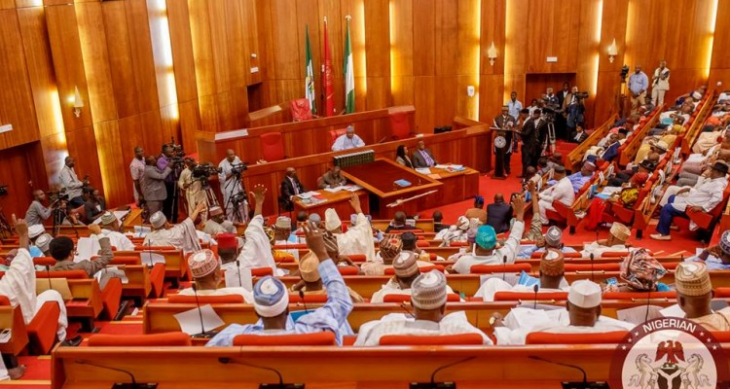
ABUJA – The Resource Centre for Human Rights and Civic Education (CHRICED) has urged the National Assembly to prioritize strengthening the legal frameworks governing Nigeria’s anti-corruption agencies.
The appeal followed the Supreme Court’s landmark ruling affirming the legality of the Economic and Financial Crimes Commission (EFCC), Independent Corrupt Practices Commission (ICPC), and Nigerian Financial Intelligence Unit (NFIU) in response to a lawsuit by 16 state governors.
CHRICED stressed that enhancing these institutions is essential to ensuring their operational independence and effectiveness in combating corruption.
Addressing journalists in Abuja on Thursday, CHRICED’s Executive Director, Comrade Ibrahim Mualeem Zikirullahi, praised the Supreme Court for dismissing the lawsuit, calling it a pivotal step in protecting Nigeria’s anti-graft mechanisms.
He noted that the case, led by Kogi State, represented a concerning attempt by political actors to weaken accountability institutions. The court’s decision, he stated, reinforced the nation’s resolve to fight corruption and promote good governance.
Zikirullahi said, “We urge the National Assembly to strengthen the legal frameworks that govern anti-corruption agencies. This is crucial for enhancing their operational independence and equipping them with the necessary technical and financial resources to effectively fulfill their responsibilities.
“The Supreme Court’s judgment is a call to action for the agencies to intensify efforts in holding public officials accountable. Those with nothing to hide should have nothing to fear from anti-corruption agencies. Impunity will no longer be tolerated.”
The briefing also highlighted the pervasive impact of corruption on Nigeria’s socio-economic development, citing examples of misappropriated funds in key sectors like health, education, and infrastructure.
CHRICED drew attention to the 2023 Transparency International Corruption Perceptions Index, which ranked Nigeria 145th out of 180 countries, underscoring the urgent need for reforms. The group also expressed concern about individuals facing corruption investigations occupying critical government positions, fostering a culture of impunity.
CHRICED criticized the government’s approach to economic recovery, particularly the removal of fuel subsidies and currency devaluation, which have exacerbated the cost-of-living crisis for millions of Nigerians. It argued that combating corruption would unlock significant resources and provide a more sustainable alternative to burdensome taxes and rising fuel prices.
Zikirullahi explained, “A robust stance against corruption could define the legacy of the current administration. Combating corruption is a more effective strategy for enhancing revenue generation than imposing taxes, fees, and burdensome costs of Premium Motor Spirit (PMS) on the populace. By addressing the root causes of corruption, the government can unlock significant financial resources otherwise lost to corrupt practices, fostering a more sustainable economic environment.
“Corruption is one of Nigeria’s most significant challenges, undermining progress in nearly every sector. Pension funds and capital budgets meant for health, infrastructure, security, and education have been siphoned off through corrupt means. Nigerians are too often confronted with the odious corruption crisis threatening our fledgling democracy.
“The fight against corruption requires a united front, engaging not only government bodies but also civil society, the private sector, and the broader community, to foster a more equitable and just society for all Nigerians. Enhancing anti-corruption institutions and promoting accountability are vital measures for restoring the integrity of our nation and facilitating sustainable development.”
While calling on all stakeholders, including civil society and the private sector, to support efforts to promote transparency and accountability, CHRICED urged anti-corruption agencies to intensify their work while maintaining professionalism and accountability, stressing that the National Assembly must provide the necessary legal, technical, and financial backing for these institutions to thrive.
The group warned that the fight against corruption is critical to securing Nigeria’s democratic and economic future.
“Anti-corruption institutions must adhere to their mandates, operate with professionalism and transparency, and maintain accountability in their actions. Officials found guilty of misconduct must be held accountable under the law,” Zikirullahi added.
Disclaimer
Comments expressed here do not reflect the opinions of Vanguard newspapers or any employee thereof.