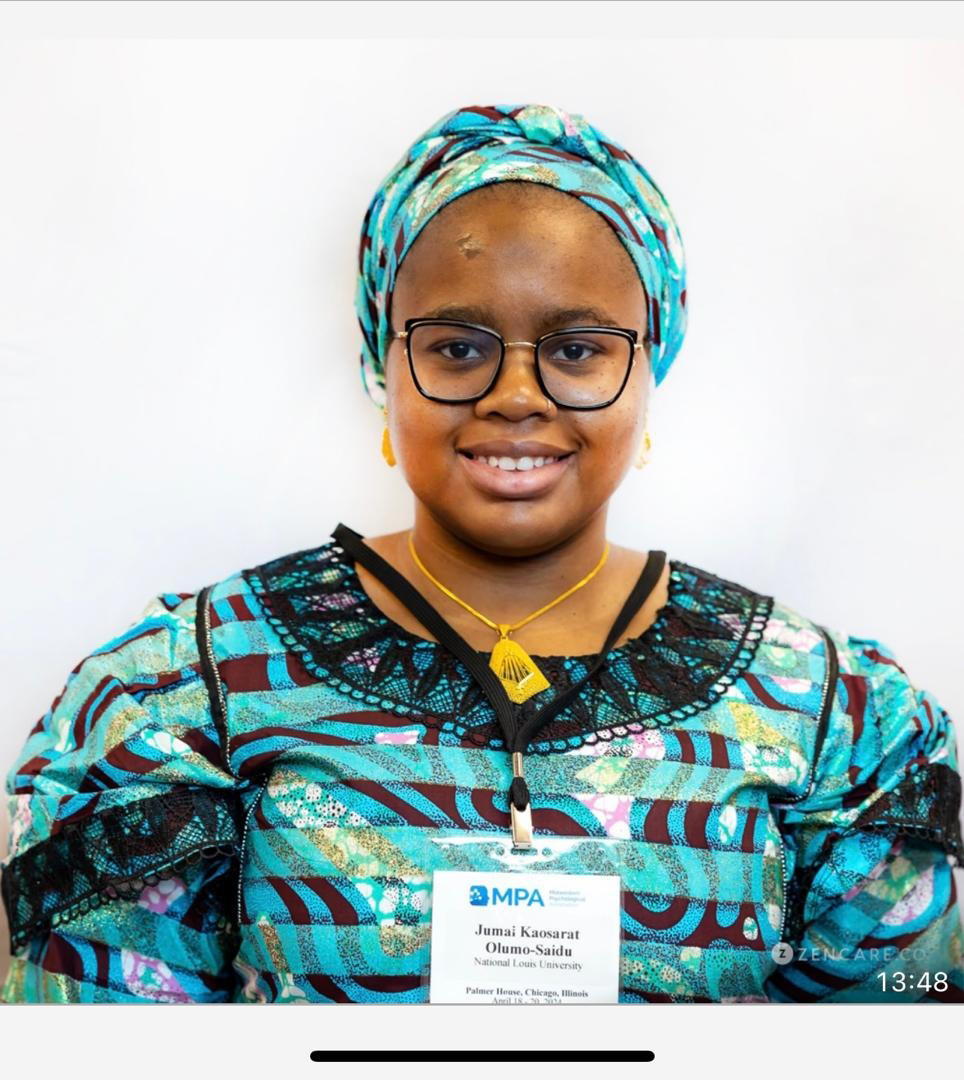
By Ebunoluwa Sessou
Jumai Kaosarat Olumo-Saidu, a gender-based violence advocate, is a third year PhD student at the National Louis University, United States of America, currently working on combating female genital mutilation among African migrants in Chicago, USA, and also in selected communities in Nigeria. She has worked with several organizations both in the United States and Nigeria to help combat this practice. She is also interested in promoting alternative ritual practices as a substitute for female genital mutilation.
In this interview she gave insight to the motivation for pursuing this study. Excerpt:
What sparked your interest in researching Female Genital Mutilation (FGM) in African migrant communities in Chicago, USA?
My interest in FGM really comes from a personal opinion. Growing up, I saw how deeply rooted cultural practices could impact women’s lives often in ways that were harmful. When I moved to Chicago, United States of America, I realized that many women from African communities were carrying similar experiences.
It became clear to me that this was not just a personal issue but a public health crisis that needed to be addressed. I felt compelled to bring these stories to light and advocate for change.
What have you discovered about the effects of FGM on women in these communities?
Through my research, I have found that the impacts of FGM are both physical and emotional. Many women suffer from chronic pain, infections, and complications during childbirth.
On the emotional side, I’ve met women who struggle with anxiety, depression, and a feeling of isolation because they can’t talk about their experiences. The silence surrounding FGM can be deafening. It’s crucial to create spaces where women feel safe to share and heal.
How do you envision changing the narrative around FGM and breaking that silence?
I believe in the power of storytelling and community engagement. One of my goals is to establish an NGO that provides safe spaces for women to come together and share their experiences.
These spaces would not only offer support but also education helping women understand their rights and empowering them to speak up. By involving community leaders in these discussions, we can help shift perspectives and foster an environment where open dialogue is encouraged.
You have mentioned working with various organizations. How have these collaborations shaped your approach?
Collaborating with organizations like Sahiyo and AHA has been incredibly impactful. They bring invaluable experience and insights into the work being done to combat FGM. Together, we’ve created educational workshops and community outreach programs that really resonate with people.
These partnerships help amplify our message and show communities that they’re not alone in this fight. It’s all about building a support network that empowers women on both sides of the ocean.
What alternatives to FGM do you think can be offered in these communities?
I think advocating for an alternative ritual is essential. We can promote coming-of-age ceremonies that honor cultural traditions while ensuring the health and well-being of girls.
These alternatives can include educational components that emphasize choice and empowerment. By working with cultural leaders, we can create meaningful practices that celebrate women without causing harm.
What challenges do you anticipate in your advocacy work, and how do you plan to overcome them?
One major challenge is the deeply entrenched silence around FGM. Many women fear speaking out due to stigma or community pressure. To overcome this, we need to engage trusted community figures that can help facilitate these conversations.
It’s also important to approach the topic with compassion, recognizing the cultural significance it holds for many. Education will play a key role in shifting mindsets and fostering an environment of openness.
What message do you hope to leave with our readers regarding FGM and your advocacy?
I hope readers come away with a greater understanding of FGM as a critical public health issue that affects women’s rights and well-being. It’s vital to approach this topic with empathy and an open heart.
I want to encourage everyone to get involved whether through supporting local initiatives, advocating for policy changes, or simply starting conversations in their own communities. Together, we can create a future where women and girls feel empowered to make choices about their bodies and are supported by their communities.
Disclaimer
Comments expressed here do not reflect the opinions of Vanguard newspapers or any employee thereof.