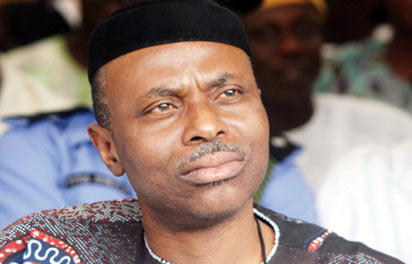
Ondo State Governor, Olusegun Mimiko
By Rotimi Fasan
IN the last two years or thereabout during which the Action Congress of Nigeria succeeded in chasing the Peoples Democratic Party out of most parts of the South-West, talks of integrating the economy and politics of the region have assumed an upward swing.
Leaders of the party, many of them former governors of the Alliance for Democracy before they were scattered to the four winds by Obasanjo’s garrison politics that thrived on the total ‘capture’ or ‘takeover’ of the region, have of late been clamouring for integration of the region.
Many of today’s supporters of regionalism in the South-West would appear to be latter-day converts, for while the AD had control of the region there was little talk of integration. The AD governors became complacent, bickered among themselves despite claims of membership of a common Afenifere household and went their different ways thereafter. Perhaps the manner they were easily blown apart by the PDP under Obasanjo convinced them of the need to come together under one regional umbrella. The manner he was able to rally the West back under the banner of the ACN after surviving Obasanjo’s decimation of the rank of the so-called progressives, no doubt, gave Asiwaju Bola Tinubu the loudest voice in the debate to return the South-West to the path of regionalism – a path that was abandoned on the entry of the military into Nigerian politics in the late 1960s.
Even if Tinubu as the power house of the ACN could be considered the arrowhead of regionalism in the South-West today, he has been subtle in his call, leaving those past governors of the AD that now populate the ACN to pursue this agenda. It would appear too that a few of these past governors need to toe this ostensible party line to make themselves relevant for, as I mentioned before, they did not pursue this integration goal with any seriousness when they ruled their various roost.
Of the present ACN governors, Ogbeni Rauf Aregbesola of Osun State would appear to be the most committed, perhaps in an ideological sense, to the goal of regionalism in the South-West. He is that one keen student and follower of the Awolowo school of regional politics among those currently professing Awoism. Raji Fashola’s interest doesn’t appear to go beyond making Lagos a model state in Nigeria within the framework of his mega city agenda.
The other ACN governors might be more interested in the integration business for the simple reason that they, as beneficiaries of Tinubu’s reclamation of the South-West from the PDP, cannot be seen to be going against their party. Which leaves me with the conclusion really that the whole talk about integrating the South-West might be driven more by the desire to ensure that the ACN has full control of the region than a genuine interest in the professed integration goal.
Until Labour-controlled Ondo State under Rahman Mimiko goes with the other states, therefore, the dream of regionalism can only remain that- a dream. This is the reason Mimiko who rose to the governorship of Ondo with the firm support of Bola Tinubu, if not the ACN, is today at odds with his former collaborators. What is more, he is suspected of harbouring sympathies for the PDP, the party under whose banner he first sought the governorship of Ondo State.
Genuine or otherwise, there are solid grounds to support the regional integration of the South-West and, hopefully, other regions of Nigeria. It might sound anachronistic to be talking regionalism in an era of multi-state structure but the truth is that the present 36-state structure under a so-called Federal system has served only to fuel the greed of public officials, increased dependence on the centre while stalling the growth of other states.
It has failed to bring the envisaged goal of development that led to the creation of the states in the first instance. The South-West like other parts of Nigeria made its greatest strides as a modern political system in the period between the 1950s and late 1960s, time during which the region was under the control of the Action Group.
The developmentalist paradigm of a welfare state that promoted free and compulsory universal education, health, agriculture and housing and which would place the South-West on a solid economic footing well before crude oil became the be-all and end-all of Nigeria’s economic drive- the entire socio-economic and political growth was designed and executed within the regional vision and might of the Western Region under Chief Obafemi Awolowo and to a lesser degree Chief SL Akintola. The same thing was played out in the other regions be it under Ahmadu Bello in the North or Nnamdi Azikiwe in the East. That level of economic and political growth has not been matched under any of our state structures beginning from 1967 when the first states were created to 1996 when the last set of states were created by Sani Abacha. A lot of the landmarks that define the South-West today and have made it the economic and social hub of Nigeria were established during the period of regionalism.
Thus when the likes of Aregbesola talk today of a common rail network across the entire West or a mega university to cater for the educational needs of the people, we know where he is coming from.
In the Second Republic, the Unity Party of Nigeria-controlled LOOBO states (Lagos, Ogun, Ondo, Bendel and Oyo) tried to replicate the magic of the regional years but made little strides.
Ever since, successive attempts at regional cooperation have met with less success. Now the ACN is picking up the gauntlet once more but there are concerns that Mimiko is not being enthusiastic about it all.
The ACN believes that integration could only be achieved under one party, a position best articulated by Aregbesola but which Mimiko doesn’t share apparently. For Mimiko, he could support regional integration without leaving his party. Indeed, integration could be better achieved under the same party but nothing says people working under different party banners cannot cooperate.
It is a question of trust and interest both of which appear increasingly in short supply between the ACN and Mimiko right now. To the extent that Mimiko does not denounce the idea of integration and is ready to commit to it fully for the greater benefit of Ondo State and the South-West in general, the ACN should be content to work with him.
There might be some sense, in fact, in not herding the entire South-West under one single party. There should be room for polite disagreement even while working towards a common goal. The West was not necessarily integrated under the AD. It would not necessarily disintegrate without ACN cover.
Disclaimer
Comments expressed here do not reflect the opinions of Vanguard newspapers or any employee thereof.