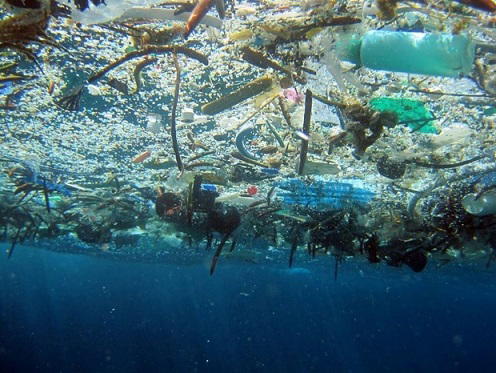
Plastics under the sea
By Dickson Omobola
Following plans by the Lagos State government to ban the circulation of single-use plastics and sachet water from January 2025, the state government has said cloth bags and biodegradable plastics, otherwise known as compostable plastics, are options the state is exploring.
The state government said unlike nylons that take a long time to decompose, biodegradable plastics, made from locally available materials like agricultural waste, could decompose between three and four weeks.
Managing Director of Lagos State Waste Management Authority, LAWMA, Dr Muyiwa Gbadegesin, disclosed this at the West African Clean Energy and Environment Trade Fair and Conference themed: ‘Sustainability Showcase: Stimulating Green Economy Investments,’ held in Lagos.
Addressing newsmen, Gbadegesin said these alternatives would help in reducing the volume of waste in the state.
He said: “In Lagos, the problem with plastic waste is that they go into the drainage resulting in flooding. In some cases, it can also lead to diseases that are connected to stagnant water like malaria, typhoid and cholera. Talking about single-use plastic such as spoons, knives, straws, plates, we are phasing it out and looking for alternatives.
“Alternative for nylon bags could be just a cloth bag that can be used and reused. When we are clearing waste, we see a lot of these nylon bags because people just throw them away. They are so cheap and it is almost free. Another alternative is the biodegradable options. Biodegradable plastics look like plastic, they feel like plastic, but they will actually decompose within three to four weeks. They are made from locally available materials like agricultural waste, sugarcane.
“Some people also call that compostable plastic. Those are the alternatives that we want to use instead of plastic that doesn’t decay for hundreds of years. It is better for us to use something that can biodegrade or something that we can use and reuse many many times. That will significantly reduce the volume of waste that we have in the state.”
On his part, Project Manager at Competence Centre, Energy and Environment, Mr Hillary Elegeonye, said: “This is the 12th edition of this event which is held yearly. Last year it was in Ghana; today, it is in Lagos. It is a big event for us because it is one of our flagship events. We are happy to see it happening. If you look around, one of the challenges in the circular economy is inadequate and improper waste management.
“As much as LAWMA is doing a lot, they still need the support of the people who indiscriminately dispose of refuse. We are trying to seek ways to eliminate this problem because waste management is a big problem which can be resolved by a circular economy. The only way to go about that is to educate the people, and what this platform is doing is to educate those who are here and those who joined virtually.”
Disclaimer
Comments expressed here do not reflect the opinions of Vanguard newspapers or any employee thereof.