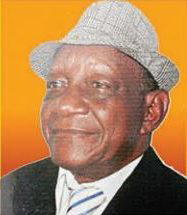
“Men make history, but, not just as they please.” Karl Marx, 1818-1883, VANGUARD BOOK OF QUOTATIONS, VBQ, p93
President Bola Tinubu has made history, but, today, it is not the history for which he would want to be remembered. Unfortunately for him, because journalism is the first rough draft of history, nothing recorded today will ever be erased. As Agathon, 447-401 BC, had irreverently reminded us, “Even God cannot change the past”.
What occurred nationwide from August 1 to 3, 2024, before Tinubu decided to address the nation the next day is the past that cannot be changed. Unprecedented in Nigerian history, this is the first national protest against an elected government since the first elections were held in the 1950s. Irrespective of what happens next, the dreams of Emilokan have turned to the nightmares of President Tinubu. The mystic is gone. Has the genie been let out of the bottle? Time will tell.
Significantly, the North, traditionally docile, has led the revolt – all the way to the doorstep of the immediate past president – Muhammadu Buhari – who left office fourteen months ago, claiming he left Nigeria better than he found it. So, who messed it up and created the near anarchy in which we now find ourselves? In reality, the national protests and the undesirable side-effects – looting, mayhem, arson, killings and massive losses of income – were all accidents waiting to happen. The calamity has been building up for over ten years.
All our presidents, since 1999, contributed to the current predicament. In my book PDP: CORRUPTION INCORPORATED (available online), the point was made and substantiated that eight years after the military departed, over N8 trillion was unaccounted for by the Obasanjo government. Corruption started with the very first Executive Order to withdraw N10 billion based on anticipatory approval by the National Assembly, NASS. There was no pause once the political class allowed the president to step on that slippery slope. Every successor has since added to the growing mountain of missing funds, running into trillions each time. And Buhari simply went completely overboard with the N30 trillion withdrawn from the Central Bank of Nigeria without NASS approval.
Nigeria’s political class has once again proved incapable of rising up to the challenges of leadership. Our democracy is again endangered. Once the protesters successfully mobilised millions across the country; and governments’ efforts to dissuade and intimidate them not to embark of the protests, the chain of reactions which brought us to where we are was inevitable. Government adopted three approaches to the protests. First, they were attributed to Peter Obi, the candidate of the Labour Party, LP, and Atiku, the leader of the Peoples Democratic Party, PDP, as well as other losers of the last presidential elections. Second, governments mobilised their own counter-protesters in some places – Lagos and Abuja in particular.
Third, all sorts of impediments were thrown in the way of the largely legitimate protests. The Police rolled out the usual warnings concerning obtaining permits before protesting; and the threat of using force to disperse them. When all those failed to deter the protesters, last minute ex-parte court orders were obtained to restrict the areas and movements of the protesters. That we are in this situation, of near anarchy, is the clearest testimony to the fact that governments have failed. The question is why? To begin with, the Federal Government, speaking through its spokesman, Mr Bayo Onanuga, was totally wrong about the causes of the protests.
The attempt to rope Obi and the Igbo into allegations of promoting insurrection to topple the FG backfired when all Igbo leaders urged their people not to participate in the protests; and Adamawa, Atiku’s state, was one of the few peaceful deep northern states. By contrast, Borno State, where the Vice President comes from and is controlled by the All Progressives Congress, APC, was the most violent state in the entire country. So much for amateurish propaganda – which might have triggered the call by some faceless people to issue a ‘quit notice’ to the Igbo resident in Lagos. Igbo people are not the most hungry in Nigeria; and will never be. The real destitute people are in the North-East and North-West.
AREWA: CHICKEN COMES TO ROOST
“If you shut up truth and bury it underground, it will but grow and gather to itself such explosive power that the day it burst through, it will blow up everything in its way” – Emile Zola, 1840-1902, VBQ p 255
For centuries, the northern oligarchy had appropriated to itself a disproportional percentage of the public revenue. For instance, Barewa College, Zaria was established to educate the children of traditional rulers who were mostly Fulani. The school was allocated almost forty five percent of education budgets each year – while all the rest had to manage with their share of the rest. Christian Missionary Schools and Government College, Keffi, Nasarawa State provided the opportunities for brilliant children who were not born with silver spoons in their mouths. Employment opportunities were also discriminatory in favour of the kids of traditional rulers.
My first tour of the North in 1975, lasting two weeks, was totally shocking. Travelling miles upon miles of roads revealed thousands of sheds barely fit for human habitation; but dotted occasionally by palatial mansions in every community. Equity was certainly not on the minds of the North’s rulers for centuries – even after independence. In actual fact, the emergence of military rule eventually provided the majority poor northerners the opportunities civilian leaders denied them. I returned to Lagos after that trip with one question on my mind: How long will this injustice continue?
The protests, starting August 1, 2024, provided part of the answer. Ignoring the fervent appeals of the Sultan of Sokoto and other northern leaders, the youths were the most vocal and violent activists. The Sultan in the North-West and the El-Kanemi in Maiduguri spoke in vain. Almajiris, traditionally obedient to their traditional rulers, obeyed another god – the stomach; which is a universal rascal. Despite the crackdown by security forces, the point has been made. Pervasive hunger now constitutes a serious security risk unless governments act fast to alleviate the danger. The FG, Police and the Army might have won only the first battle in a series of future engagements. As in all wars, the last battle, which is still possible, is the only one that counts. It is difficult to predict when that one might occur unless urgent steps are taken to avert disaster.
WELL-FED FIGHTING THOSE WITH NOTHING TO LOSE
“The most difficult person to fight is somebody who has nothing to lose” – The late Major Bob Reynolds, US Vietnam War survivor, 1972.
Bob was one of about a dozen Vietnam War American survivors. A hefty black man, 6 feet 7 inches in his socks, he was built like a Mack truck. He was drafted into the Army and sent to Vietnam to fight. A man who has never been afraid of violence, he confessed that his heart melted after shooting about thirty Viet Cong soldiers; and, instead of running back, more came surging forward. While the American soldiers hoped to return home, they were confronted with adversaries ready to die. He recalled that those whose stomachs were ripped open by bullets had nothing in their bellies!! If care is not taken, we might in the future be sending well-fed soldiers against those who have nothing to lose.
I arrived in Kano to start work in March 1981; just as the last elements of the Maitasine religious uprising was being wiped out; but, not before creating panic for two years. Those who lived through it recall that the rag-tag army consisted of mostly poor, ill-fed and ill-clothed individuals. When Boko Haram started during Yar’ Adua’s regime, the bulk of the troops were destitute. It is quite possible that the composition has remained the same. Because the Devil always finds work for idle hands, it should not surprise us that more hoodlum groups are springing up in places where economic deprivation is most prevalent.
Nigerian security forces, apart from being stretched more than ever before, face an increasing number of desperate opponents. Contrary to popular belief, a soldier is employed to kill for his country; not to die for her. A dead soldier is a loss, not an asset, to his country. At any rate, he has a job, a means of livelihood and hope for the future. Because he has a future, he wants to survive the conflict. By contrast, the desperado, with nothing to lose can take great risks. To be quite candid, it would appear to me that our present predicament, unless very quickly resolved, will eventually create a nightmare for everybody – not just President Tinubu.
N570 BILLION GRANT TO STATES
“Habit is stronger than reason” – Professor Dorfman
Tinubu, having come this far on the belief that “every man has his price”; and having paid it, can be forgiven for thinking that money can solve any problem. Giving N570 billion to states is another example of feeding the over-fed. With the exception of a few governors, Abia, Adamawa, Delta and Lagos in particular, most of the rest are likely to just waste the funds. Nothing will be achieved by it. Read the VANGUARD BOOK OF QUOTATIONS anytime, anywhere and for very little.
Disclaimer
Comments expressed here do not reflect the opinions of Vanguard newspapers or any employee thereof.