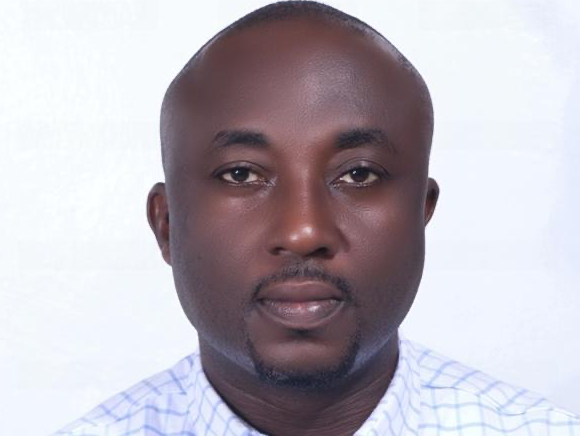
In a groundbreaking stride for environmental sustainability and technological innovation, Nigerian-born scientist Dr. Kelechi J. Okere is leading one of the most promising advancements in nutrient recovery technology from municipal wastewater at Clarkson University, New York.
Backed by the U.S. Department of Energy (DOE), Dr. Okere’s research is offering a transformative solution for more than 2,000 wastewater treatment plants across the United States, with far-reaching implications for both climate mitigation and agricultural sustainability.
This U.S.-based breakthrough builds upon a solid foundation laid in Asia. While pursuing advanced research at Malaysia’s premier university— the University of Malaya, Dr. Okere executed a pioneering project under the Clean Development Mechanism (CDM). The initiative focused on energy efficiency through lighting retrofits and waste-to-energy conversion. His work turned 4 tons of daily university waste—previously landfilled—into a productive energy resource, slashing the campus’s carbon footprint and unlocking a yearly savings of over $1 million.
Dr. Okere’s Malaysia-based project earned him an appointment as a Research Assistant in the Department of Built Environment and a key role with the Low Carbon Committee. The committee was established under the “Low Carbon Society Strategy” grant by Malaysia’s Ministry of Energy, Green Technology, and Water, following the directive of then-Prime Minister Najib Razak to cut the country’s carbon emissions by 40% by 2020. His work at Malaysia’s top university led critical low-carbon innovations, positioning him among Asia’s emerging voices in climate action and sustainable infrastructure.
As part of his leadership in the Zero Waste Campaign (ZWC), Dr. Okere secured a RM 100,000 ($34,483) grant to explore anaerobic digestion, achieving impressive daily outputs of over 1,400 kWh of electricity and 1,800 kWh of heat. This effort secured more than 6,600 Certified Emission Reduction (CER) credits via CDM methodologies AMS 11.N and AMS III.AO, generating a combined net profit of RM 900,000 ($310,344) and landfill diversion savings of RM 400,000 ($137,931).
His global collaboration extended beyond Malaysia. He participated in a tri-nation environmental engineering research program alongside scholars from Kyoto University (Japan) and Tsinghua University (China), where he examined pollution dynamics in Malaysia’s Klang River. His efforts led to implementing a sensor-equipped trash boom, reducing approximately 87,000 tons of plastic and waste from entering waterways between 2019 and 2023.
Building on this international experience, Dr. Okere joined a prestigious DOE-funded initiative (Award DE-EE009503) at Clarkson University in 2023. His work focuses on advanced phosphorus recovery from anaerobic digestion sidestreams, producing slow-release fertilizers such as hydroxyapatite and struvite. By 2024, he expanded the scope to include ammonia recovery via bipolar membrane electrodialysis, developing a dual-nutrient recovery platform.
“Our integrated approach not only ensures environmental protection but also advances circular economy goals,” explained Dr. Okere. “In laboratory experiments, we’ve achieved nutrient recovery rates of up to 80% for phosphorus and 60% for ammonia, significantly outperforming the traditional Haber-Bosch process with energy usage below 10 kWh/kg-N.”
His research outcomes have significant strategic implications, preventing eutrophication, combating aquatic dead zones, and reducing reliance on imported phosphate rock and fossil-based nitrogen fertilizers. Previous deployments of his methods in Nigeria and Asia have already offset more than 15,800 tons of CO₂-equivalent emissions.
Dr. Okere’s pilot-scale research at Clarkson University actively supports federal and state initiatives to meet mandates under the EPA’s Nutrient Pollution Policy and the DOE’s Water Security Grand Challenge.
His excellence is recognized by numerous awards, including Best Poster Presentation and the Sustainability Prize at Clarkson University’s Research Showcase (2023). Graduating top of his PhD class with distinction (CGPA: 4.84/5.00) in Natural Resources and Environmental Management, Dr. Okere leverages over 12 years of experience across Nigeria, Malaysia, and the U.S. His mentorship continues to inspire a new generation of climate-smart scientists, alongside his leadership roles with professional organizations like the Nigeria Environmental Society (NES) and the New York Water Environment Association (NYWEA).
From Owerri to Kuala Lumpur to New York, Dr. Okere exemplifies global innovation. Nigerian institutions have a valuable opportunity to leverage his expertise through technical exchanges, adopting his nutrient recovery models for agro-waste treatment, curriculum development, and featuring him prominently in national dialogues on climate resilience and circular economy.
As Dr. Okere engineers a cleaner, more sustainable future, his cross-continental impact affirms that true sustainability knows no boundaries.
Disclaimer
Comments expressed here do not reflect the opinions of Vanguard newspapers or any employee thereof.