..Musawa points the way of creative economy
By Luminous Jannamike, Abuja
ONCE upon a time, in the land of green-white-green, the nation’s wallet was bursting at the limits thanks to the liquid gold gushing from its soil.
But lo and behold, a visionary in Versace, the ever-so-stylish Hannatu Musawa, Minister of Arts, Culture and Creative Economy, stood before a crowd of eager listeners at the 2024 retreat of the Ministry.
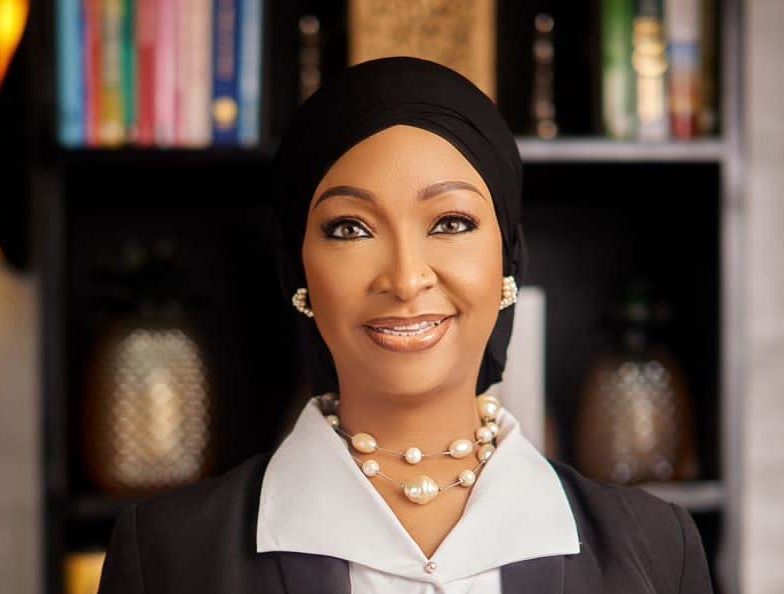
With the flair of a seasoned storyteller, she spun a yarn about a future where Nigeria’s new cash cow was neither bovine nor buried underground—it was, wait for it… creativity!
With the determination of a Nollywood protagonist facing the in-laws, Minister Musawa laid out a roadmap as ambitious as a Lagos driver in rush hour traffic.
The plan? To make Nigeria’s creative sector the envy of Wakanda! By 2027, she pledged to generate a cool 2 million jobs, and by 2030, to add a whopping $100 billion to the GDP. Who needs oil when you can export laughter, drama, and art?
In a scene charged with more tension than a season finale cliffhanger, the Minister declared the creative sector as the future’s fountain of wealth. “As a nation, we are trying to diversify from oil, and the creative economy is a strong alternative as the new oil because the future of the country depends on the creative sector!” she exclaimed, as the crowd nodded along, their brains ticking faster than a talking drum.
READ ALSO: I’m here to revolutionise entertainment industry — M B Billy
But alas, every Nollywood saga has its villain, and here it came in the form of challenges and the need for money—lots of it. Yet, the Minister, undeterred and as confident as a Lagos street vendor, reassured everyone that with unity, integrity, and some good fashioned governance, the creative economy would be as robust as an African mama at a wedding feast.
As the retreat came to a close, with everyone feeling as hopeful as a tourist on one of the beaches of Victoria Island, it was clear that the Minister’s speech had touched many.
There was a buzz in the air, a feeling that Nigeria was on the brink of something big. The skeptics had been silenced, the believers energized, and if all went according to plan, Nigerian creativity would soon be flowing faster than palm wine at a festival.
Meanwhile, the ICPC Chairman, Dr. Musa Aliyu, with a moral compass as straight as an iroko tree, urged the crowd to keep it clean and play fair. Integrity, he reminded them, is the key to ensuring that the creative gold rush pays off.
And then, in a scene-stealing moment, the Special Adviser to the President on Policy and Coordination, Ms. Hadiza Usman, stepped into the spotlight. She hailed the retreat as a clarion call to action, a symphony of policy and creativity that could orchestrate Nigeria’s rise to cultural stardom.
As the curtain fell on the retreat, there was a sense of unity and purpose in the air. Laughter mixed with the seriousness of ambition, and the Minister’s call to “elevate Nigeria’s cultural and creative landscape” echoed in the hearts of all. With a cast of millions ready to create, Nigeria’s “new oil” is set to fuel not just the economy, but the soul of a nation.
So, readers, let’s roll out the red carpet for Nigeria’s next top export: creativity! It’s renewable, it’s abundant, and it’s 100% Nigerian. Who’s ready to laugh, dance, and paint their way to prosperity?
Remember, the stage is set, the audience is global, and the show, dear friends, is about to begin. Let the creative extravaganza commence.
Stakeholders React
Meanwhile, in interviews conducted by Saturday Vanguard, various stakeholders shared their perspectives on the development of the Nigerian creative industry and the role of the government. One stakeholder emphasized the importance of accountability in meeting GDP targets, another underscored the necessity of a structured framework, a third raised doubts about the feasibility of job creation targets, and the final stakeholder highlighted the industry’s self-reliance and expressed skepticism towards government initiatives.
Kenny Ogungbe, the CEO of Kennis Music, stated, “The Minister should explain how she plans to ensure the $100 billion contribution to the GDP by 2030 will be achieved. She is the one who conceived the idea and set the target.”
Tunde Akinsanmi, a vocalist in the pop sensation group Styl Plus, stated, “I believe we have already surpassed the government’s target for the creative industry. However, our success has been primarily driven by individual efforts rather than a collective platform. Take, for example, artists like Davido, Burna Boy, Wizkid, and Tiwa Savage. They are not only creating jobs on a massive scale they are also generating substantial income.
“Nevertheless, due to the lack of a structured framework in Nigeria’s creative industry, other countries like the US and UK benefit by collecting revenue through show permits, taxes, and other legal payments. If Nigeria can concentrate on developing a comprehensive framework for the industry, implementing monitoring and standardization processes, and ensuring that every participant is a stakeholder whose information is captured in a database, significant opportunities for growth and revenue generation can be unlocked.
“The creative industry holds immense financial potential that could benefit the government. However, the lack of understanding about how this money is generated makes it challenging for the government to effectively tax, monitor, and regulate creators, hindering the industry’s overall growth and success.
“In order for Nigeria to achieve its ambitious goals in the creative sector, a multi-faceted approach is crucial. This includes focusing on education and training to nurture creativity from a young age, developing infrastructure, providing financial support, establishing favorable policy frameworks, and promoting Nigerian creativity on the global stage.”
Kaycee Oguejiofor, festival/concert producer and showbiz impressario, said: “Discussing the creation of 2 million jobs within the creative economy by 2027, which is three years from now, seems overly ambitious, if not entirely unrealistic. The context of such a claim is essential. If the minister provided the background and rationale behind this projection, perhaps we could better understand and respond to the assessment.
“The question remains: How does the government intend to achieve this? Will there be a collaborative approach with stakeholders, akin to a public-private partnership, to generate these jobs? Are there plans to offer grants that would encourage more people to enter the industry?
“The creative economy already plays a significant role in Nigeria’s employment sector, providing jobs for more than 10 million citizens. If we refer to the tenure of the Honorable Kemi Adeosun as the Minister of Finance in 2018, records indicate that the creative sector was the fourth-largest contributor to the nation’s GDP. This industry is already a multi-billion dollar arena.
“It is crucial to identify who the stakeholders are and what data was used to set such a target. Without this information, the government’s proclamations appear disconnected from the industry’s current reality and its potential growth trajectory.”
Obinna Agwu, an A&R Executive at Horus Music in Nigeria, expressed, “There is a general lack of trust in the government. If it were up to the government, we wouldn’t have the Nigerian creative industry that the whole world is celebrating today. Generally, there is a lack of interest when the government sets ambitious targets like this for the industry. The Jonathan administration claimed to have allocated a significant amount of money to Nollywood. What materialized from that announcement?
This is not the first time we have seen initiatives like this fail to materialize. My initial impression is that most entertainers do not even pay attention to such stories because they do not see any tangible impact or change. Therefore, dwelling on this topic excessively is futile. It does not bring about any change. The creative industry in Nigeria continues to grow, and the factors contributing to its growth are completely independent of the government. We are progressing regardless.”
Disclaimer
Comments expressed here do not reflect the opinions of Vanguard newspapers or any employee thereof.