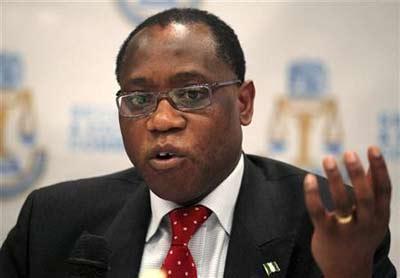
Olusegun Aganga, Trade & Investment Minister
By Franklin Alli
OPERATORS in the Nigerian industrial sector have described 2011 as a year of recurrent unstable, hostile operating environment.
In a review of the business environment in 2011, industrial operators identified unbearable energy costs and prohibitive interest rate as the most critical problem for the sector.
The review of the year was contained in a Business Environment Report 2011 issued by the Lagos Chamber of Commerce and Industry (LCCI.
The Report said: “Exchange rate depreciation: Many firms noted with concern the sharp depreciation of the naira exchange rate in 2011 with its attendant implications for business operating costs. The rate depreciated from N151 in January to N162 to the dollar in December.
The implications for investors were as follows: High cost of inputs, especially imported raw materials, machineries and equipment, and high import duty, VAT and Ports charges all of which are percentages of cost of imports. Some firms complained about the volatility of the exchange rate and the challenges it posed for business operations, especially planning.
“Cargo Clearance at the Ports: Firms that had ports related transactions during year expressed profound discontent with the excruciating processes of clearing cargo at the ports. All respondents complained of an awful and frustrating experience in the course of cargo clearance.
Prevalent issues were the multiplicity of agencies at the ports, tedious bureaucracy in documentation and rampant extortion. It takes an average of 2 – 4weeks to clear cargo at the ports. This had implications for the cost of borrowed funds which were used for the importation; demurrage charges etc.

Olusegun Aganga, Trade & Investment Minister
“Weak Consumer demand: Most firms experienced weak consumer demand which manifested in low patronage for many sectors and high consumer resistance. There were indications of significant contraction in aggregate demand and a deceleration in the tempo of economic activities during the year. This adversely affected investors.
“Manpower challenges: Firms in professional services and construction industry reported declining quality of skills in the economy. Concerns were expressed about the quality of graduates and the cost of retraining them before they can be of value to employers. Firms in the construction and cottage industries lamented the loss of skilled workers to the commercial motorcyclists sector (Okada business) because of compensation relativity issues.
“Smuggling: Many formal sector businesses in the distributive trade sector lamented the rampant smuggling by informal sector operatives which created competitiveness challenges. This problem was pronounced in the tyre industry.
“Oil and Gas Sector: Upstream Oil Sector
The delay in the passage of the Petroleum Industry Bill remains the greatest inhibition to investment in the sector. Operators in the sector observed that the situation presents a profound uncertainty challenge which makes investment in the sector very difficult. They therefore urged the National Assembly and the Executive arm of government to ensure the expeditious passage of the bill in the interest of the economy and the growth of the oil and gas sector.
Investors in the sector also lamented the phenomenon of multiplicity of taxes which undermines profitability in the sector: Corporate tax (petroleum profit tax) of 85%; Education Tax of 2%; NNDC Levy of 3% of each company’s budget; 0.2% levy on oil export for the Export Supervision and Inspection; and a Cabotage Levy collected by NIMASA.
Put together, the operators in the sector are paying a tax in excess of 90%. This scenario could discourage investment in the sector. To promote the realization of the objectives of the national Content Policy, players in the sector suggested the provision of appropriate incentives to stimulate investment domestically in the segments covered by the policy. They observed that currently there is a weak domestic capacity to facilitate the realization of the objectives of the policy.
“Downstream Oil Sector
Investors in the downstream oil sector expressed concern over excessive regulation of the sector. This was identified as a major problem inhibiting investment in this segment of the oil and gas sector. They also called for urgent deregulation of the sector and the passage of the Petroleum Industry Bill (PIB).
“Business Registration Professionals in the Consulting businesses expressed concern over the bureaucracy and resultant delays in the process of business incorporation. They lamented the over centralization of the processes by the Corporate Affairs Commission (CAC).
They called for immediate decentralization of the activities of the Commission so that the processes can be started and completed without recourse to the Corporation Headquarters in Abuja. They contended that a more intensive use of information technology (IT) would facilitate rapid decentralization of the processes.
“Logistics Business
Operators in the logistics sector expressed concern over the state of roads and the attendant cost in terms of time and vehicle maintenance. There were also complaints of multiplicity of permits and harassment by government operatives such as the Police, the VIO, LASTMA and the FRSC and local council officials. For the government to realize its aspiration of economic transformation, it would be useful to address the varied concerns and challenges that have been highlighted by the private sector players in this report. The report presents a valuable feedback on the effectiveness of public policy.
Lagos Chamber is requesting the authorities to address the constraints and concerns in 2012 in the interest of the economy and the welfare of the Nigeria people. Nigerian economy has tremendous potentials that could be harnessed to advance the frontiers of the economy and impact on the lives of the citizens.
But for this to happen, the process of structural reforms to unleash these potential must be accelerated. Policy choices should be made to boost investors’ confidence; drastically reduce infrastructure deficit; ensure macroeconomic stability; promote policy consistency; guarantee a level playing field for all investors and deal firmly with corruption.”
Disclaimer
Comments expressed here do not reflect the opinions of Vanguard newspapers or any employee thereof.