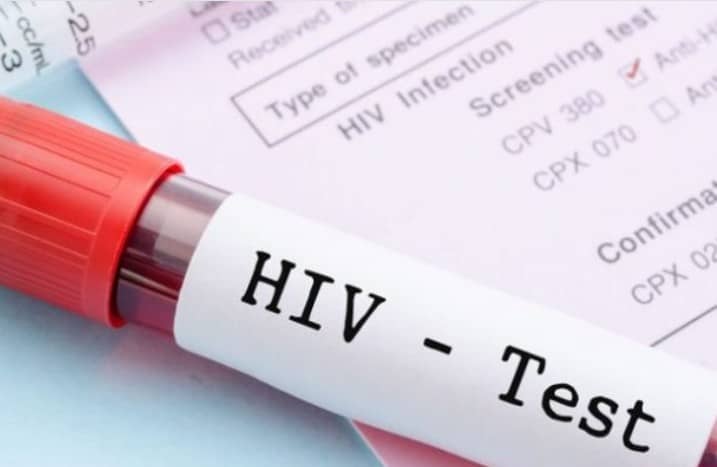
Stock image
•As Nigeria bears 32% burden of global pediatric infection
By Sola Ogundipe
The New HIV Vaccine and Microbicide Advocacy Society, NHVMAS, has tasked the Federal Government to intensify public education and sensitisation around the vertical transmission of HIV (formerly Prevention of Mother-to-Child Transmission of HIV, PMTCT) programme and its prevention.
The NHVMAS regretted that among the factors fuelling the burden was the large number of Nigerian women giving birth at mission homes, under traditional birth attendants or at home.
Nigeria bears a 32 percent burden of pediatric HIV infection globally.
Disclosing these and other concerns during a three-day capacity-building programme for journalists in Lagos on biomedical HIV prevention research and advocacy, the Executive Director of NHVMAS, Florita Durueke, regretted that Nigeria is still having cases of people living with HIV giving birth to babies that are HIV positive.
“This is something that can be prevented because we have a programme called Prevention of Mother-to-Child Transmission of HIV, PMTCT, where women can take up HIV tests, know their HIV status, and if they’re HIV positive, they have to take up treatment and also enroll in the PMTCT programme.
“PMTCT allows them to give birth to their babies, and the baby will have access to the Nevirapine prophylaxis. So, that way, the baby is protected from getting HIV.
“But what we are seeing is that a lot of women in Nigeria still access antenatal services from mission homes, TBAs, and sometimes they will even stay at home and give birth.
“So, it’s a missed opportunity, because these women may eventually not know their HIV status, and if, peradventure they are HIV positive, they give birth, unattended by a healthcare provider, and their baby may become HIV positive.”
On what Nigeria should do, Durueke explained that there is a need to increase public education and sensitisation around the mother-to-child transmission of HIV and the PMTCT programme.
“This will enable every woman of reproductive age to be able to know their HIV status, and every woman that is pregnant knows that it’s the person’s right to know their HIV status, and if the person is HIV positive, you enroll in treatment.
“Secondly, governments must build that partnership with the TBAs and mission homes in such a way that we empower them to make sure that their clients take up HIV tests, and if they have clients that are HIV positive, they should refer them. “Possibly, the government can do like a cash transfer to these TBAs to make sure that we don’t have any woman that is HIV positive missed in terms of the referral.”
She regretted that Nigeria is still struggling with pre-exposure prophylaxis, PrEP ring access for those at substantial risk of HIV infections.
PrEP ring is a silicone ring that is inserted in the vagina every month and delivers long-acting, topical, and localized HIV prevention.
Durueke said: “We have tools that can make a difference in HIV prevention, tools like PrEP-ring and the injectable carboxy-gravel. So, we have issues with the Nigerian HIV prevention policy, you know, adopting these tools as part of the package of intervention in the HIV prevention space.
“What this implies is that Nigeria should move to the regulatory approval of injectable carboxy-gravel as HIV prevention tools, and also the regulatory approval of PrEP-ring that women can use.
“And if we achieve this, then we should be able to have our HIV prevention guideline integrate injectable carboxy-gravel as well as the PrEP-ring in the prevention package.
“And then, mobilize our donors and other partners to make investments in providing these tools, and also make investments around public education and demand creation for these tools,” she poised.
She noted that Nigeria can achieve epidemic control of HIV if the country can make sure that every effective HIV prevention tool is made available.
Disclaimer
Comments expressed here do not reflect the opinions of Vanguard newspapers or any employee thereof.