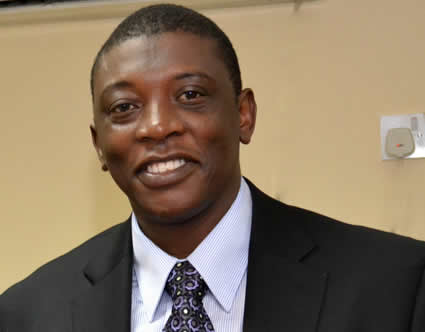
The Director General West African Institute for Financial and Economic Management (WAIFEM), Baba Yusuf Musa in this interview discussed his presentation at the just concluded World Bank/IMF annual meetings in Marrakech, highlighting how FG can address fiscal risks that cause budget variations as well as improve tax collections.
QUOTE
I also raised the issue of all these waivers that we have been given. I think the waivers are really becoming another source of leakage to our tax collection system.
By Babajide Komolafe, Economy Editor
Can you provide highlights of the paper you presented at these meetings?
The paper looked at the fiscal risks that are arising which the Nigerian government needs to take note of. What the paper really looks at is the reason we always have deviations in our budget from what was forecast at the beginning of the budget to what we have at the budget. We always have variations over the years. And the principal reason was because of the fiscal risks that are associated with the economy. We thought it would be good to highlight it for the government to take note and see how they can take precautionary measures to make our budget more resilient.
What were these fiscal risks you identified in Nigeria’s budget?
I identified about nine risks, which we need to take note of ranging from the hidden debt. By hidden debt, I mean, the debts that are not disclosed which the government usually does not report in the debt statements. Examples are inter-agency institutional debt. Inter-agency debts are debts that are usually not reported, but then they are entities that owe contractors and those are all debts that do not reflect in the actual government budget. Then, we also have other risks such as climate issues, you realise that, in recent times we have been having many climate disasters and other related issues. In addition to that we have the forecast that we usually make for instance the exchange rate which does not really reflect the reality.
If you look at the current situation, right now. If you are a state government with some amount of external debt, based on the budget that was actually projected. Now because of the devaluation of the naira, you have to generate more Naira to be able to pay for this service. But at the time of the budget formulation, perhaps you might have budgeted some amount that is far less than what is currently existing in the exchange rate. So, all those volatilities were highlighted to call the attention of the government.
Above all, when you look at the growth forecast for the country, over the last two years we have experienced anaemic growth, and the outlook is actually not looking as gloomy as we think. The cost-of-living crisis is increasing. So most likely, we will have an increase in cost as a result of some of the policies that the new regime found necessary to achieve. So, all those fiscal matters that will maybe make the budget deviate from the time of forecast, we highlighted them all during the presentation.
You would have followed some of the reports that were released in the course of this meeting, which have seen growth projections in the case of Nigeria drop to 2.9%, and up to 3.1% next year. You must have also read some of the recommendations that have come for some of the reforms that the FG made and the advice that we should stay on course. But staying on the course has come at a very great cost for the average Nigerian. What is your impression about some of these recommendations given the fact that back home, the impression is that we’re already beginning to suffocate in what appears to be a wholesome attempt at carrying out reforms?
I really sympathise with Nigerians, but these are all issues that we have been raising over a very long time. We have underlying issues that should have been addressed much earlier, but the symptoms have been showing over the years. Unfortunately, we were not courageous enough to address all of them. I think this new regime came and found it necessary to address those anomalies in our economy.
It’s like you’ve been sick and you go to a medical doctor to be able to solve your problem. You might have to put yourself through some additional pains to go through before the sickness is addressed.
So, in our context, one can look at it from a building perspective. You can take the analogy that when you have a building that has a good foundation, should there be any earthquake or anything that will cause the building to shake. As long as it has a good foundation, the likelihood of that building remaining strong will all be there, but where you have a bad foundation and then of course, there is any volatility, then you realise that in the end, the building will suffer, if not collapse, but there will be serious damages. So, that’s exactly what happened in our own context.
There were several fundamental issues with our economy that should have been addressed much earlier. And I think the commitment of the government was part of the issue or part of the reason why we have been dancing around certain things instead of addressing the fundamentals. That’s why for a very long time, this issue of things like subsidies has been raging in the last 10 years, we have all been talking about it. We haven’t had any courage from the government side to address those ones.
But now a new regime came and thankfully they have to really tackle the issue, but not only subsidy, of course, the exchange rate is there, and so many other economic issues that should have been addressed.
But I think there is still some room for improvement. Though the new government is trying to make an effort to increase tax revenue, which is the fundamental problem with our economy, we still have a long way to go in terms of mobilising the actual tax revenue that Nigeria should have. Once we address the issue of tax, I believe that more than half of our problems in terms of debt issues and public expenditure will be addressed.
The issue of tax has been coming up in most of the recommendations at this meeting as a major step we need to take to tackle our economic problems. We need to raise more tax revenue, but the companies are already bleeding, and individuals are also bleeding, So, who do we want to tax again?
There are a lot of opportunities for us to tax. The presentation I gave, I highlighted four principal areas where the government needs to really look into. Number one is the issue of property tax. When you take the property tax ratio to GDP, that of Nigeria is virtually less than one per cent, despite all the wealth that we have. The number of buildings, the number of cars that we have in the country. When you take the ratio of properties to GDP is less than 1% compared with an average of about five to 10 per cent in lower-middle-income countries like ours. That is one source that we can look at, and there are several opportunities to mobilise those tax revenues on properties.
Just take the capital cities of any of our states and see the number of buildings, and how many landlords are actually paying tax to the government. If you take that ratio, you realise that there are very few and there are just some minimal issues that the government should do to mobilise those ones. We need to have a register that identifies who the owners of properties are and have a reporting format that can easily be tracked. If you give out your house on rent, it is a source of income and you should declare it and pay a certain percentage but that has not been happening. That is why people are complaining.
The problem is that the civil servants, all employees in the formal sector are the ones taxed by the government but those who are in the informal sector, and those who have properties, who are millionaires are actually evading the tax that they were supposed to pay. So that’s one source.
Another source is digitalisation. We should have addressed the issues that relate to digitalisation. We have actually tried to digitalise the collection process, but there is room for improvement. In the collection process, checks and balances should also be improved.
For instance, if one is to pay a certain amount of money through an online format or to the federal revenue authorities, in many cases you will find that when you want to pay the tax, the website in so many cases will not work. But if you walk physically there to the Internal Revenue Department, somehow you will see that it will work. So, in my view, there has to be some form of monitoring mechanism that at least someone should be checking to see that all these are things working so that investors and those who are willing to pay the tax online should have easy access.
If you go to the ports, the port authority in this century, why do we have to go on physical inspection in our ports with all the technology that we have, but in actual sense when you go there, how many scanners are working in our ports? And that gives room for evasion because whatever you bring, I don’t think the customs are strong enough to go through every container and check all this. So the efficiency of even the collection of taxes needs to be improved.
Also I think there has to be some kind of synergy even among the collection or the collection agencies, you know, over the years the Customs built a lot of experience in the collection of taxes. And if you ask the Customs, they will tell you that Nigerians generally do not declare the actual content of whatever they bring into the country. So, we have to find the reason why these things are being done that way so that at least we have confidence that let Nigerians declare whatever they bring and pay the actual duty that should be paid.
I also raised the issue of all these waivers that we have been given. I think the waivers are really becoming another source of leakage to our tax collection system. Once those kinds of waiver issues are addressed, I think the government will mobilise much more than what they are realising now.
So, I have highlighted about three or four areas where the government can look into it and I believe if they follow that, they will really improve our tax collection.
Disclaimer
Comments expressed here do not reflect the opinions of Vanguard newspapers or any employee thereof.