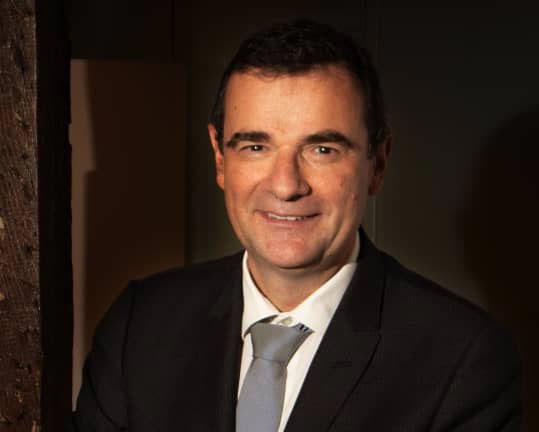
Fabio Ferrari is the Chief Executive Officer of aDryada, whose company in partnership with Ardian, recently launched the Averrhoa-Nature-Based Solutions Fund, which is aimed to deploy around N1.5 billion worth of projects and capital, mainly in emerging markets and developing countries. In this interview with Elizabeth Osayande, he spoke on Africa, its leaders, and the continent’s potential.
Who is Fabio Ferrari?
Can I say I am an entrepreneur with over 30 years of experience creating new business models without sounding pretentious? After my first successful adventures in the telecom domain, I wanted to put this skill to the service of the environment.
I did it first for air quality and the energy transition: initially focusing on air quality and the energy transition, I created Symbio in 2010, which has emerged as a prominent player in the European market for hydrogen fuel cells in the field of mobility. In my capacity as Vice-President of France Hydrogène at that time, I spearheaded the creation and development of a business model of mobility, which has since garnered adoption across France and Europe.
Since the year 2021, in collaboration with the team at aDryada, I have been utilising my knowledge to contribute towards the preservation of biodiversity. Our primary objective is to undertake the restoration of forests, and mangroves, and the preservation of biodiversity, with a specific focus on tropical regions around the globe.
We rely on an innovative business model for this, capable of attracting international investors to the large-scale projects that we are developing beyond financial engineering, and it now relies on the generation of very high-quality carbon credits. That means all our projects have three inseparable pillars – climate, biodiversity, and improving the living conditions of local populations. This also means we are aligned with the highest international standards, like the IFC PS ones for the “social” part of our projects.
Could you share your insight on biodiversity and the opportunities for Africa?
How can we attract international private investors in projects that protect and restore biodiversity? In my opinion, this is the question that we must collectively answer so that Africa’s potential in this area is revealed.
The African continent is indeed particularly rich in biodiversity. There are a quarter of the species of mammals, a fifth of the birds, and a sixth of the plants on the planet. Its ecosystems are also unique and essential for maintaining global biological diversity.
Today’s challenge is to generate international financial flows that can protect and restore such a treasure. This implies such flows must contribute to improving the living conditions of populations and provide them with activities that can coexist with the maintenance of natural ecosystems and habitats.
Creating such flows and developing large-scale biodiversity projects that are supported by the local population is precisely aDryada’s mission. We now use high-quality carbon credits to generate revenues. We are already working on the creation of biodiversity certificates to increase them in the future. aDryada is the co-founder of the Organization for Biodiversity Certificates.
Could you please tell us about aDryada’s activities in Africa and Nigeria?
Africa is a key target for us since the biodiversity potential is huge, and we know we can build impactful projects on the continent, benefiting both local populations and biodiversity. Our major project is also in Ivory Coast: Karidja aims to reforest 70,000 ha of classified forest and create agroforestry zones on 30,000.
Beyond that, we have regular exchanges with the authorities of other countries, including Nigeria. What we mean is that we deploy projects more or less quickly. The possibility, for states, of putting in place a framework that allows us, together, to attract international private investors. For reforestation of mangrove restoration projects like those we are carrying out, we, above all need a clear regulatory framework on the types of concessions and voluntary carbon credits and the possibility of generating them in Euros or Dollars.
Afterward, we limit the risks of project execution by associating ourselves with one or more local partners – and we already have a really good one in Nigeria, Noblesse Green Energy. We also involve the populations directly impacted by the project throughout its life, by creating activities and participating in the creation of the infrastructure they need (schools, hospitals, etc.). Not because we are an NGO but simply to ensure that these populations will also carry out the project. This is what we call “reducing social risk” in investor language…
You have just launched the Averrhoa Nature-Based Solutions fund. What are your ambitions for Africa?
Ardian, a world-leading private investment house, and aDryada indeed announced the launch of the Averrhoa-Nature-Based Solutions Fund on the 28th of September. The aim is to deploy around 1.5 billion worth of projects and capital, mainly in emerging markets and developing countries.
The selected projects will be large-scale ones focusing on sequestration and based on the three inseparable pillars of climate, biodiversity, and improving the living conditions of local populations. This is a prerequisite to generate high-quality carbon credits that are to be sold on the international voluntary carbon market at a good price – thus benefiting all stakeholders: investors, government, local population, and aDryada!
As an expert in this field, what are the benefits of this solution to climate change in Africa?
Beyond climate change, the benefits of our projects are threefold: environmental, economic, and social. We are convinced considering the three together is a prerequisite to be impactful from a long-term point of view.
At the environmental level, we are notably participating in the reconstitution of the forest cover, with an expected impact on the level of rainfall and biodiversity restoration. We also offer States the possibility of ensuring that the carbon credits generated by our projects are used to achieve their climate objectives and their National Determined Contribution.
At the economic level, we allow private investments to reach often neglected rural areas and create of new activities for the local population. We notably remunerate people for planting trees, monitor their growth, and protect the forest, but we also initiate new activities and train them for new professions.
Finally, to create such activities and improve the livelihoods of populations in the long term, we need new infrastructures (schools, hospitals, etc.). So, we participate in their financing.
Considering success on climate change requires the support of local populations – so that they do not cut the trees – no doubt: the three kinds of benefits should always go together…
Can biodiversity projects generate significant economic income for African countries and thus act as a growth accelerator?
Yes, they can, without the slightest hesitation, but on two conditions.
The first one is that African countries create a carbon credit frame that can reassure international private investors on major issues such as the ownership of those credits, the level of taxation, or the possibility of entering into public-private partnerships on concessions of at least 40 years. This would incite investors to finance such projects since, to date, the only remuneration tool for biodiversity projects is high-quality carbon credits (thus including a biodiversity component).
However, the voluntary carbon market in Africa is at a crossroads. On the one hand, certain countries – like Nigeria! – are working to establish a regulatory framework. On the other hand, certain announcements made by leaders during the African Climate Summit are likely to block the development of attractive projects. I am thinking in particular of the wish expressed by certain countries to retain 50% of carbon revenues or to require developers to allocate more than 40% to local communities. This market is an international one and these propositions could lead to an uncompetitive carbon credit price.
This is not to dispute the need for redistribution – again, projects that fail to include communities in their development and raise their standards of living are doomed to failure. It is also normal to return a share of carbon revenue to the country, as long as the balance found with the tax levels allows the profitability of the model.
Simply, these announcements result from negative assessments often made on REDD+ type conservation projects, in which the required investment is low (less than 200 euros/ha, compared to more than 1,500 in reforestation projects), where the credits generated are sold at low prices due to the quality being difficult to prove, and for which there is less need for international private investors. Applied to sequestration projects where investments are quite high, it is necessary to attract infrastructure private investors, they are just… counterproductive.
The framework has to be clear, simple, and bankable. This is, in my opinion, the essential prerequisite for Africa to be able to get the most out of the carbon market in the short term.
Then, I feel African countries should be more involved in the definition of biodiversity credits – since the biodiversity treasury is mainly here, not in Europe! Numerous initiatives are emerging to define such credits – and aDryada is a co-founder of a major one, the Organization for Biodiversity Certificates. Experts helping in the methodology, and companies wishing to test such credits in their countries… are welcome!
What are the main obstacles to carbon credit projects in Africa today?
As I previously said, we must clearly distinguish REDD-type emissions reduction projects (forest protection) from projects sequestrating CO2 from the atmosphere – such as the forest and mangrove restoration projects that we are carrying out.
In the first case, there is no “obstacle”, except the fact the quality of the carbon credits that are generated is difficult to prove, which explains why their value is very low on the market (less than $5).
In the case of sequestration projects, the main obstacle is the absence, in many countries, of a regulatory framework that should reassure international investors on major issues such as the ownership of carbon credits, the level of taxation, or the possibility of entering into public-private partnerships on concessions of at least 40 years. But I do not doubt that such a framework will be put in place quickly: the environmental and economic potential is too important to remain unexploited!
What types of North/South partnerships should African countries set up to integrate the “green” component into major development projects?
Many African countries have a strong potential for “green” income from a very specific type of infrastructure project: reforestation and restoration of mangroves.
On these projects, the financing method can be comparable to that put in place for the construction of highways or airports; for example, international private investors take the investment risk during the construction phase. They then earn part of their money through the sale of carbon credits on the voluntary market when the forest begins to generate them (which is equivalent to the toll on a highway).
The advantages for the host country are numerous: not only does it not have to go into debt with international donors – which it often has to do for major infrastructure projects – but it also funds local economic development. and the reconstitution of its forests by foreign private funds.
Disclaimer
Comments expressed here do not reflect the opinions of Vanguard newspapers or any employee thereof.