Odimegwu- Ojukwu
By Rotimi Fasan
THE last couple of weeks have been period of obituaries in Nigeria. Two prominent Nigerians who had in their different ways transformed the political and professional landscape of the country passed on.
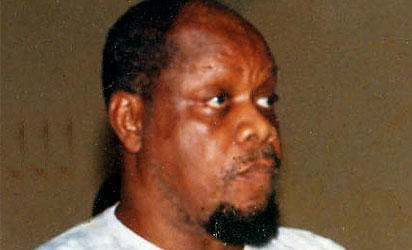
The passing of former leader of Biafra and Igbo scion, the Ikemba Nnewi, Dim Chukwuemeka Odumegwu Ojukwu had been reported severally in the press and might have not been totally unanticipated. His protracted battle with stroke had been front page news for months following his hurried transfer abroad for medical attention.
So long was the Ikemba’s battle with ill-health that in the course of it his wife, Bianca, had to return home to take up a political appointment in the Jonathan administration.
Other than just staying idly in the UK while her husband remained under close medical watch there was, perhaps, little else Mrs. Ojukwu cold have done. A prominent beauty queen, her forte couldn’t possible be medical science. Thus when the end finally came for the famous face of Biafra, she would apparently get the news second hand like the rest of Nigerians. Since the exit of Dim Ojukwu the eulogies have not ceased and there appears now what seems like a struggle for the crown of the best crafter of epithet for the deceased.
The Ikemba was distinguished for his very deliberate manner of speech, a precision in language usage that was marked by careful observance of the rules of elocution which, perhaps, is what some Nigerians call his ‘Queen’s English’. Whether Queens English or something else we cannot yet put a name to, the point is that the Ikemba had a way with words.
And even as more eulogists emerge to cloud the airwaves with their rain of praises, there is none yet to match in degree of preciseness the Ikemba’s own description of Chief Obafemi Awolowo, way back in 1987, as the ‘best president Nigeria never had’. Some people thought this was a tongue in cheek praise of the philosopher-statesman but I cannot be persuaded of the truth of such claim.
Even though they had both belong on different sides of the struggle to define the direction Nigeria should go in the wake of the Civil War crisis, I’m inclined to read Dim Ojukwu’s comment as genuine words of praise, even admiration, from one political actor on another.
But, alas, not one of the heaps of eulogies that have been poured on the memory of Chief Ojukwu in this age of philistines rises beyond the level of verbiage. The common denominator by way of praise of this Nigerian leader is the claim that he would be sorely missed and that he died just when he was most needed. Drab, drab! I hope some of us won’t begin to throw up soon upon hearing the cloying words that have become a regular fare on occasions like these when a prominent face passes.
No doubt a highly polarising figure, especially in the wake of his role as the leader of Biafra between 1966 and 1970 when the War ended, through his period of exile in Ivory Coast and eventual return, dangerously, to politics in 1982, Chief Odumegwu Ojukwu elicited the extremes of emotions even though he somewhat lived down his war time reputation in a post- Civil War Nigeria.
Maybe it was for the way he was able to reintegrate himself into the Nigerian system that Yakubu Gowon, the one Chief Ojukwu liked to call by his not well-known name, Jack said he died a Nigerian. But while the Ikemba was passionately loved by many, many also spoke of him with passionate distancing, if one could put the point finely. As a little boy growing up, even before one came to understand the intricate details of the events that had given Chief Ojukwu his name in the annals of Nigeria, a lot of myths surrounded his person. He was described in the most frightening terms. Sometimes scurrilous remarks were made about his bald pate. But not one description failed to take the Chief seriously. With his wide, prominent eyeballs and heavy beards, he could match Achebe’s description of Okonkwo in Things Fall Apart and he commanded both attention and respect from friends and foes alike.
A revolutionary, if ever there was one, his prominent background did not stop him from taking to the military at a time when the profession was the refuge of those with no certain future. He was certainly the last of those Igbo leaders with a commanding hold on the imagination, not only of the Igbo but also of Nigerians of other ethnic backgrounds.
If the passing of the Ikemba was anticipated, the same cannot be said of Chief Alex Ibru, publisher of The Guardian.
There was no news that he had been ill. Never one on the loud side, he mellowed even further after the unfortunate attempt on his life by goons of a regime in which he served Nigerians as Minister of Internal Affairs. The gospel of a transformed Nigeria that he had preached through the pulpit of The Guardian was one he would take to the ecumenical centre he founded after leaving government.
There had been prominent media houses in Nigeria before 1983 when The Guardian joined the fray but the influx of Nigerian academics, in a way that was to give Nigerian journalism a prominent intellectual bent, occurred at The Guardian and this could be traced to the foresight of Chief Ibru in hiring an intellectual in the mold of Stanley Macebuh. Several of those who joined Macebuh at The Guardian never went back to the academia, others did after many years. And people familiar with Chief Ibru have attributed the leading role that the paper has played and will, hopefully, continue to play to the liberal cast of its founder’s mind. The face of Nigerian journalism was in a sense changed by The Guardian and there is another sense in which it could be said that we have closed the page on that era of print journalism brought to its apogee at The Guardian. The world over the future of print journalism looks uncertain and, although, Nigeria appears to present a peculiar case in which more papers appear on the newsstand there is every reason to believe that The Guardian era cannot be repeated twice just as no newspaper has been able to replicate the magic spawned at the Daily Times under Babatunde Jose.
When Nigerians talk of journalism in many years to come they would certainly remember there once lived a businessman, although lacking the reputed power and ruthlessness of a Rupert Murdoch, nevertheless commanded the attention of Nigerians, kings and plebeians alike, in a manner that calls to mind the legendary status of the erstwhile publisher of News of the World.
Disclaimer
Comments expressed here do not reflect the opinions of Vanguard newspapers or any employee thereof.