By Ishola Balogun
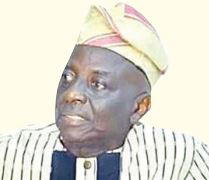
Senator Adelere Oriolowo, a one-term senator who represented Osun West senatorial district in the Upper Chambers of the National Assembly, (2019-2023), in this interview with Saturday Vanguard said state governors should look beyond distributing paltry sums of money to citizens from the N5 billion palliatives sent to each state by the federal government, saying it is not sustainable.
Excerpts:
Agenda for the Ministers
The president has given them the mandate, they must deliver. You know the President cannot be everywhere, the Ministers are the representatives of the President, who has the mandate of Nigerians as elected President to deliver on his promises.
They will have to deliver. But I also wish to say that things have gotten so bad that it may have to take some time for the benefits of all these reforms to manifest. It is quite easy to destroy something, but it takes a longer period of time to rebuild what has been damaged.
It is like an injury; you can have an injury within a twinkle of an eye, but the bruises will take some time to heal. No doubt, the agenda before them is to make life better for Nigeria within their various ministries. My submission is that we should give the president and his ministers more time to fix the hardships in the country.
On N5 billion palliative to each state
I am averse to distributing money, I have never liked the idea, but my understanding of that money going to each of the states is like a loan. It is left for each of the states to utilise the money in such a way that it will produce a real palliative that will endure for a long time.
They should all think about and use that money wisely. It’s not free money, free money is the bane of our development. If you share between N10,000 to N20,000 to each of the poor, it will not last beyond three days under these present harsh economic realities. So, what happens to them after that? What will they do to cushion the effect of the present situation after then? Will you distribute another amount of money?
Sustainable ideas like investing massively in agriculture that will not only put food on their tables but also ensure food sufficiency; establishing industries that will create jobs and employ the children of the poor, or investing in their private businesses to make them grow economically. There is no limit to these sustainable ideas, not distributing meager money that will not stand the test of time.
Better form of palliatives
After I left the Senate, I went into agriculture full time, and we are training youths in different areas of agriculture, including animal husbandry, cocoa growing, crop and fish farming, among others. I can’t imagine the benefit of this if it is done on a large scale where the government provides a certain number of youths with 1000 hectares of land in each of the local governments as well as other materials for doing this. Chief Obafemi Awolowo did this with the farm settlements in those days.
It is more or less like community farming, and the idea came from the Israel-model. With this, they have been able to grow from an agricultural base to an industrial base. So, if we are able to cut out some of our vast land areas for agriculture development in each local government, get some youths, empower them with farm implements and other kinds of assistance not necessarily in cash, give them hope, and help them become great through this, it will work out.
You also have to build a processing centre where these products will be processed and ready for both local consumption and export. There must also be favourable export policy that will help the business to grow. It will also be monitored by standard organisation. Unfortunately, we have various institutions today, but they are not functioning. There is no aspect of our challenges that we don’t have institutions that can address, but they are not functioning, the few ones that you might point at are not working optimally.
The bad side of this is that we have lots more that are not even recognised by law. As the chairman of Legislative Compliance, when I was in the Senate, I discovered that more than 600 establishments are taking their funding from the federal government through appropriations, yet they don’t have any legal backing. Some are also relying on obsolete laws. Yet we appropriate money for them every year. So, the issue of non-compliance with the law is everywhere.
It is not that we don’t have enough laws; compliance is the problem. It is everywhere, including you and me. My appeal to the executive is that whenever any law is made by the National Assembly, the Executive should see to its execution. It is a general thing. The creation of the Legislative Compliance Committee was as a result of the National Assembly’s desire to make sure that all the legislation was complied with.
Fixing refineries to check importation
The fixing of refineries is long overdue. We have faltered for so long by neglecting our moribund refineries. Nigeria is the only country among the OPEC countries that does not have a functioning refinery.
Even the smaller countries have at least one functioning refinery, some have two or more.
It is what the government of the day should pursue with vigour and see it to a logical end in the shortest possible time. Yes, we can have private refineries, but government refineries are important to check the excesses of the private ones.
Rehabilitation of these refineries will not only foster good and healthy competition between the privately owned and government owned refineries but will also serve as energy and crude security in line with the national oil policy. That is the way to grow.
Disclaimer
Comments expressed here do not reflect the opinions of Vanguard newspapers or any employee thereof.