By Eric Teniola
The piece last week dwelt on the requirements under the 1963 Constitution for the appointment of a minister in Nigeria. The narrative continues today without reference to the military era
ON October 18, 1979, President Usman Aliyu Shehu Shagari submitted to the Senate presided over by Dr. Joseph Wayas, the confirmation of the following list as ministers and ministers without cabinet rank. They were M. Mohammed Ibrahim Hassan (Bauchi), M. Adamu Ciroma (Borno), Mr. Isaac Shaahu and Mr. Paul Unongo (Benue), Professor Iya Abubakar (Gongola), Alhaji Umaru Dikko and Professor Ishaya Audu (Kaduna), Alhaji Bello Maitama Yusuf (Kano), Alhaji Akanbi Oniyangi (Kwara), Alhaji Ndagi Mamudu(Niger), Mrs Adenike Ebun Oyagbola(Ogun), Mr. Samuel Adebisi Ogedengbe (Ondo), Chief Richard O. Akinjide (Oyo), Mr. John Jatau Kadiya and Mr. Gorge Baba Hoomkwap (Plateau), Mr. Victor Masi (Rivers), Alhaji Ibrahim Gusau (Sokoto), Mr. D.C. Ugwu and Mr. Chimezie Ikeazor (Anambra), Professor Sunday Matthew Essang (Cross River), Mr. Amadi Emina (Bendel), Dr. Sylvester Ugoh and Dr. I.I. Maduike (Imo) and Dr. Wahab Olaseinde Dosunmu (Lagos).
Ministers with non-cabinet rank included Alhaji Ahmed Musa (Bauchi), Chief P. Bolokor (Bendel), Alhaji Asheikh Jarma (Borno), Alhaji Ali Baba (Gongola), M. Iro Abubakar Dan-Musa (Kaduna), Alhaji Bilyamin Usman (Kano), Mr. Ademola Thomas (Lagos), Chief Olu Awotesu (Ogun), Chief Mrs. J. Akinrinade (Oyo), Alhaji Ahmudu Nahuce (Sokoto), Chief E. Okoi-Obuli (Cross River), Mallam Mamman Ali Makele (Kwara), Mr. Cladius Agboola Bamgboye (Ondo) and Dr. Jakiri Igbani (Rivers).
He later fired Chief Paul Unongo and replaced him with Chief Audu Ogbeh. In the second term of President Shagari other ministers were appointed included Chief Eleazor Chukwuemeka Anyaoku (90) from Obosi in Anambra State, who later became the Secretary General of the Commonwealth from 1990 to year 2000. Chief Anyaoku married Princess Bunmi from Abeokuta in 1962.
In 1999, President Olusegun Obasanjo, appointed Ministers of State. They included Mrs Modupe Adelaja (Defence), Chief Dubem Onyia (Foreign Affairs), Alhaji Musa Elayo Abdullahi (Justice), Chief Chris Agbobu (Agriculture and Rural Development), Alhaji L. Ade Haruna Elewi (Communications), Mallam L. Tukur Batagarawa (Defence-Army), Alhaji Bello Usman (Education), Dr. Imeh T. Okopido (Environment), Mr. Solomon S.A. Ewuga (Federal Capital Territory, FCT), Senator Jubril Martins-Kuye (Finance), Dr. (Mrs.) Aminat Ndalolo (Health), Chief Lawrence Nwuruku (Industry), Mr. Garba Madaki Ali (Transport), Mr. Yomi Edu (Special Duties, The Presidency), Alhaji Ibrahim Umar Kida (Inter-Governmental Affairs, The Presidency), Dr. Mohammed Shata (Internal Affairs), Alhaji Danjuma Goje (Power and Steel), Mrs. Pauline K-Tallen (Science and Technology), Mr. Isa Yuguda (Transport), Chief Precious Ngelale(Water Resources), and Prince Vincent Ogbulafor(Economic Affairs, The Presidency).
Section 147 and 148 of the 1999 Constitution of Nigeria states that: (1) there shall be such offices of Ministers of the Government of the Federation as may be established by the President; (2) Any appointment to the office of Minister of the Government of the Federation shall, if the nomination of any person to such office is confirmed by the Senate, be made by the President; (3) Any appointment under subsection (2) of this section by the President shall be in conformity with the provisions of section 14(3) of this Constitution:-provided that in giving effect to the provisions aforesaid the President shall appoint at least one Minister from each state, who shall be an indigene of such state; (4) Where a member of the National Assembly or of a House of Assembly is appointed as Minister of the Government of the Federation, he shall be deemed to have resigned his membership of the National Assembly or of the House of Assembly on his taking the oath of office as Minister; (5) No person shall be appointed as a Minister of the Government of the Federation unless he is qualified for election as a member of the House of Representatives; (6) An appointment to any of the offices aforesaid shall be deemed to have been made where no return has been received from the Senate within 21 working days of the receipt of nomination by the Senate.
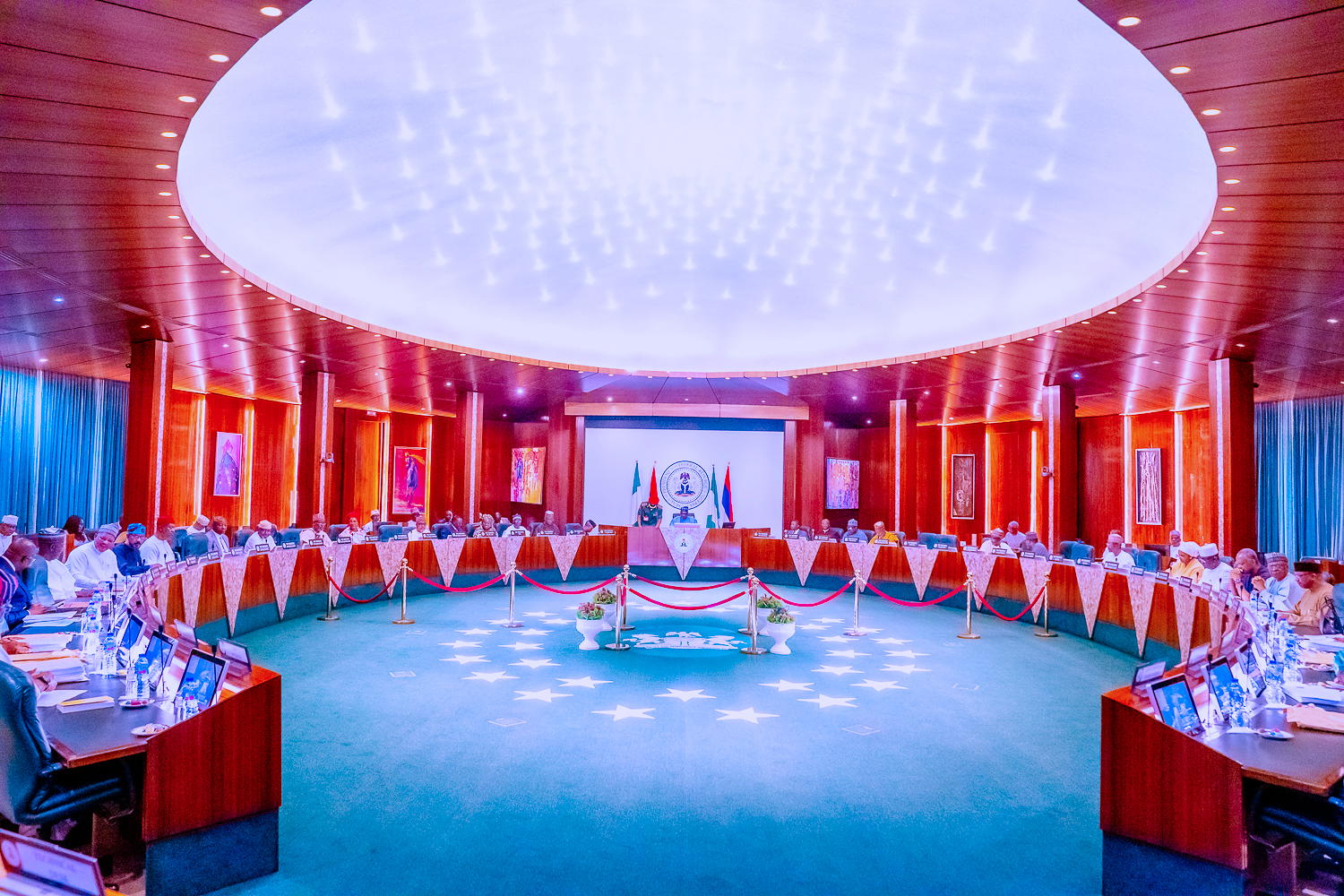
Section 148 (1) states that: “The President may, in his discretion, assign to the Vice-President or any Minister of the Government of the Federation responsibility for any business of the Government of the Federation, including the administration of any department of government. (The President has the power to assign administrative responsibility to the Vice-President or any Minister regarding any business or department of the Government.) Section 148 (2): The President shall hold regular meetings with the Vice-President and all the Ministers of the Government of the Federation. The President should have regular meetings with the Vice-President and all the Ministers in regards the following:
Section 148 (2)(a)determines the general direction of domestic and foreign policies of the Government of the Federation when it relates to the general direction of local and foreign policies of the government. Section 148 (2)(b) is on co-ordinating the activities of the President, the Vice-President and the Ministers of the Government of the Federation in the discharge of their executive responsibilities; and (meetings held in order to arrange the activities of the President, Vice-President and Ministers and in doing so, assist them in discharging their executive functions/ responsibilities.)
Disclaimer
Comments expressed here do not reflect the opinions of Vanguard newspapers or any employee thereof.