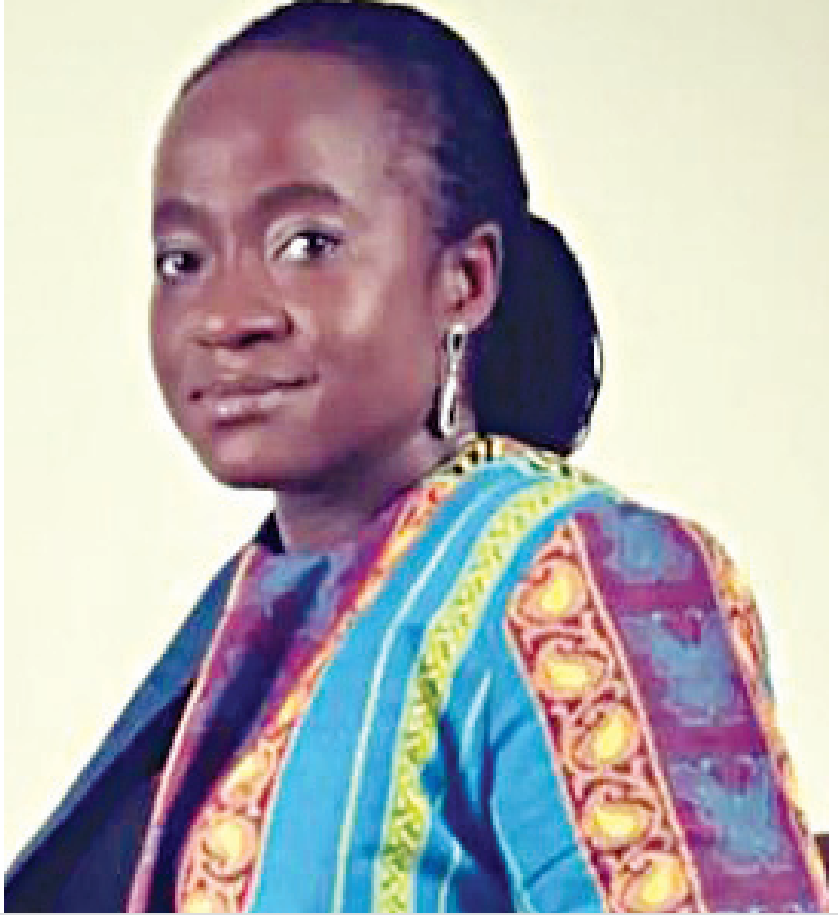
Dr. Chichi Menakaya is a UK-based Trauma and Orthopaedic Surgeon and CEO of Annomo Health, an international premium medical concierge service which provides personalised patient pathways for clients seeking international healthcare worldwide with top medical hospitals and specialists, while offering a luxury lifestyle concierge.
The award-winning Imperial College, London alumna has also worked for the National Health Service, NHS in the UK and continues to wear different hats of surgeon, researcher, collaborator, educator, mentor, founder, volunteer, leader and team player.
Many Nigerians travel overseas for medical tourism, citing lack of quality medical facilities in the country. What do you think can be done to stop it?
People need to have the free will to seek healthcare anywhere they desire, it is their health and they should be able to control it. However, if our government, private organisations and individuals modernise our existing healthcare institutions with the appropriate medical experts, Nigerians will have an easier choice.
I believe a lot of Nigerians who seek medical help abroad would rather be treated in their home countries surrounded by loved ones. At the same time, we can also welcome international medical teams who do not mind coming to Nigeria to help out, train and build with us.
The healthcare space is a global village and more than ever, healthcare collaboration is paramount to grow our own healthcare. I get countless requests from experts who want to go to Nigeria and offer their services but we must get our security right to ensure that their work is impactive.
It is no longer acceptable to just do medical missions, take pictures and then leave without continuity of care. These collaborations need to be ongoing and not just one off picture opportunities.
In Annomo Health, although our parent company is based in the UK, we recognise the importance of national impact and involvement and therefore work with doctors and allied health professionals based in Nigeria to provide a mirror service in Nigeria where possible.
We have clients whose treatments are jointly done by a professor in the UK and one in Nigeria while the patient sits in their Nigerian home and gets the best treatment surrounded by family. This is not virtual or mobile app consultations. We identify what is available in Nigeria and make up the deficit with our international collaborators.
Quite a number of countries do come to Nigeria to poach medical practitioners such as nurses and doctors. What are the implications?
The brain drain is sad but I cannot blame the doctors or nurses because unless Nigeria starts recognising that the bedrock of nations are built on health and take their doctors and nurses seriously, we will continue to experience this mass emigration. Other countries recognise the value of our health workers and therefore pay them the appropriate wages on time, give them a conducive environment and encourage their career growth.
With a population of over 200 million people, Nigeria has a doctor/patient ratio of 1:4250 against the recommended 1:600 by the World Health Organisation. This is mindboggling and distressing. The nurse/patient ratio is even worse than this.
A nation without health workers might as well pack up shop and stop existing. Medicine is a rigorous and lengthy career, so after long years of studying, the wages and living conditions need to be commensurate.
We can curb emigration if we change our priorities as a nation.
Not too long ago, Minister of Health, Dr Osagie Ehanire called on stakeholders to embrace the aftermath of the COVID-19 pandemic for strengthening the health system. Applying lessons from the pandemic, how do you think Nigeria can build a resilient health system that reflects the reality of the times?
The COVID-19 pandemic has shown much vulnerability in our global health systems. It has also made nations and people rethink how we see health and our priorities. It caused a rude shock and had profound implications on health, economic progress, trust in the government and social interactions.
If we have learnt anything, we will realise that for the first time, the entire world realised that ‘health’ controls the world. I applaud Dr Ehanire’s comments and to see this come to life, Nigeria needs to allocate more funds to our health system. These funds must be accounted for and the impact of its use clearly visible to Nigerians.
We must introduce robust clinical governance policies in Nigeria to ensure that we maintain any changes we make. There is no better time than this to build a private and public sector partnership.
As a Nigerian practising in the UK, do you face any challenges in the course of your duty?
My mother always said that when you face challenges, you must pull up your trousers and keep going. She would add that tough times never last but tough people do.
I was taught from a very early stage that challenges should not break you but build you. So I started my job as a doctor in the UK with that as foundation.
There are different challenges. First, there is the issue of acceptance by colleagues and patients. You walk into a job and as an international graduate, everyone looks at you with doubt of your knowledge and skills. I learnt very early that I do not need to convince anyone of my skills or worth and so I bent down and worked hard so that my actions answered the doubts for me.
It can be funny when I see the shock on patients’ faces when I introduce myself as their surgeon. I still get that look till today, decades later.
I just smile, reintroduce myself and focus on providing the clinical care they require.
I have been told that because I was ‘foreign’ that I would never get a job as a surgeon. I have also been told that as a woman, I am too weak to be a surgeon too. These comments are meant to introduce fear and doubts but hey, as my woman, Michelle Obama would say, ‘when they go low, we go higher.’
My father calls me his eagle and as an eagle, I do not cower in the face of challenges.
What is your opinion on the Federal Government health policies and implementation?
I am afraid we cannot talk of implementation when there are no clear health policies in Nigeria. Our healthcare needs better regulations. We need policies that make health workers and institutions accountable to citizens.
Patient-centered care is the mantra all over the world and if Nigeria doesn’t join in, we will remain in the dark ages.
We are a country of intelligent people yet we succumb to suboptimal healthcare. They leave a trail of body bags as they play pretend doctor on our loved ones. Nigerians continue to lose loved ones to these charlatans because no concrete policies are stopping these unregulated practices.
There is also no harm in asking for help from the diaspora and international medical communities.
We need to address cultural beliefs, religious ideations and then we come to the actual healthcare structure in terms of infrastructure, technology and delivery by doctors. When you see extremely intelligent people tell you that ‘witchcraft’ is the cause of sudden death or that cancer or diabetes is sent by some evil relative, you begin to understand that our healthcare is really in danger.
What does an international premium medical concierge such as yours do?
We offer health services that connect the best doctors or hospitals in a saturated healthcare market to the client based on experience, competency, efficacy, quality and at the same time, luxury. We have built a 360-degree personalized service dictated by the needs and wants of our clients.
We provide an exclusive and bespoke priority access to the world’s best doctors, hospitals and lifestyle. The stakes were high when we started, so we found the best of the best and bring them to our clients. Our doctors are experts who have honed their skills to perfection.
We have been able to create the luxury of healthcare today. Our lifestyle partners have been thoroughly vetted, understand discretion and confidentiality, and are the upper echelon in the business.
We have an inhouse dedicated concierge company that handles travel, accommodation, private education, property wealth, holidays, tailored food services and much more. Our service was born so that people concentrate on their busy lives while we sort out things that matter the most.
There is no doubt that the economy of any society determines the level of health care that individuals take. As a medical doctor, what is your advice to Nigerians in terms of making health care a priority?
I always ask why people don’t worry about the cost of designer bags or an expensive holiday or data for social media as much as they worry about paying for healthcare. Nigerians struggle to understand preventive medicine. In most people’s mind, their health is pretty good because they feel completely “well” in themselves. However, one day, they go to sleep and not wake up the next day. When the cause of death is announced to be due to a heart problem, everyone around is too perplexed to realise that a simple health screening may have meant that the deceased could have received lifesaving treatment. Still in the same family, another person would have an annoying cough and after months of self-prescribed antibiotic treatment for “pneumonia”, a reluctant visit to the doctor will reveal that that cough was Stage 4 lung cancer.
As Nigerians, we need to rethink our health priorities fast.
How do you see the future of health care in Nigeria?
I truly believe that the future of healthcare in Nigeria can be very bright. I say this because the experience of covid-19 exposed the fragility of health services all over the world and Nigeria was not left out.
I believe that the government saw clearly how it is no longer acceptable to just have looming healthcare inequalities since disease is no respecter of social status, age or tribe. We all saw how, even though people had the funds to afford things, the pandemic limited the services they had access to. It was indeed a very sad time. As nation to continue to exist, we have to upscale our healthcare delivery services and the time is now.
Sorry, I meant to say, yesterday since we are already behind most countries as it stands. It is impressive to build a nice shiny edifice of a hospital with the latest technology in every corner, but if we lack the expertise, experience or the dedication to deliver that service, then the building will lose its’ shine after a period. Nigeria has to ensure that health is rooted in our communities.
Disclaimer
Comments expressed here do not reflect the opinions of Vanguard newspapers or any employee thereof.