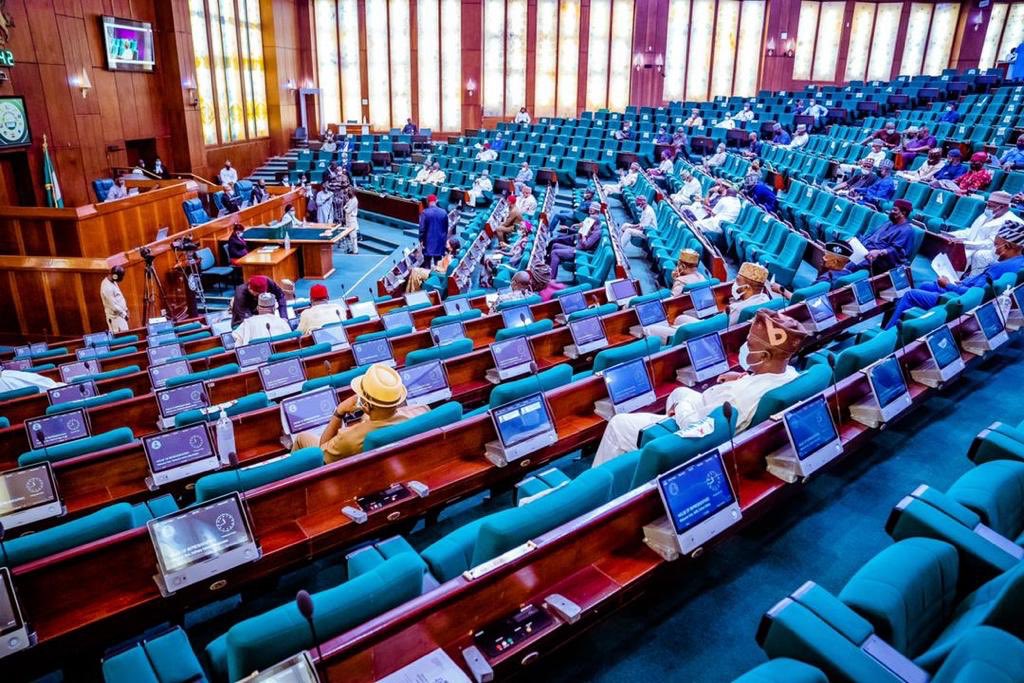
House of Reps.
By Levinus Nwabughiogu-Abuja
House of Representatives, Thursday, commenced legislative action on a bill seeking to establish a National Polytechnic Commission (NPC).
When created, the National Polytechnics Commission Bill (HB 1935) will be saddled with the responsibilities of supervising, regulating and coordinating Polytechnics education in the country.
The bill, sponsored by Hon. Doctor Farah Dagogo, Member representing Degema/Bonny Federal Constituency from Rivers State, has already scaled First Reading on the floor of the House.
As part of the functions of the proposed Commission, Section 4(1b) empowers it to ‘prepare, after consultation with all the state governments, the Polytechnics, the National Manpower Board and such other bodies it considers appropriate, periodic master plans for the balanced and coordinated development of all Polytechnics in Nigeria’.
Also, section 4(1bi) listed its development plans to include, ‘general programme to be pursued by the Polytechnics, in order to ensure that they are fully adequate to meet national needs and objectives.
Similarly, section 5(2) of the bill stated that “the Executive Secretary shall be the Chief Executive Officer of the Commission and shall be responsible for the execution of the policy of the Commission and the day-to-day running of the affairs of the Commission.”
Section 8(1) establishes a National Polytechnics Commission Fund, Section 8(3) was categorical that “disbursement from the fund shall be made in accordance with rules made undersection 23 of the Finance (Control and Management) Act and,, without prejudice to the foregoing, rule (26) of the Public Funds of the Federation (Disbursement) Rules, shall continue in force and have effect, as if made under this subsection”.
The membership of the Commission to be appointed by the President, shall consist of a Chairman and one representative each from the Federal Ministry of Education, Health and Finance and one representative from the Association of Polytechnic Rectors.
Also, six persons with wide knowledge and experience representing both private and public sector interests are to to be part part of the Commission on individual merit and nationwide basis.
A statement from the sponsor of the bill signed by his media aide, Ibrahim Lawal and made available to news men stated that other members of the Commission were expected to have academic disciplines from Agriculture, Environmental Sciences, Humanities, Social and Management Sciences, Engineering Sciences and Technology as well as Earth, Mineral and Natural Resources.
Disclaimer
Comments expressed here do not reflect the opinions of Vanguard newspapers or any employee thereof.