•Life in Nigeria now solitary, poor, nasty, brutish and short
•Why next president should come from South-East
•Only a restructured Nigeria will work
• Supports political solution on Nnamdi Kanu’s matter
•Gov. Ikpeazu has nothing new to offer Abians
By Levinus Nwabughiogu
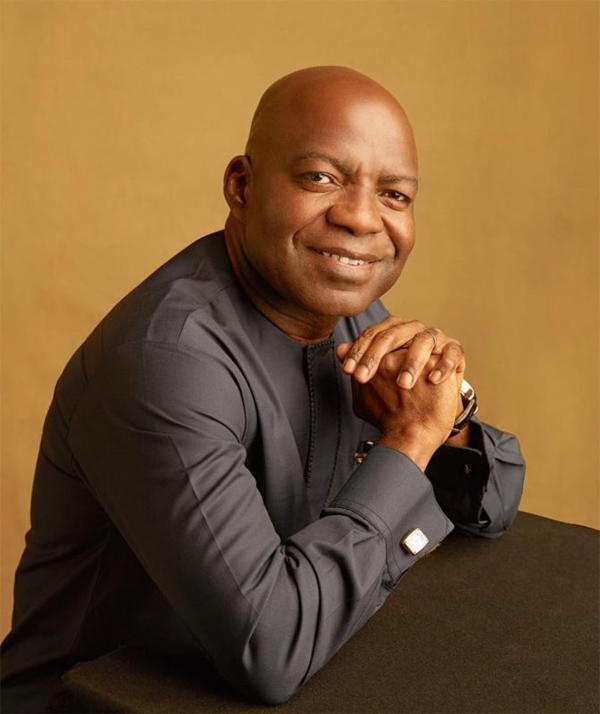
Dr. Alex Otti is an economist and politician. He contested for the governorship of Abia State in 2015. In this exclusive interview with Vanguard, he bares his mind on contemporary economic, political and social issues in Nigeria, saying that only a restructured country will work for the people.
Let’s get your view on the state of the nation
I believe the state of the nation is clear to everyone. You don’t need to be an economist to feel the impact of the challenge. However, there are two sides to it. The first is the global crisis on the back of the corona virus pandemic which shut down the world economy in 2020 and parts of 2021. As you would notice, the global economy is recovering so also the local economy with the National Bureau of Statics reporting a 2021 4th quarter GDP growth rate of 3.98 per cent. However, we still have our domestic economic challenges. Inflation is galloping at close to 16 per cent as of last month. Unemployment is at its highest level in recent times, where over one in every three people who are actively looking for work cannot find one.
Exchange rates are at their highest ever. Nigeria has since become the poverty capital of the world with close to half of our population living below the poverty line of less than N1000 per day. Matters are not helped by our poor revenue generating potential even with rising crude oil prices. It was reported that about 92 per cent of our revenue would go into debt servicing this year. This means that we may need to borrow more this year to continue to pay salaries. Insecurity has become synonymous with our country. The nation has descended to what Thomas Hobbes referred to as the state of nature where life is “solitary, poor, nasty, brutish and short.”
Given your background as an economist and former banker, would you say that the economy is doing well?
The interesting thing about economics is that it analyses implications of different courses of action. It will normally not impose on you but tells you what would happen if you chose to go one way and what will happen if you chose a different direction. With what I just said about our economy, I will leave it to readers to pass judgement as to how the economy is doing.
The Naira is on constant free fall. Does that worry you?
Ordinarily, it should not worry anyone. But in reality, it does. And this is for a whole lot of reasons. Our daily lives and livelihood are somehow dependent directly or indirectly on the value of the dollar and to a little extent other foreign currencies. Most of what we consume are imported. Even crude oil that is produced in Nigeria gets refined abroad and imported back into the country with all the distortions in terms of shipping, clearing, tariff and other avoidable costs.
- READ ALSO: How Britain, Obasanjo let Nigeria down
It is therefore understandable when we panic whenever the Naira loses value. If we were a net exporter of goods, a depreciation of the Naira wouldn’t mean much to us. However, as a net importer of virtually everything, we will continue to worry until the structure changes.
Insecurity still ravages the country. Do you think Nigeria will win the war?
In the long run, Nigeria will win. But just like J.M. Keynes said, “In the long run, we are all dead.” But that again depends on a lot of factors, ranging from fixing the economy to good governance. Sustained decline in the economy naturally goes in the same direction with insecurity. Increases in poverty rate, unemployment, inequality and the like fuel insecurity. By the time we seriously decide to deal with these monsters, insecurity would begin to decline.
President Muhammadu Buhari recently assented to the Electoral Act Amendment Bill. What’s your take on that?
That is very good news. You may know that Abia people and I are victims of the ambiguity of that Act. In 2015, Abia electorates voted for me, and I won the election. It was subsequently stolen at the state collation centre in Umuahia by the outgoing government. I proceeded to court and retrieved the mandate at the Court of Appeal which ruled that I be sworn in as governor because I proved that I won the election.
The Supreme Court, however, reversed the verdict and held that the card reader we relied on to prove that fictitious votes were brought into the collation centre was unknown to the Electoral Act. Some analysts have argued that the Supreme Court relied on technicality rather than the spirit of the law. So, this amendment cures that mischief and many others including electronic transmission of votes which would eliminate collation centres where politicians rig elections from. It is victory for democracy and sounds a death knell to election rigging. The area to now pay attention to would be to secure the electronic system against hacking and compromise.
Abia polity has been animated with declaration of governorship ambitions by some people. You are very familiar with the terrain. Do you have any intention to contest in 2023?
It is great news that more and more people are getting involved. I have always advocated for this. We need everyone to get involved in how they are governed. It was Plato that said, “one of the penalties of refusing to participate in politics is that you end up being governed by your inferiors”. For me, I started a journey in 2015 and have not got to my destination yet. I have two options: either continue until I get to the destination or go back to where I was coming from. I cannot stop midway. If I have to go back to where I was coming from, then, there wouldn’t have been any need to start the journey in the first place. The only real option open to me, therefore is to continue to my destination.
Your support base in APGA was large. But you have since left the party. Do you think such exists in APC?
Absolutely. I moved with most of my supporters. As a matter of fact, I was the one that delayed our movement to APC. Most of my supporters were ready as far back as 2019. It is also instructive to note that many of my supporters are more interested in me and what I represent than platform, even as much as platforms are important in the Nigerian political system.
How would you assess the government of Governor Okezie Ikpeazu almost seven years after?
My position about the outgoing government is in the public domain. I will refer you to the several releases that I had made in the past. I believe I have done my bit about trying to steer him on the right way to lead our people as credible opposition. His tenure is almost over. There is little or no time left for him. It is now left for Abia people and posterity to pass judgement on him
The clamour for a President of Igbo extraction in 2023 has necessitated a call on the major political parties to zone their presidential tickets to the South-East. Do you think the parties will heed the call?
The issue of a President of Igbo extraction has been on the front burner, and it is an equitable demand from Igbo as a part of the country. I doubt that there are many people that would fault that call given the arguments that are very sound and logical. While I support it, I also make bold to say that a few other things need to be done to fix our politics.
One of those is to reduce the cost of governance drastically. I have been consistent in making the point that a country that spends over 70 per cent of its budget paying salaries and a meagre 30 per cent in Capital expenditure cannot make progress. A country with such a large government at the executive and legislative levels can hardly do any meaningful thing. Again, the 1999 constitution is flawed. It needs serious overhaul to ensure fiscal federalism, a weak centre and stronger regions. I have also documented my views on this and interested readers should avail themselves of my interventions. Why do I say so? It is only a restructured Nigeria will arm government to work in the interest of the people.
Do you support the call for a political solution on Nnamdi Kanu’s matter?
I actually support a political solution on Nnamdi Kanu’s matter. I believe this would de-escalate the tension and other issues bothering on protests for self-determination. The level of insecurity in the South-East has assumed an alarming dimension as armed men have held everyone hostage. Working week has officially been reduced to four days, with Monday being observed as a work- free day.
Some people abide by the ‘sit-at-home’ order out of fear, but they observe it nonetheless. I have always been an advocate of dialogue rather than force. Granted the government has the legitimate instrument of coercion and can always use it, it was the late African American General, Collin Powell, who said, “out of all the manifestations of power, the one that appeals to me most is restraint.” I have always held the view that every war including the one recently declared by President Putin will end on the negotiation table. So, why fight at all? The best time to negotiate was yesterday. The next best time is now.
Disclaimer
Comments expressed here do not reflect the opinions of Vanguard newspapers or any employee thereof.