By Matthew Johnson
The International Press Centre, IPC, and Media Rights Agenda, MRA, have raised concerns over delays and restrictions in access to public records, warning that information gaps created by public institutions are fuelling misinformation and disinformation in Nigeria.
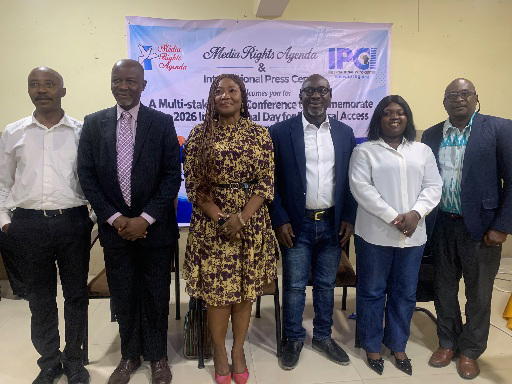
The organisations spoke in Lagos on Monday at a multi-stakeholder conference to commemorate the 2026 International Day for Universal Access to Information, with the theme, “Freedom of Information in the Age of Disinformation: Why Transparency Matters More Than Ever.”
Executive Director of IPC, Mr Lanre Arogundade, said the rapid spread of information through the internet and social media had not translated into improved access to reliable and verifiable information held by government institutions.
Arogundade said when authoritative information was difficult to obtain, delayed, incomplete or inaccessible, an information vacuum was created, allowing speculation, misinformation and disinformation to thrive.
He said the Freedom of Information, FOI, Act enacted 2011 should not be viewed merely as a legal mechanism for requesting documents from public institutions, but as an essential instrument for accountable governance, informed citizenship and credible public discourse.
According to him, although the FOI Act provides a framework for citizens, journalists, civil society organisations and other stakeholders to access information held by public institutions, the existence of the law alone was insufficient.
He said the democratic value of the legislation depended largely on how effectively it was implemented and how accessible the process was to those seeking information.
He added that access to information was useful only when citizens and journalists had the capacity to interrogate, verify, contextualise and communicate the information obtained.
“We call on public institutions to provide timely, credible and accessible information, particularly on issues of public interest, because effective communication can prevent information gaps from becoming breeding grounds for false narratives,” Arogundade said.
Speaking on the role of civil society organisations in implementing the FOI Act, the Founding Executive Director of Women Associate Research and Documentation Centre,WORDS, Mr Abiola Akiode, represented by Mr Olaniyi Olaniyan, urged journalists to use the law strategically to obtain documentary evidence and strengthen public-interest journalism.
Olaniyan said journalists should not rely solely on official statements and other readily available sources, adding that civil society organisations should promote awareness of the FOI law and support citizens in exercising their rights.
“Media must hold the agency accountable by examining how effectively it performs its statutory responsibilities, particularly in the areas of public enlightenment, misinformation, disinformation and preparations for elections.
“Legal practitioners should help clarify and defend citizens’ rights, while journalism training institutions must equip future media professionals with the skills required to turn information obtained through the FOI process into rigorous, evidence-based reports.”Olaniyan said
On the gender dimension of FOI implementation, Programme Officer at MRA, Mrs Ayomide Eweje, said universal access to information must take into consideration who was able to seek, obtain, use and benefit from public information.
Eweje advocated gender-responsive approaches to FOI implementation to ensure that the right to information was meaningful to different groups within society.
“There should be statistics showing the gender of people seeking information as part of efforts to combat misinformation,” she said.
Mrs Anikeade Treasure, Executive Director of Illuminate Nigeria Development Network, said newsrooms should establish regular FOI workflows, with investigative desks tracking requests relating to public procurement, budget implementation, government projects and regulatory decisions.
She called for stronger authentication of media content, including the use of technical measures that could help audiences distinguish original reports, photographs, audio and video from manipulated material.
“15 years after the enactment of the FOI Act, gaps in implementation, bureaucratic delays, poor record management and limited awareness continue to restrict citizens and journalists from obtaining information held by public institutions.
“ After requesting for public information through FOI media practitioners gets often delayed after seven working days.
“journalists should use FOI requests to obtain documentary evidence instead of relying solely on press releases, social media posts or unofficial sources. Period of time delays in requesting information should be addressed.
“News organisations should also strengthen media literacy by regularly educating audiences on how to identify manipulated content, cloned newspaper pages and other forms of digital deception.”Treasure said
Mr Alimi Adamu of Principal Partner, Adamu and Adamu & Co. A legal practitioner said lawyers had a critical role to play in helping citizens enforce their right to information when public institutions unlawfully denied access.
He urged courts to provide greater clarity on issues surrounding exemptions, timelines for enforcement, compliance with judgments and the liability of public officials for wrongful denial of information.
He maintained that transparency should not be treated as an end in itself, stressing that information must be accessible, usable and capable of enabling citizens and institutions to hold public authorities accountable.
He said judicial enforcement under the FOI framework could be difficult for ordinary citizens, journalists and civil society groups to navigate without legal assistance, and called on lawyers to provide more pro bono services to those seeking to enforce their rights.
“Judicial decisions had helped clarify aspects of the FOI Act, significant challenges remained in translating the law into effective access to information.
“Increased scrutiny of the National Orientation Agency, NOA, over its role in public enlightenment and the fight against misinformation and disinformation.”Adamu said.
Disclaimer
Comments expressed here do not reflect the opinions of Vanguard newspapers or any employee thereof.