By Nnasom David
Government officials, academics, civil society leaders, development practitioners, young people and rural community representatives have called for a fundamental shift in Africa’s rural development approach, urging stakeholders to move away from short-term projects towards sustainable systems that can withstand funding changes and political transitions.
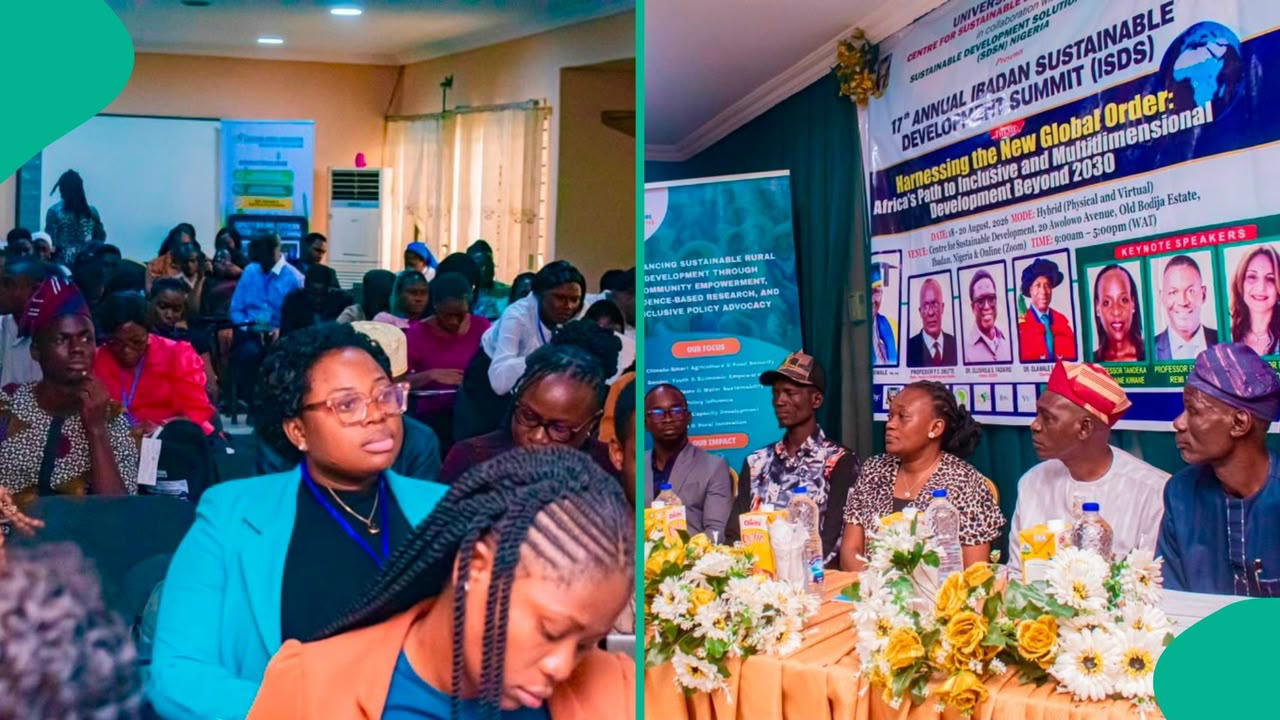
The call was made at the Rural Development Forum, organised by the Rural Nurture Initiative (RNI) and the African Rural Development Network (ARDN) as a side event of the 17th Annual Ibadan Sustainable Development Summit held by the Centre for Sustainable Development (CESDEV), University of Ibadan, in partnership with the Sustainable Development Solutions Network (SDSN) Nigeria.
The hybrid forum, themed “Building Africa’s Rural Future Beyond the Sustainable Development Goals,” attracted about 300 participants from Nigeria, Zimbabwe, Ghana, Cameroon, Somalia, Brazil, the United States and other locations.
Speaking at the event, Founder and Executive Director of RNI, Mrs Damilola Olajubutu, said the forum was timely as the 2030 deadline for achieving the Sustainable Development Goals (SDGs) draws closer.
Olajubutu noted that while the SDGs may come to an end, rural Africa would continue to exist, with millions of people living, working and pursuing their ambitions in rural communities.
She challenged participants to reflect on “what kind of rural Africa are we building beyond the SDGs,” stressing the need to replace temporary interventions with lasting development systems where rural communities are recognised as partners, leaders and co-creators.
Delivering the keynote address on behalf of the Oyo State Commissioner for Agriculture and Rural Development, Barr. Hon. Olasunkanmi Olaleye, the Director of Rural Development in the ministry, Mr Lekan Egunbiyi, highlighted government efforts aimed at improving agricultural productivity and rural livelihoods.
He listed interventions including subsidised fertilisers and agricultural inputs, agricultural loans, tractorisation services, livestock development programmes and vaccination initiatives.
During a panel session on sustaining rural development beyond political administrations, Egunbiyi advocated a bottom-up, felt-need approach, where communities identify their priorities and take ownership of development initiatives.
He explained that programmes built around community needs and ownership are more likely to receive institutional support and survive beyond the administrations that introduced them.
A Senior Lecturer in the Department of Agricultural Extension and Rural Development at the University of Ibadan, Dr Oluwaseun Adeleke, called for a transformation of agricultural extension approaches from top-down models to systems that begin with the realities of rural people.
Adeleke stressed the importance of engaging communities directly, understanding their challenges and making decisions with them rather than for them.
She also highlighted the value of indigenous knowledge, noting that emerging solutions such as digital agricultural extension should complement existing local practices rather than disregard them.
The General Manager of the Oyo State Community and Social Development Agency, Mr Salau Jelili Olaniyi, shared the agency’s community-driven development model, where communities identify their needs and receive support to implement projects themselves.
Olaniyi called for wider adoption of community-driven approaches across Nigeria’s three tiers of government, citing the National Community Driven Development Policy as a framework for strengthening grassroots participation.
Olajubutu, who also serves as Principal Coordinator of ARDN, urged development actors to rethink the relationship between funders, non-governmental organisations and rural communities.
She argued that development financing often gives funders significant influence over programme priorities, timelines and measures of success, leaving communities with participation but limited decision-making authority.
“So they can have participation without necessarily having power,” she said, calling for a transition “from consultation to community agency.”
She advocated greater involvement of rural communities in programme design, budgeting, implementation, monitoring and evaluation, while urging NGOs to serve as facilitators that connect resources to genuine community priorities.
Olajubutu also called for flexible funding models capable of responding to local realities instead of forcing communities into fixed project structures.
Founder of the Sustainable Peace and Leadership Initiative (SUPLIN), Mr Adebisi Michael Oladeji, focused on youth participation, calling for practical opportunities that expose young people to agriculture and rural development.
He suggested stronger links between students interested in agriculture and rural communities to provide practical experience and encourage youth involvement in the sector.
Representatives of rural communities also contributed to the discussions, with Mr Ali Jibril, Chairman of the Irewolede Farmers’ Association in Gbedun, Ona-Ara Local Government Area, and Mrs Kudirat Abdullateef, a female representative of the association, highlighting challenges faced by farmers.
Abdullateef emphasised the importance of farmers to national development, stating that “no farmer, no nation.”
She called for continuous farmer training and empowerment, while raising concerns about farm destruction, poor storage facilities and post-harvest losses.
She also criticised the practice of engaging communities only for data collection without sustained follow-up support, urging development organisations to provide tangible outcomes after gathering information.
Jibril called for development interventions to reach genuine farmers and address the realities of rural communities, while stressing the need to prepare young people in rural areas for active participation in agriculture.
The forum concluded with the adoption of the Rural Development Forum Communique: A Declaration of Africa’s Rural Priorities for the Post-2030 Agenda.
The communique identified eight priority areas, including moving from projects to systems, strengthening community agency, ensuring financing reaches grassroots communities, placing women and young people at the centre of rural transformation, valuing indigenous knowledge, improving data and evidence systems, strengthening local institutions and partnerships, and ensuring rural communities have a voice in shaping the post-2030 development agenda.
The declaration urged governments to integrate rural development systems into planning and budgeting, called on development partners to align funding with community priorities, encouraged civil society organisations to pursue community-owned programmes, and urged academia and the private sector to support evidence-based rural transformation.
RNI and ARDN said they would share the communique with policymakers and stakeholders, develop a policy brief from the forum’s outcomes and continue discussions on sustainable rural development.
The event also featured contributions from traditional rulers, academics and government officials, including Kabiyesi HRM Oba Rev. Ademola Olugbile Folakanmi, Makuuledoye II, Alado-Ado Awaye, Oke-Ogun; Prof. Ayoade Adenike of Ladoke Akintola University of Technology (LAUTECH); Engineer T.H. Amuda, Oyo State Director of Agricultural Engineering Services; and Prof. Kola Farinloye of Canterbury Christ Church University, United Kingdom.
The panel discussion was moderated by Mr Godwin Ebiloma, Nigeria Country Manager of RNI, while Mr Ayodeji Oladimeji, Deputy Executive Director of RNI, presented the draft communique for adoption.
The forum’s central message was that Africa’s rural future cannot rely on temporary projects but must be built on sustainable systems, stronger institutions, grassroots financing and communities empowered to shape the development that affects their lives.
Disclaimer
Comments expressed here do not reflect the opinions of Vanguard newspapers or any employee thereof.