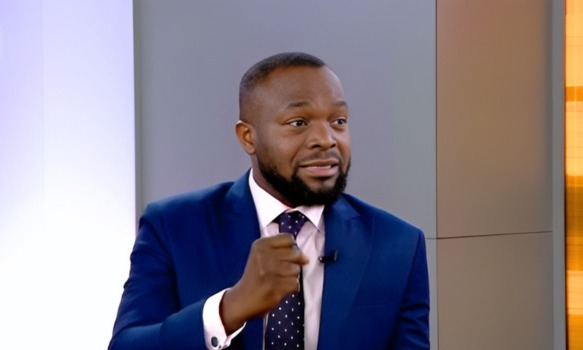
Minister of Communication, Innovation and Digital Economy, Bosun Tijani
…For some, he should sit down at home, face telecom services
…Nigeria not an island, others justify trip
By Juliet Umeh
As Nigeria grapples with persistent telecommunications challenges, mixed reactions have continued to trail the Minister of Communications, Innovation and Digital Economy, Bosun Tijani, who is currently in Geneva, Switzerland, attending the 2026 session of the International Telecommunication Union, ITU Council.
While some industry stakeholders argue that the minister should remain in the country to tackle worsening network quality and infrastructure gaps, others insist his participation at the global forum is necessary, stressing that Nigeria cannot operate in isolation.
The meeting, which began on April 28 and will run through May 8 at the ITU headquarters in Geneva, places Nigeria in a prominent global position, with Tijani serving as Chair of the Council for the 2025–2026 term, a role the country has not held in nearly five decades.
Despite the prestige attached to the position, concerns have emerged within the telecoms industry over the timing of the trip, given the scale of challenges facing operators and consumers in Nigeria. Critics argue that with persistent service disruptions, rising tariffs, and infrastructure setbacks, the minister’s presence is needed at home to drive urgent interventions.
The ITU, a United Nations specialised agency with 194 member states, oversees global telecommunications standards and development. Its 48-member Council, of which Nigeria occupies one of Africa’s 13 seats, is responsible for administrative oversight, including budget approvals, operational planning, and supervision of key sectors such as radiocommunication, standardisation, and development.
Industry analysts who spoke anonymously to Vanguard note that the Council’s work is largely technical and administrative, traditionally handled by senior regulatory officials rather than cabinet-level ministers. Observers point to the Nigerian Communications Commission, NCC, particularly its technical leadership, as capable of representing Nigeria at such engagements.
Meanwhile, the absence of the minister comes at a time when Nigeria’s telecom sector is under pressure. Broadband penetration remains below the 70 percent target set under the National Broadband Plan 2020–2025, hovering around 50 percent as of late 2025.
Operators continue to grapple with frequent fibre cuts, estimated at between 30 and 40 incidents daily, alongside unresolved right-of-way charges across states and rising operational costs driven by foreign exchange volatility. Consumers have also faced increased data tariffs, further raising concerns about affordability and access.
However, not all stakeholders share the view that the minister’s presence in Nigeria is indispensable at this time.
Speaking with Vanguard, Group Head, Marketing and Communications at Open Access Data Centres, Mr Obinna Adumike, defended Tijani’s participation at the global forum.
“I don’t think there is anything wrong with the Minister attending the ITU,” he said. “Nigeria is not in a crisis situation that requires his constant physical presence. The role of the Minister is largely administrative, regulatory and policy-driven.”
According to him, “the telecommunications sector is predominantly driven by private sector players, while government agencies provide policy direction and regulation. “His physical presence in Nigeria 24/7 does not necessarily determine the sector’s performance. What matters is whether he is effectively carrying out his responsibilities, regardless of location,” he added.
Adumike further noted that international engagements such as the ITU Council offer opportunities for collaboration and learning.
“Attending forums like the ITU provides opportunities to build relationships, attract investment and learn from countries that have successfully developed their telecom infrastructure. These are critical for initiatives like Project BRIDGE, which require funding and global partnerships,” he said.
He stressed that exposure to global best practices remains vital to addressing local challenges. “I would be more concerned if the Minister remained in Abuja without actively engaging internationally. Exposure to global best practices is critical for solving local challenges,” he added.
President of the National Association of Telecoms Subscribers, NATCOMS, Mr Adeolu Ogunbanjo, said Nigeria must continue to participate actively in global telecom engagements.
“Nigeria is not an island. We must participate in whatever is happening globally,” he said.
“We have the population and the market size, and we must leverage platforms like this to bring back gains that will improve telecom services for Nigerians.”
He expressed optimism that outcomes from the engagement would translate into better service delivery. “The idea is to ensure that whatever the minister gains from such engagements will be applied to improve the quality of services back home,” he added.
The Geneva trip adds to a growing list of international engagements by the minister, including participation in high-level events during the United Nations General Assembly in New York and other global technology forums. While these engagements are considered important for Nigeria’s digital diplomacy, some stakeholders argue that their impact has yet to be fully felt locally.
Disclaimer
Comments expressed here do not reflect the opinions of Vanguard newspapers or any employee thereof.