By Nwafor Sunday
The Italian government, in collaboration with six leading universities, has expanded efforts to strengthen Africa’s research capacity through a multi-country initiative aimed at empowering early-career academics and fostering long-term scientific collaboration.
The programme, known as Science Hubs for Advanced Research and Education with Africa (SHARE_Africa), targets researchers across 10 African countries, addressing long-standing structural barriers that have limited the continent’s contribution to global knowledge production. Despite a growing academic population, Africa currently accounts for just 1–2 per cent of global scientific output, reflecting persistent challenges including limited funding, weak infrastructure, and fragmented research systems.
The initiative is coordinated by the Italian Higher Education with Africa Foundation, established in 2019 with support from the Italian Ministry of Universities and Research. Its founding members include University of Bologna, University of Florence, Politecnico di Milano, University of Naples Federico II, University of Padua, and Sapienza University of Rome.
Backed by funding from the European Union under the Next Generation EU framework and aligned with Italy’s National Recovery and Resilience Plan, SHARE_Africa is designed to deliver high-quality, internationally recognised education while strengthening institutional ties between African and European universities.
At its core, the programme adopts a transnational education model, combining academic training with practical, interdisciplinary learning tailored to Africa’s development challenges. It focuses particularly on early-stage researchers, positioning them to drive long-term impact within their home institutions and national systems.
The initiative builds on earlier efforts by the IHEA Foundation, which deployed virtual learning during the COVID-19 pandemic to support academic continuity across 30 universities in 13 African countries. However, SHARE_Africa goes further by institutionalising collaboration through structured training programmes and joint research design.
Central to its implementation are six Blended Executive Programmes (BEPs), each aligned with global development priorities such as sustainability, health, energy, and food systems. These programmes integrate the objectives of the European Commission’s Global Approach to Research and Innovation with the African Union’s Agenda 2063 and the AU–EU Innovation Agenda.
Among the flagship courses is Cultural Heritage and Sustainable Tourism, led by Sapienza University of Rome, which trained participants in leveraging cultural assets for sustainable development, with a focus on Tunisia and the broader North African region.
Another programme, Sustainable Business for New Challenges, delivered by the University of Florence, provided interdisciplinary training in sustainability, research design, and scientific publishing to researchers from Morocco, Ethiopia, Tunisia, and Algeria.
In the agriculture sector, the University of Bologna led a programme on Precision Agriculture and Sustainable Food, equipping participants with tools to tackle food security and environmental sustainability challenges across diverse African contexts.
Water resource management, a critical issue across the continent, was addressed through a programme led by the University of Naples Federico II, which trained participants from nine countries, including Nigeria, Tanzania, and Rwanda, on integrated and locally adaptable solutions.
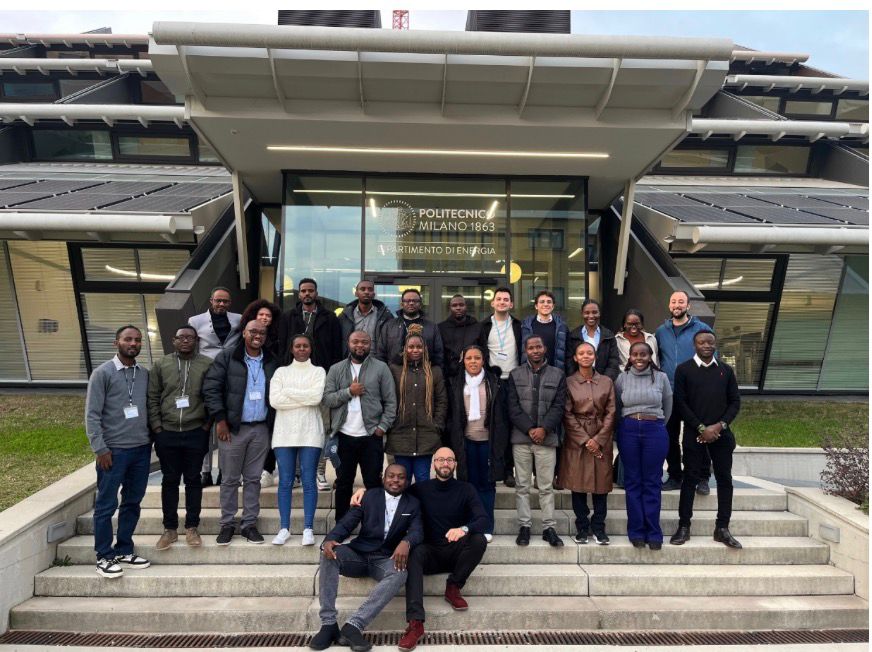
Energy and geopolitics formed the focus of a course by Politecnico di Milano, which explored sustainable energy systems within the context of global uncertainty. The programme emphasised Africa’s strategic position in the global energy transition, given its vast natural resources and persistent energy access gaps.
Meanwhile, the University of Padua led a multidisciplinary programme on One Health and Global Health, equipping participants with the knowledge to address complex public health challenges through integrated, science-based approaches.
In total, the SHARE_Africa initiative has trained over 120 researchers across countries including Kenya, Ethiopia, Côte d’Ivoire, Mali, Nigeria, and Algeria. Beyond training, it has facilitated the emergence of a network of scholars and institutions engaged in collaborative research and knowledge exchange.
Analysts say the initiative represents a shift from fragmented academic partnerships towards more structured and equitable collaboration models. By focusing on capacity building within African institutions, the programme also seeks to address the long-standing issue of brain drain, enabling researchers to build sustainable careers locally.
Looking ahead, the IHEA Foundation plans to expand its engagement through the development of multi-level academic curricula in partnership with African universities. These efforts aim to deepen institutional integration and ensure that the gains from SHARE_Africa translate into long-term, systemic improvements in research and higher education across the continent.
As global challenges such as climate change, public health crises, and food insecurity become increasingly complex, initiatives like SHARE_Africa underscore the growing importance of cross-continental collaboration in generating locally relevant, globally impactful solutions.
Disclaimer
Comments expressed here do not reflect the opinions of Vanguard newspapers or any employee thereof.