By Chukwuma Ajakah
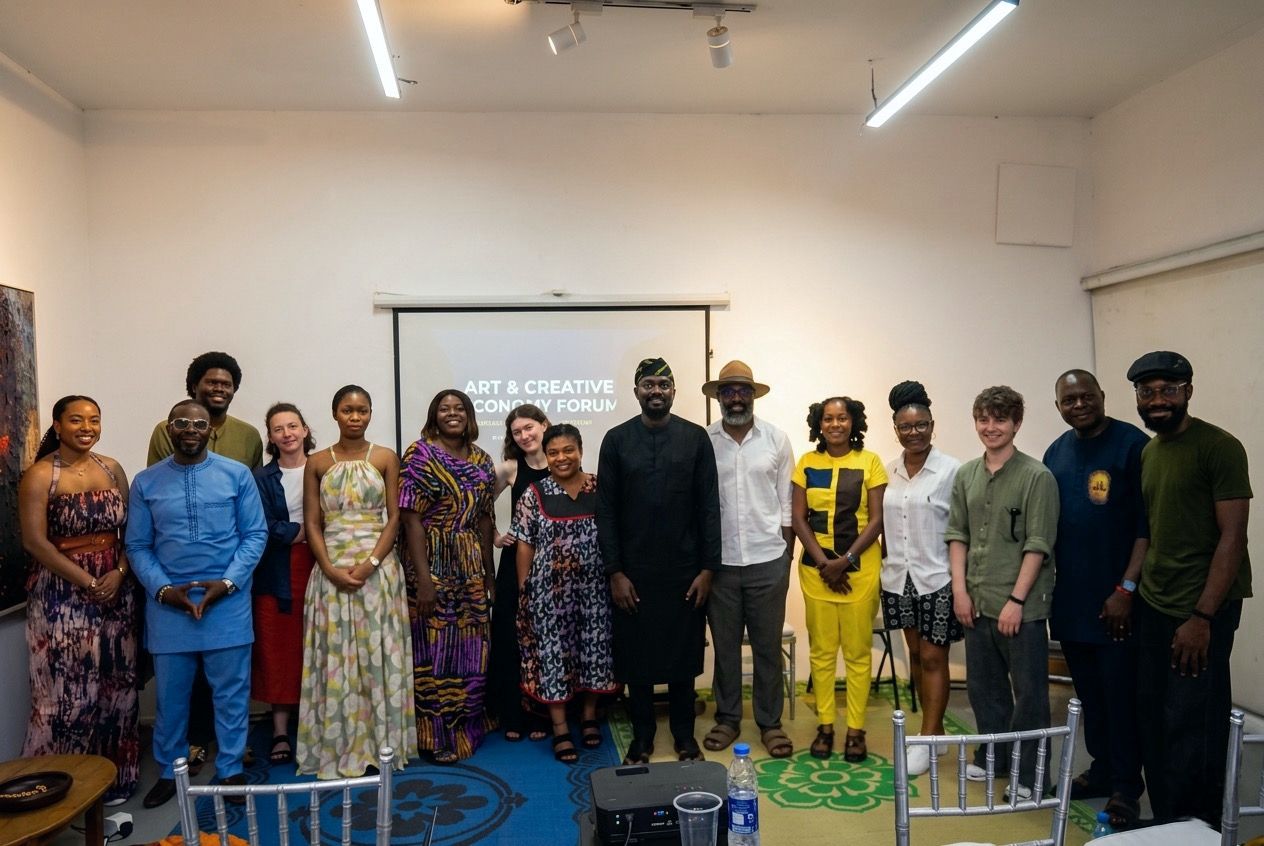
Digital Benin, an online platform documenting royal objects looted from the Benin Kingdom in 1897, was introduced to a Lagos audience of artists, curators, and cultural researchers at Kokopelli Gallery on Sunday, May 3, 2026, in a session that opened wider conversations on restitution, digital access, and the ethics of documenting African heritage.
Mr. Dare Herald, Director of Kokopelli, gave the welcome address, introduced the Center For Black And African Arts & Civilisation (CBAAC) team, the Digital Benin team, and set the tone of the conversation.
Themed “Digital Benin: Digital Heritage at the Intersection of Culture, Data and Practice,” the gathering featured a presentation of the platform alongside research tools developed to support documentation, interpretation, and access to cultural knowledge.
Discussions centred on digital heritage at the intersection of culture, data and practice, and on how digital infrastructures are reshaping the ways cultural histories are accessed and shared.
Digital Benin brings together historical photographs, documentation materials, and records of royal objects taken from the Benin Kingdom during the British invasion of 1897 and globally dispersed until the 1930s. The platform offers a long-requested, Edo-centric overview of these belongings, connecting them to the history, culture, and rituals of the Benin people, particularly the Royal Court, and tracing their movement into institutions around the world. For the first time in 126 years, it reunites objects scattered across museums worldwide.
The platform is organised around eight research features. “Ẹyo Otọ” introduces the objects and their Edo designations; the “Catalogue” holds searchable data, images, and research on 5,304 objects across 139 institutions in 21 countries; “Institutions” lists those holdings, “Provenance” traces the names attached to them, and “Map” plots present-day Edo South alongside the global locations of both the objects and the institutions holding them. “Oral History” preserves traditions transmitted across generations of Benin people, “Itan Edo” recounts the cultural and historical trajectories of the kingdom, and “Archive” brings together dispersed archival documents selected
for their relevance to the study of the objects and the history of the Benin Kingdom.
Participants in attendance pointed to the platform’s research underpinnings as what set it apart from conventional online museum catalogues.
Conversations explored how the platform might serve as a reference point for practice, education, and ongoing debates around restitution. Attendees noted in particular the value of a platform that does not simply display Benin objects but reconnects them to language, history, memory, and local knowledge.
The session was facilitated by members of the Digital Benin team, including Iwinosa Oyakhire, Godfrey Ekhator-Obogie, Mabel Oviahon, Eiloghosa Obobaifo, Imogen Coulson, Ermeline de la Croix, and Dimitri Müller, whose collective work spans research, documentation, digital development, and public engagement. It was hosted in collaboration with Kokopelli Gallery, led by Dare Herald and Sadiq Ajibola Williams, whose programming has consistently created space for cross-disciplinary exchange between artists, researchers, and cultural thinkers.
The Lagos session formed part of a wider effort to create points of exchange between artists, researchers, cultural practitioners, and technology-driven thinkers, and to deepen the platform’s engagement with Nigerian audiences. Digital Benin’s value lies in its Edo-centric, language-first approach, built from within the cultural community whose
objects and history it documents, and in its insistence that digital access carry the weight of memory, and oral knowledge alongside object data.
As global conversations around restitution and cultural ownership continue, platforms grounded in the cultures they document are positioned to play a growing role in how that heritage is interpreted and engaged with.
Disclaimer
Comments expressed here do not reflect the opinions of Vanguard newspapers or any employee thereof.