By Favour Ulebor, Abuja
Austria has outlined a renewed push for a non permanent seat on the United Nations Security Council for the 2027 to 2028 term, presenting itself as a consistent supporter of multilateral diplomacy, civilian protection, and global peace operations.
The election, scheduled for June 3, will see Austria competing within the Western European and Others Group for two available seats. Austria previously served on the Council in 1973 to 1974, 1991 to 1992, and 2009 to 2010.
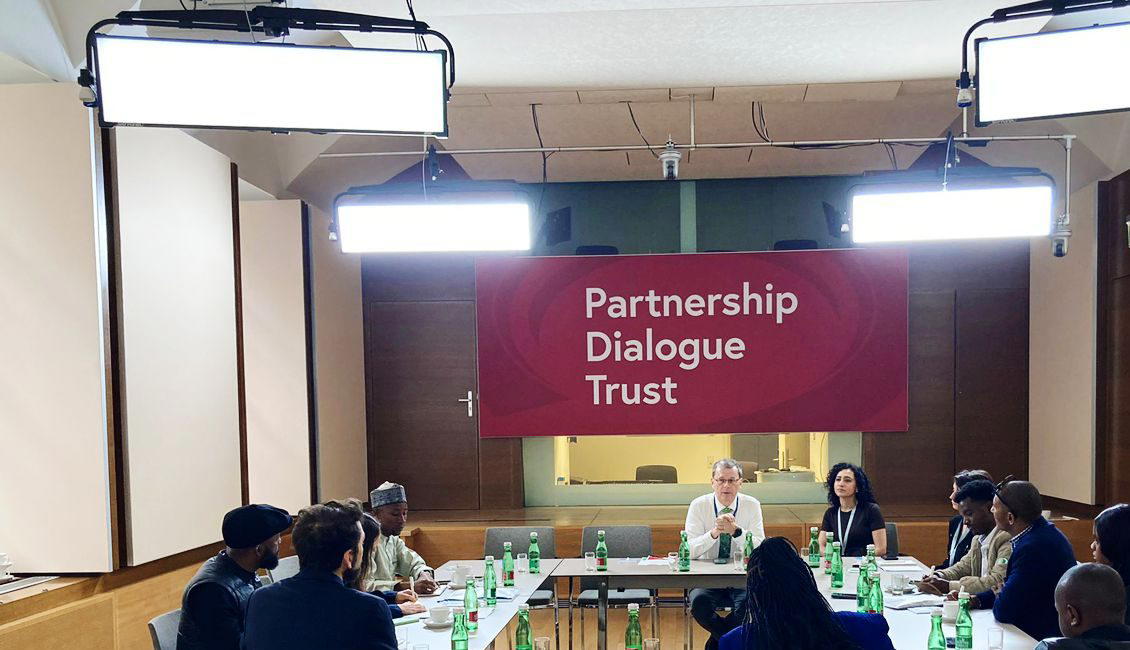
Speaking during a briefing in Vienna, Officials of Austria’s foreign ministry told Vanguard that Austria is basing its current bid on its long standing engagement with the United Nations system, its role as host of major international organisations in Vienna, and its record in peacekeeping and disarmament diplomacy.
Vienna as Global Diplomatic Command Centre
Officials said the country sees itself as a platform for international dialogue and negotiation.
Austria currently hosts more than 40 international organisations, including United Nations agencies and bodies linked to nuclear oversight and international security. Vienna is one of the UN headquarters cities globally, alongside New York, Geneva, and Nairobi.
According to officials, this position has shaped Austria’s foreign policy identity as a mediator state focused on dialogue and trust building in international relations.
Officials described multilateralism as central to Austria’s foreign policy, stressing that as a small country in Europe, building partnerships beyond its borders remains important for peace, stability, and economic development.
“The United Nations is the pivotal platform for global cooperation and fostering peace, rooted in the principles of international law and trust,” officials stated.
They added that Austria’s military neutrality places the country in a unique position to bridge differences and encourage cooperation among states during periods of rising geopolitical tension.
Austria has maintained a constitutionally neutral status while actively participating in European Union foreign policy frameworks.
Security Council Bid Anchored on Civilian Protection
A key pillar of Austria’s Security Council campaign is the protection of civilians in armed conflict.
According to a statement published under the “Partnership Dialogue Trust Austria for United Nations Security Council 2027 to 2028” campaign and delivered by Ambassador Gregor W. Kössler at the United Nations Security Council, Austria stated, “Since the UN Security Council first placed Protection of Civilians on its agenda in 1999, the nature of civilian harm in armed conflict has evolved dramatically. Austria has made PoC a long standing priority and continues to lead by example.”
The statement further noted Austria’s involvement in advancing Security Council Resolution 1894, which strengthened frameworks for civilian protection and humanitarian access in peacekeeping environments.
Austria also emphasised that modern conflicts increasingly affect civilians, particularly in urban areas, where a majority of victims are non combatants.
Officials noted that Peacekeeping remains a cornerstone of Austria’s multilateral engagement.
Since 1960, Austria has deployed more than 100,000 personnel to peacekeeping missions globally, with special focus on protecting civilians, particularly women and children affected by conflicts.
Austria also supports stronger cooperation between the United Nations and regional organisations, especially African led peace operations.
Austria noted that it continues to invest in peacekeeper training, operational safety, and environmentally sustainable peacekeeping systems.
Artificial Intelligence, Urban Warfare and Global Security
Austria has also positioned itself as an advocate for stronger international regulation of emerging military technologies, particularly artificial intelligence and autonomous weapons systems.
Officials described these developments as emerging threats to global security, warning that the increasing use of autonomous systems in warfare raises concerns about accountability and human control.
“We strongly advocate for the establishment of international regulations of autonomous weapons systems,” Austria stated.
Officials stressed that retaining meaningful human control over weapons systems remains essential for protecting humanity and preventing indiscriminate harm during conflicts.
Austria has supported United Nations discussions on lethal autonomous weapons systems and has hosted several international conferences in Vienna aimed at advancing humanitarian disarmament and arms control efforts.
For more than three decades, Austria has also supported campaigns against landmines, cluster munitions, and uncontrolled arms transfers.
The country further highlighted its role in the establishment of the Treaty on the Prohibition of Nuclear Weapons.
Austria is also among supporters of efforts aimed at reducing civilian harm caused by explosive weapons in populated areas, commonly referred to as EWIPA.
Climate Diplomacy and Sustainable Development
Austria is equally presenting climate action as part of its broader peace and security agenda.
Officials said the country has increased international climate financing nearly tenfold since 2010 as part of efforts to address climate change and environmental insecurity.
Austria currently supports the United Nations Climate and Security Mechanism and is expected to serve as Co Chair of the mechanism in 2025.
Officials said Vienna has become an important centre for climate, energy, and sustainability discussions through conferences focused on renewable energy, energy poverty, and green transition policies.
Austria also noted that its commitment to climate neutrality by 2040 remains central to its national and international policy direction.
Officials said investments in renewable energy and green technology are aimed not only at environmental protection but also at promoting economic growth and social stability.
“We are convinced that expanding renewable energy is key to alleviating energy poverty, driving economic growth and building more peaceful and stable societies,” officials stated.
Austria Seeking Stronger Partnerships with Africa
Officials also highlighted Austria’s increasing engagement with African countries, noting that Vienna is seeking to move beyond traditional development cooperation models toward more balanced partnerships.
They said Austria is working toward an Africa strategy focused on peace and security cooperation, trade, cultural exchange, governance, education, and people to people relations.
Officials also noted expanding diplomatic engagement with countries such as Nigeria and Ghana, including cultural and economic cooperation initiatives.
They stressed that future cooperation would be structured around mutual benefit rather than donor recipient frameworks.
Austria also reaffirmed support for stronger African representation within global institutions, including the United Nations Security Council.
As a founding member of the Accountability, Coherence and Transparency Group, Austria said it supports reforms aimed at improving the effectiveness, transparency, and accountability of the Security Council.
Officials noted that such reforms should better reflect present global realities, especially through stronger representation of underrepresented regions, including Africa.
Austria also pointed to its partnerships with Least Developed Countries, Small Island Developing States, and Landlocked Developing Countries through development cooperation and humanitarian assistance programmes.
Officials said the country remains committed to advancing equitable partnerships capable of mobilising public and private investment for sustainable development.
Rule of Law and Trust in the United Nations
Austria further emphasised the importance of international law, accountability, and institutional trust in maintaining global peace and security.
Officials said strengthening the rule of law has remained one of Austria’s major foreign policy priorities over the years.
Austria hosted several important international conferences linked to the development of international law, including the Vienna Conventions.
As a previous member of the Security Council, Austria also led initiatives aimed at strengthening accountability mechanisms, including the establishment of the Ombudsperson to the ISIL and Al Qaida Sanctions Committee and the International Residual Mechanism for Criminal Tribunals.
Officials said Austria believes lasting peace and development can only be achieved through stronger multilateral cooperation, accountability, and equal access to justice.
Positioning as a Trusted Bridge Builder
With the Security Council election approaching, Austria is presenting its candidacy as a continuation of its long term multilateral engagement anchored on civilian protection, rule of law, climate action, institutional trust, and international cooperation.
Officials said Austria’s neutrality allows it to engage across political divides and contribute to dialogue during periods of international uncertainty.
“As a militarily neutral country, we are dependent on an effective and functioning multilateral system,” officials stated. “The United Nations is irreplaceable.”
Austria added that if elected to the Security Council, it would work closely with both Council and non Council member states, especially countries directly affected by issues on the Council’s agenda.
Officials said the country’s overall objective remains strengthening trust in the United Nations while promoting peace, sustainable development, and international cooperation in an increasingly divided world.
Disclaimer
Comments expressed here do not reflect the opinions of Vanguard newspapers or any employee thereof.