By Juliet Umeh
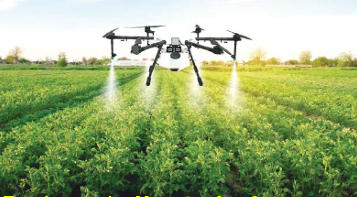
Technology is emerging as the defining force in Nigeria’s push to transform agriculture from a subsistence activity into a modern, productivity-driven sector capable of ensuring food security and economic stability.
At the Vanguard Economic Discourse with the theme: Food Security and Socioeconomic Stability, stakeholders across government, development institutions, and the private sector agreed that the future of agriculture will be shaped by data, digital platforms, climate-smart solutions, and innovative financing.
Minister of Agriculture and Food Security, Abubakar Kyari, described technology as a critical lever for repositioning the sector.
According to him, while agriculture contributes between 20 and 24 per cent to Nigeria’s GDP and employs about 70 per cent of the workforce, inefficiencies persist due to limited access to data, mechanisation, and finance.
He said: “We are rebuilding our platforms with digital verification to guarantee transparency and measurable impact. This is critical to restoring trust and improving productivity.”
He disclosed: “Digital systems are now being deployed to ensure that subsidies and inputs reach genuine farmers, with over 622,000 farmers already supported under the National Agricultural Growth Programme, recording yield increases of up to 30 per cent.
“Beyond data systems, the Federal Government is also driving mechanisation through a technology-enabled shared service model under its National Agricultural Mechanisation Programme.
“The initiative, which involves the deployment of over 2,000 tractors and 9,000 implements, allows farmers to access equipment on demand. This marks a transition from manual farming to technology-enabled agriculture,” Kyari added.
On financing, Kyari said digital lending and embedded finance are being leveraged to bridge the long-standing credit gap in agriculture, where formal lending remains below four per cent.
“Through digital platforms, we are connecting farmers to capital more efficiently and expanding financial inclusion,” he said.
Similarly, Minister of Livestock Development, Idi Mukhtar Maiha, underscored the role of technology in modernising livestock systems.
“Technology and innovation will be critical in improving productivity, enhancing resource management, and enabling real-time data for planning,” Maiha said.
He noted that Nigeria’s livestock sector, currently valued at $32 billion, could grow significantly with the adoption of digital tools, improved genetics, and better infrastructure.
Maiha also highlighted the need for innovation in tackling post-harvest losses, estimated at 30 to 40 per cent for perishable goods, stressing that investments in cold chain systems and logistics are essential.
From the private sector, Sterling Bank emphasised the role of digital ecosystems in transforming agriculture. Group Head, Agriculture and Solid Minerals Finance at the bank, Dr. Olushola Obikanye, said technology is now central to improving efficiency across the value chain.
“Digital agriculture is no longer optional, it is essential. It enables transparency, better risk assessment, and scalable financing,” he said.
He added that the bank is deploying value-chain financing models that integrate finance, technology, and market access.
For the International Fund for Agricultural Development, IFAD, youth-driven innovation remains the key.
Country Director, Dede Ekoue, said young Nigerians are already driving change through precision agriculture and digital advisory platforms.
“This transformation will not happen without the youth. They bring the technological know-how needed to scale innovation,” she said.
Ekoue disclosed that IFAD has invested about $1.8 billion in Nigeria, reaching nearly four million rural households, but noted that scaling impact requires stronger private sector participation.
Across board, stakeholders agreed that while technology holds the key, collaboration is critical. Public-private partnerships, they said, will be necessary to scale innovation, de-risk investments, and build the infrastructure required for a digital agricultural economy.
With Nigeria’s population projected to exceed 250 million by 2030, the urgency to act is clear. Stakeholders warned that without embracing technology at scale, the country risks widening food deficits and economic vulnerabilities.
However, with the right mix of data, innovation, and partnerships, they believe agriculture can become a major driver of economic diversification, job creation, and national stability.
Disclaimer
Comments expressed here do not reflect the opinions of Vanguard newspapers or any employee thereof.