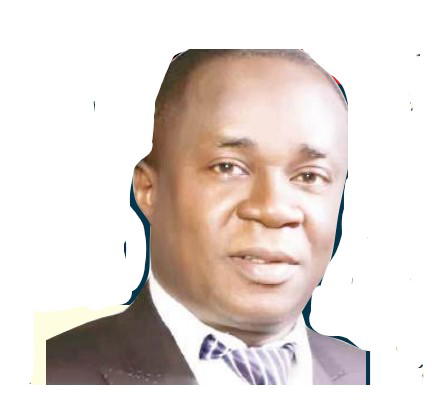
By Matilda Ikediobi
Director of the Institute of Capital Market Studies, Nasarawa State University and President of the Capital Market Academics of Nigeria, Professor Uche Uwaleke, in this monitored interview, spoke on what Nigeria can do to correct the gaps that the World Bank identified in its Nigeria Development Update.
What do you think Nigeria should do going forward in addressing all these gaps that the World Bank identified in our fiscal spending?
I will start by saying that the World Bank’s concerns are valid. If you read the Nigerian Development Update of October 2025, the World Bank also highlighted a number of these issues. And we are also beginning to see them here in the Nigerian Development Update for April of 2026. When you look at all of this development, what strikes me is the fact that as a country, we have a revenue management problem. I have heard the argument that Nigeria’s problem is a revenue problem. Nigeria doesn’t have a debt problem, it’s a revenue problem.
But I want to argue here or even push it further that what we even have is a revenue management problem, if you like, capturing all that should come in. We have a lot of leakages along the process, which the World Bank report highlighted. If you look at the federation account, for example, there are five sources of inflows into the federation account. You have the revenues collected by the Nigerian Revenue Service, formerly the Federal Revenue Service. You have that of the NNPCL. You have the Nigerian Upstream Petroleum Regulatory Commission. Of course, you have the Nigerian Customs Service and then the Ministry of Mines and Steel Development. The four major ones are NNPCL, Nigerian Customs Service, Nigerian Revenue Service and then the NUPRC. Now, the leakage coming from NNPCL would appear to have been partially addressed by the president under the Executive Order 9.
You recall the Executive Order 9 tried to plug the leakages that were even created as a result of the Petroleum Industry Act of 2021. So that Executive Order 9 made it that the deductions that NNPCL used to do, particularly with respect to 30 per cent frontier exploration, another 30 per cent management fees, you also have 20 per cent retention and the duplication of funds, all of that would appear to have been taken care of by Executive Order 9. I think the president took the right step. For me, it was a step in the right direction coming up with that Executive Order 9, trying to, if you like, foster what we even have in the Constitution, Section 162 of the Constitution that talks about the federation account. But I think we need to do more, particularly in the area of plugging the leakages.
Leakages are still there, particularly when you look at the other revenue generating agencies like the Nigerian Revenue Service, that of the NUPRC, and the Nigerian Customs Service, because the World Bank emphasised this issue of cost of revenue collection, high cost of revenue collection. We appear to be collecting more money, but we also appear to have very little left to be spent on, in areas that need these funds. And that was why I talked about it.
As you have made clear, these problems exist and the World Bank has identified them before. What do you recommend as a person in that field of expertise?
Now, the first thing that we need to do is, as I have said earlier on, Executive Order 9 has taken care of the deductions that NNPC used to make before now. Now, we also need to address this issue of the high cost of revenue collection by these agencies. That’s what we need to do. Now, as we speak, these three agencies I mentioned, and it was important I started by mentioning them, collect between four per cent and seven per cent of …they retain them as cost of revenue collection. That is high on…, by any standard. The Nigerian Revenue Service gets four per cent of non-oil revenue. Nigerian Customs Service gets seven per cent of custom duty and then NDPRC gets four per cent.
So what needs to be done is to try to reduce them in line with global standards. What is that global standard? The global standard is between 0.5 per cent and one per cent. Now, if you look at the UK, for example, in the UK, Her Majesty’s Royal Revenue and Customs, the cost to revenue ratio is 0.51 per cent. Now, if you take the OECD countries, 38 of them, it’s between 0.5 per cent and one per cent.
And even if you come down to Africa, Kenya, for example, has between one and two per cent. Ghana, South Africa, Uganda, many African countries even use that as completely budget-based, as opposed to paying the percentage of revenue. My point is we need to reduce that to four per cent. Seven per cent is very high. It’s not in line with global standards. Because we are simply, if you like, incentivising. For me, it’s a perverse incentive, you know, incentivizing volume, as opposed to promoting efficiency. One of the principles of revenue collection in public finance is that the cost of collection should be low relative to the amount being collected. With respect to that, my recommendation is to reduce the cost and also consider going forward, let all of that be, budget-based, not payment as a percentage of revenue, the ad valorem type.
This report flagged 5,000 accounts, sub-accounts under the Treasury Single Account, the TSA, as being not fully integrated into the consolidated revenue framework. TSA has been in operation for over 10 years. How come we still have some sub-accounts not captured? Is it because of the failure of the system, or just a deliberate bureaucratic move, resistance to avoid being fully transparent and how can we fix this challenge?
Of course, you notice the TSA was introduced even before the Buhari regime. That was when we had the TSA, but the Buhari regime now came and gave it a teeth. But all these 10 years, over time, we have not seen any review or monitoring of the TSA framework. When you have introduced something and you fail to review it over time, people also tend to introduce loopholes and ways to circumvent what the original intention is. So that is what has happened. Ordinarily, TSA, it’s supposed to help to bring about transparency ensure, just as the name suggests, Treasury Single Account. I think that what we also need to do now is to have a review of the TSA. That was also why, if you notice in that report, the World Bank was talking about a public investment management assessment, a public investment management reform. Part of that public investment management reform should also include a thorough review, a forensic review of the performance of the Treasury Single Account and all the other reforms around the public financial management system, including the GIFMIS. We need to, at this time, also review the operation of the GIFMIS, the operation of the IPPIS, and all of that. When you don’t review them over time, that is what you find. So people begin to, as I said, put in place measures to circumvent what was there from the outset.
How do we get NUPRC out of this gray area so that we can also have transparency and clarity about how that agency is being funded?
It is not just about the NUPRC. As I mentioned earlier, there are other agencies involved. All that we need to do is to ensure that these agencies are funded in line with global practice and not just by having a percentage, giving a percentage of revenue, the first-line charges. As you rightly noted, I was looking at a record, one of the publicly available records that in January 2024, for example, among the three of them, Federal Inland Revenue Service at the time, NUPRC, and the Nigerian Customs Service, in the month of January 2024, they got N78 billion by way of this first-line charge.
Meanwhile, it was higher than the amount that the entire six states in the North-East got by way of allocation; FAAC allocation to the South-East states in January 2024 was around 56 billion. Meanwhile, these agencies got 78 billion. Again, six states in the North-Central got 55 billion, South-East 47 billion. The amount that these agencies are getting on a monthly basis is higher than what a lot of states combined are getting. And when you also compare that with what we allocate to education and health, critical sectors of the economy, you now begin to realise that the opportunity cost is just too high. I think what should happen is to make them part of the budgetary process.
Let the funding be budget-based. So let them come up with their needs, and then they get funded based on their needs. As with the current arrangement is a situation where they are not funded based on needs, but just based on a percentage of revenue. Now, regarding fiscal federalism, it depends on the type that countries are practicing. If I take similar federations, maybe like India, similar federations, Canada, India is a good example. If you have tiers of government, and a particular tier is carrying the weight, of course, it will make sense for that tier to enjoy a larger share of what is centrally collected. As you know, the bulk of revenues in Nigeria today, are centrally collected.
The Nigerian Revenue Service, for example, collects the company’s income tax, collects petroleum, profit tax, collects even the VAT, even though we know the VAT is more now to states and local governments. When all this money comes in, they have to be shared based on responsibility. Federal government today takes 48.5 per cent of what comes in.
The states take 26.72, and the local government takes 20.70. I think it’s in line with our own structure. But now that we are beginning to develop responsibilities to states, in terms of electricity, correctional services, of course, the states should have more revenues.
Disclaimer
Comments expressed here do not reflect the opinions of Vanguard newspapers or any employee thereof.