By Gabriel Ewepu
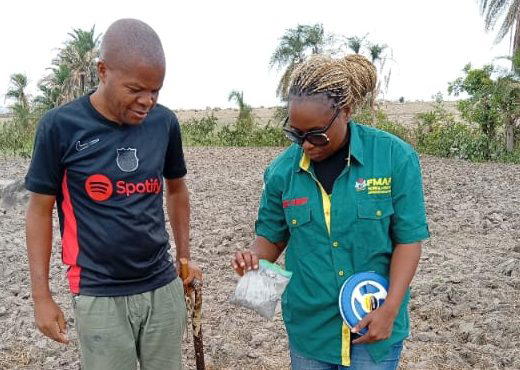
ABUJA – IN a bid to upscale food production and profitability, the Federal Ministry of Agriculture and Food Security and Korea-Africa Food and Agriculture Cooperation Initiative, KAFACI, have moved to deploy soil fertility enhancement technologies using green manure and livestock manure.
This was at a workshop organized by the Federal Ministry of Agriculture and Food Security in collaboration with the Korea-Africa Food and Agriculture Cooperation Initiative, designed to ensure early-stage inclusivity of key stakeholders and to foster collective ownership of the project.
Meanwhile, the initiative forms part of ongoing national efforts to promote sustainable soil management practices, improve agricultural productivity, and strengthen food security. It is being coordinated by the Department of Agricultural Land and Climate Change Management Services, ALCCMS, under the Federal Ministry of Agriculture and Food Security.
The workshop had in attendance government institutions, research organizations, academia, extension services, and the farming community to deliberate on practical and scalable solutions for enhancing soil fertility using organic resources.
Objectives of the workshop include; explore and develop soil fertility enhancement technologies using green manure and livestock manure; To promote the use of environmentally sustainable and locally available soil improvement methods; To develop a practical and implementable action plan for the adoption and scaling of the technologies; To strengthen collaboration among stakeholders involved in soil fertility management and agricultural development.
The workshop provided a platform for critical reflection on existing practices and emerging opportunities in soil fertility management.
The workshop was formally declared open by the Director of Agricultural Land and Climate Change Management Services, Mr. Olanipekun Oshadiya, represented by the Assistant Director, Soil and Fertility Management, Mrs. Afolabi Fatima, Assistant Director, Soil Testing and Fertility.
Oshadiya in an opening remarks, emphasized the strategic importance of soil fertility in achieving national food security and sustainable agricultural development.
He noted that declining soil quality remains a major constraint to agricultural productivity in Nigeria and highlighted the need for innovative, affordable, and farmer-friendly solutions.
He further stated that the project aims to develop adaptable technologies utilizing green manure crops and livestock manure, including cow dung, poultry waste.
He also explained that these technologies are expected to: Improve soil structure, nutrient content and soil health; Enhance crop yields and overall farm productivity; Increase farmers’ income and livelihoods Promote sustainable land use and environmental conservation
He expressed appreciation to KAFACI for its continued partnership and reaffirmed the Federal Government’s commitment to strengthening international collaboration to drive agricultural transformation.
Meanwhile, unanimously participants agreed on the urgent need to: Transition towards sustainable and climate-smart soil management practices; Promote the adoption of organic soil amendments using locally available resources; Strengthen linkages between research, extension services, and farmers; Develop clear implementation strategies to ensure scalability and long-term impact.
Participants expressed deep appreciation to KAFACI for its technical and financial support, as well as its commitment to advancing sustainable agricultural practices in Nigeria.
Some of the resolutions reached at the workshop include; Soil fertility enhancement technologies using green and livestock manure should be developed as locally adaptable solutions tailored to Nigeria’s diverse agro-ecological conditions.
The technologies must be simple, cost-effective, and easily adoptable by smallholder farmers to ensure widespread utilization. Priority should be given to the use of locally available resources, including plant-based green manure and livestock waste, to reduce dependency on expensive external inputs.
The Federal Ministry of Agriculture and Food Security should establish a robust Monitoring and Evaluation (M&E) framework to track implementation progress and measure impact. Comprehensive capacity-building programmes should be developed and implemented for key stakeholders, including: Farmers Extension agents Researchers Policy makers.
Disclaimer
Comments expressed here do not reflect the opinions of Vanguard newspapers or any employee thereof.