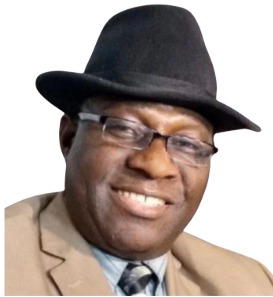
By Prof. Mannixs E. Paul
When truth finally breaks through in a broken system, it does not always bring relief; it often brings disbelief. Ordinary citizens struggle to accept it, not because the facts are unclear, but because the reality is too heavy: a system that was meant to protect them has quietly turned against them.
Across many societies facing deep governance challenges, people are not just reading about corruption; they are living with its consequences every day. A small business owner is forced to pay multiple unofficial “fees” just to keep the doors open. A young graduate, qualified and capable, is denied opportunity because they lack connections. A patient in a public hospital is told to “facilitate” their own treatment before receiving care. A police officer, underpaid and unsupported, becomes vulnerable to compromise. A judge delays a case endlessly while justice slips further out of reach. These are not isolated incidents; they are patterns that define daily life.
The most painful reality is when those entrusted with upholding the law become the very architects of its breakdown. When institutions meant to enforce justice are deliberately weakened—through delayed funding, poor remuneration, lack of tools, and political interference- the system does not fail by accident; it is made to fail. Those who try to do their jobs with integrity are frustrated, sidelined, or even punished. Meanwhile, those who cooperate with the dysfunction are rewarded with promotions, access, and protection.
In such an environment, the message becomes dangerously clear: loyalty to a broken system is more profitable than integrity. This is where society begins to lose its moral compass. Citizens start asking difficult questions: Does doing the right thing still matter? Is honesty now a disadvantage? Has integrity become a liability?
For many, the answer feels painfully obvious. Whistleblowers are silenced or ignored. Journalists face pressure when they expose uncomfortable truths. Civil servants who refuse to compromise are transferred, demoted, or isolated. Meanwhile, individuals who enable corruption often rise quickly, shielded by influence and power. The result is a culture where silence feels safer than truth, and survival often requires moral compromise.
The consequences go far beyond frustration—they shape the future of entire generations. Young people grow up seeing effort disconnected from reward. They begin to question the value of education, hard work, and honesty. Trust in public institutions erodes, and with it, the sense of belonging to a fair and functioning society. When justice becomes selective, citizenship itself begins to feel unequal.
Worse still, when a society loses an enduring support system—one that inspires courage, awakens conscience, and sustains commitment—it becomes extremely difficult to reclaim its destiny. Such a nation begins to slide down a dangerous path, one that mortgages the future of its unborn generations. A culture that does not reward truth or protect integrity slowly conditions its people to accept less, expect less, and ultimately become less.
Silencing the voices of reason in any generation is never a sustainable option. When thinkers, reformers, researchers, and truth-tellers are ignored or suppressed, society loses its capacity for self-correction. Many leaders, rather than surrounding themselves with competence and honest counsel, choose comfort in loyalty—filling their circles with individuals who offer praise but no value. In time, this creates an echo chamber where reality is distorted, and critical decisions are made without truth. Ironically, the same individuals who offer blind loyalty often become the loudest critics when failure becomes unavoidable.
Yet, even in this difficult reality, there are still voices that refuse to be quiet. These are individuals—often few, often overlooked—who continue to speak, act, and stand for what is right. They are the honest officers who resist pressure, the journalists who keep reporting, the professionals who refuse to cut corners, and the everyday citizens who choose fairness even when it is inconvenient. Their strength lies not in numbers, but in conviction.
But conviction alone is not enough. For a society at the edge, the way forward must be intentional, collective, and sustained.
First, there must be a deliberate restoration of institutional independence. Law enforcement agencies, the judiciary, and oversight bodies must be adequately funded, protected from interference, and empowered to act without fear or favor. When institutions work, citizens begin to believe again.
Second, transparency must move from rhetoric to reality. Public budgets, procurement processes, and government decisions should be open to scrutiny. Technology can play a key role here—digitizing services reduces human interference and limits opportunities for manipulation.
Third, there must be real consequences for wrongdoing. Accountability cannot remain selective. When high-profile offenders face justice, it sends a clear message that no one is above the law. Without this, reforms remain symbolic.
Fourth, ethical leadership must be prioritized—not just in politics, but across institutions. Leadership should be measured not only by results, but by integrity, fairness, and public trust. Systems that reward loyalty over competence must be dismantled.
Fifth, citizens themselves must be part of the solution. Civic awareness, community engagement, and collective action matter. When people demand better—peacefully, consistently, and in unity—systems are forced to respond. Silence sustains dysfunction; participation challenges it.
Finally, there must be protection and encouragement for those who choose integrity. Whistleblowers, reformers, and ethical professionals should not stand alone. They should be supported, recognized, and safeguarded, because they represent the conscience of society.
A nation where justice is denied, and citizens feel helpless, is not just facing a governance problem; it is confronting a moral crisis. But even at the edge, decline is not destiny. With courage, accountability, and a shared commitment to what is right, societies can rebuild trust, restore fairness, and secure a future where truth is not feared, but upheld—and where the hopes of future generations are not traded away for the failures of the present.
Prof. Mannixs Paul is the Global Chairman of the Chartered Examiners of Criminology and Forensic Investigation (USA) and President of Uniworld Corporate Investigation and Security Specialists LLC. A distinguished scholar-practitioner, he brings together strong academic expertise and extensive professional experience as a seasoned researcher, licensed private investigator, organizational strategist, and public policy, governance, and management consulting specialist.
He is the founder of the AfroRedFlag White-Collar Protective Shield Program—an anti-corruption initiative focused on strengthening accountability frameworks across Africa. In addition, he leads MEFOUNDATION, a mission-driven organization committed to advancing human capacity development and empowering communities through knowledge and skills. He writes from New York.
Disclaimer
Comments expressed here do not reflect the opinions of Vanguard newspapers or any employee thereof.