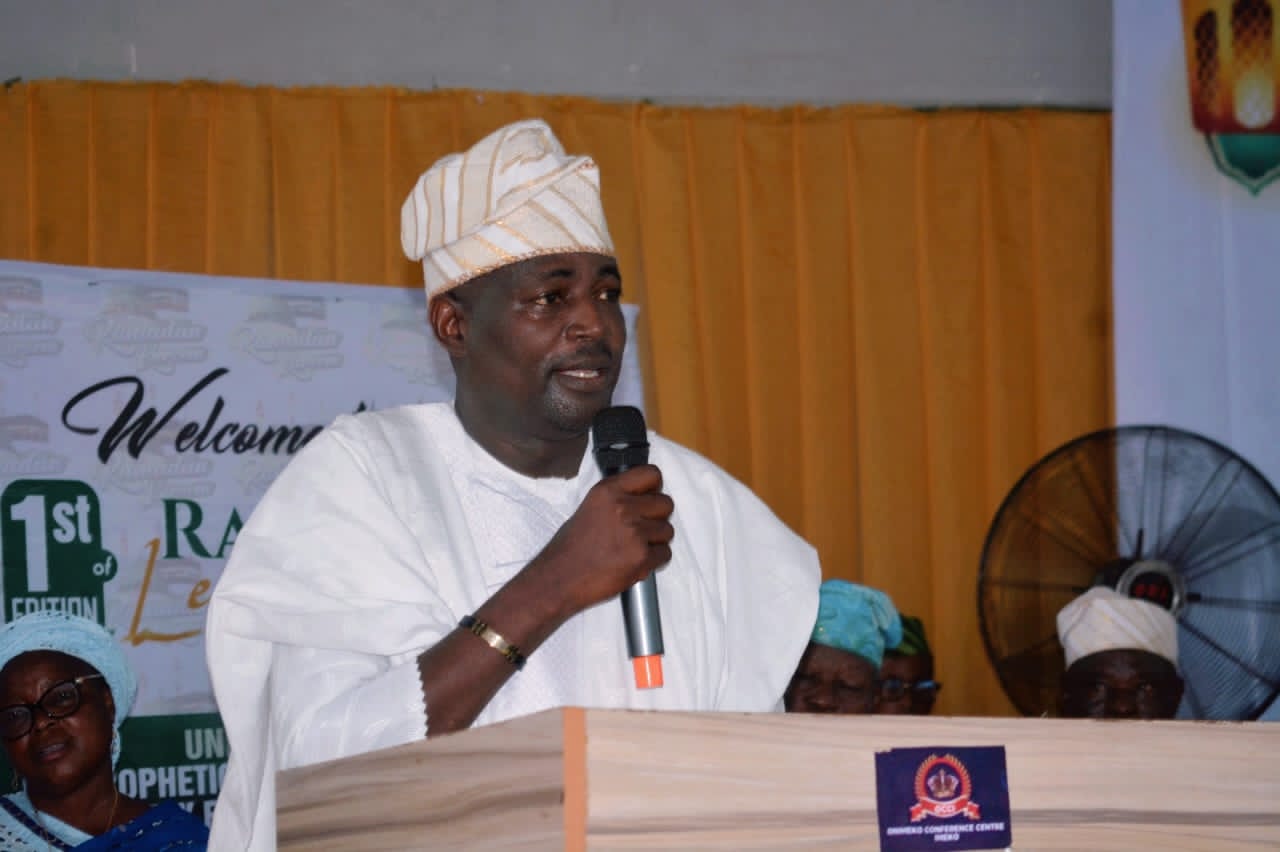
By James Ogunnaike, Abeokuta
An Islamic cleric, Shuaeb Adegbite, has called on political office holders across the country, to embrace prophetic teachings as the bedrock for effective and people-oriented governance.
Adegbite stressed that politics, when guided by ethical and spiritual values, could serve as a potent instrument for promoting peace, justice and sustainable development.
He made the call at the Ramadan Iftar, organised by the Ogun State Commissioner for Sports Development, Hon. Wasiu Isiaka, in honour of his late parents, Prince Tijani Ade Isiaka and Alhaja Kuburat Isiaka, held in Imeko, Imeko-Afon Local Government Area of Ogun State.
According to the cleric, “the teachings of Prophet Muhammad emphasise leadership qualities such as accountability, compassion and fairness, which are largely missing in today’s political system.”
He added that leaders who imbibe these virtues would be better equipped to prioritise the welfare of the people above personal or partisan interests.
Adegbite warned that meaningful development would remain elusive in an environment plagued by corruption, division and self-interest.
“Political leaders must adopt value-based approaches that emphasise transparency, inclusiveness and service to the people,” he said.
Highlighting the need for inclusive governance, the cleric noted that effective leadership requires active engagement with all segments of society, especially the marginalised.
“Policies driven by broad consultation are more likely to yield sustainable development outcomes,” he stated.
Addressing youths, Adegbite encouraged them to actively participate in the political process with integrity and a clear sense of purpose.
He cautioned against being swayed by divisive rhetoric or short-term gains, urging them instead to become agents of positive change guided by strong moral principles.
The cleric also called on religious institutions to play a more proactive role in shaping political consciousness, noting that faith-based organisations have a critical role to play in promoting ethical leadership and civic responsibility.
He further advocated stronger collaboration among government, religious bodies and traditional institutions as a means of building trust, strengthening governance and ensuring inclusive development.
In his remarks, Isiaka explained that the event was not only organised to honour the memory of his late parents but also to seek divine guidance for effective governance in the state.
He said, “there is a need to continually integrate spiritual and moral values into leadership, as this remains key to addressing societal challenges and fostering unity within our communities.”
Disclaimer
Comments expressed here do not reflect the opinions of Vanguard newspapers or any employee thereof.