By Chioma Obinna
With more than 3.7 million Nigerians still living in internal displacement, the United Nations, Federal Government, and the United Kingdom yesterday called on the private sector to transform the nation’s displacement crisis into economic opportunity.
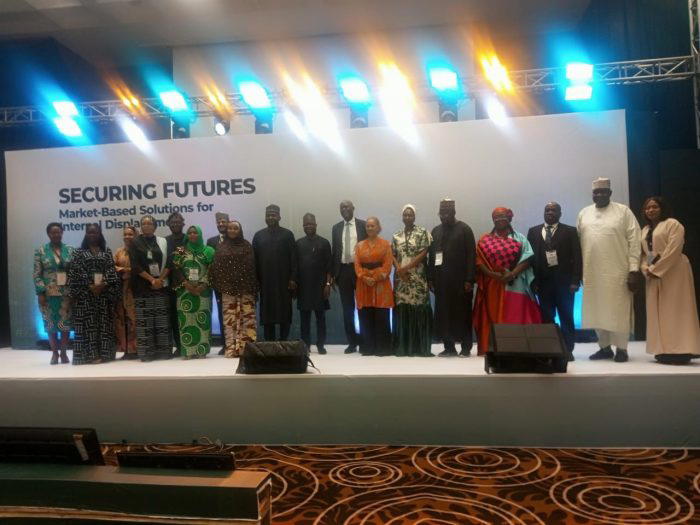
Speaking at a high-level 2-Day conference in Lagos tagged: Securing Futures, Market-Based Solutions for Internal Displacement, the UN Resident Coordinator Mohamed Fall said displacement “is not only about movement; it is about loss of home, broken routines, loss of dignity, and sometimes loss of freedom.”
He said: “Across Nigeria, over 3.7 million people are internally displaced. Another 2.6 million have returned home but are struggling to rebuild their lives. These Nigerians are not victims. They are entrepreneurs, they are farmers, they are students, they are leaders. If you give them opportunity, it can yield returns that are good for business and good for the country.”
Fall emphasised that humanitarian aid alone cannot solve the crisis. “This is not about philanthropy or charity. It is about smart investment, investment in stability, in prosperity, in shared value,” he said, urging businesses to move from pilot to scale, from relief to resilience.”
Fall insisted that displaced persons do not want handouts. “I have not met any displaced person who wants to depend on aid. What they ask for is access to economic opportunity, education, water, sanitation, and health,” he said.
“Together we can build a Nigeria where recovery creates prosperity. When government, business, and the United Nations stand as one, transformation can occur,” Fall said.
Representing the Vice President, Senator Kashim Shettima, the Minister of Defence, Gen. Christopher Gwabin Musa (rtd.), said Nigeria hosts one of the largest displaced populations in Africa.
“Nigeria cannot afford to allow millions of capable citizens to remain economically excluded,” he said. “Unlocking their potential is not only a moral imperative, it is an economic necessity and a strategic national priority.”
Shettima while delivering his keynote address at the event themed: “Unlocking Private Sector Potential in Displacement Contexts”, added that while humanitarian assistance has saved lives, “long-term stability cannot be built on relief alone. Sustainable peace requires livelihoods, skills, and assets.”
Also speaking, Head of Development Cooperation at the British High Commission, stressed that investment in displacement-affected communities offers tangible returns to businesses.
“There is enormous talent and ambition in those communities. There are new markets and larger market shares to be had. The returns are in every direction you look.”
Rowe noted that development partners can help “de-risk investments through guarantees, equity, and improved access to finance,” particularly for small and micro enterprises, which are the backbone of the economy.
As security challenges, climate shocks, and economic hardship continue to drive displacement across the Northeast, Northwest, North Central, and Middle Belt, stakeholders agreed that partnership between government, business, and development actors is the only path to durable solutions.
Disclaimer
Comments expressed here do not reflect the opinions of Vanguard newspapers or any employee thereof.