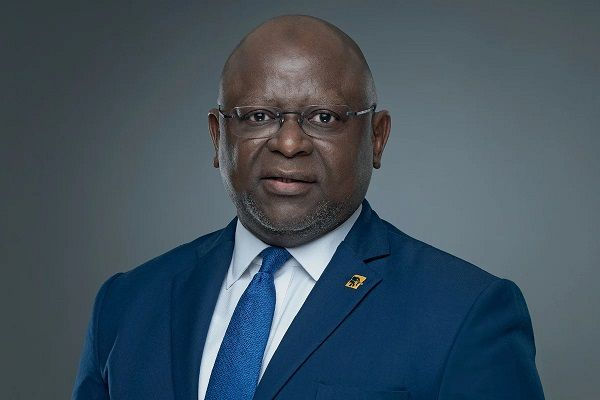
By Shina Abubakar, Osogbo
Muslims leaders have been tasked to re-engineered Islamic education approach towards solve complex worldly demands rather than focus only on the after life.
This was disclosed by the former Chief Executive Officer, Mr Adesola Kazeem while delivering the 15th convocation lecture of the Fountain University, Osogbo, Osun State, titled; From Faith to Fortune: Building a Prosperous Ummah through Leadership, Education, Innovation and Economic Empowerment.
He also a called on Islamic leadership organisations, such as Nigeria Supreme Council for Islamic Affairs, NSCIA, the Muslim Ummah of Southwest Nigeria, MUSWEN, to ensure paradigm shift from custodian of mosque to architect of economics.
According to him, the current system of Islamic education excels at preservation but fails at preparation. It teaches soul about eternity but leaves the intellect ill-equipped for the immediate, complex demand of this world.
“This must be replaced by a new paradigm: the unification of knowledge, where faith is the framework through which we understand, engage with, and transform our reality.
While highlighting radical reform Islamic education need to go through to achieve the paradigm shift, he said the aim, “is to produce Muslim polymath: believers who can engage deeply with their faith while competently building, managing, and innovating in the modern world.
“An education that only prepares for the afterlife neglect our duty as Khalifah (stewards) on earth. We must build system that unify these purposes, creating capable builders for this world, grounded in the values for the next”.
He also called for the creation of Islamic venture capital frameworks that translate classical principles into modern investment structures capable of supporting tech startups and social enterprises. He stressed that young Muslim innovators need ethical but competitive funding models. “We must build the Ummah Growth Fund that empowers our brightest minds to scale globally,” he maintained.
To our esteemed Islamic leadership – The Nigeria supreme council for Islamic affairs, NSCIA, The Muslim Ummah of south-west Nigeria, MUSWEN and all the bodies of authority: you should hold a sacred trust. The community looks to you. Your role must now evolve decisively . You must move from being custodians of mosques to architects of economies.
Fountain University Convocation 2026: Adeduntan Tasks Graduants With Driving Innovation and Economic Prosperity
Fountain University 2026 Convocation Ceremony charged the graduating students to embrace innovation, economic empowerment, and faith-driven leadership as they step into a rapidly changing world.
The Convocation Lecturer Adesola Kazeem Adedutan (Pro Chancellor Abiola Ajimobi Technical University) Delivering the lecture with the theme “From Faith to Fortune: Building a Prosperous Ummah Through Leadership, Education, Innovation and Economic Empowerment,” he said the future of the Muslim community depends on graduates who can merge spirituality with modern economic realities. “Today marks a covenant with your future and the future of the Ummah,” he declared.
He began by redefining the concept of fortune from an Islamic perspective, noting that financial wealth alone does not constitute true prosperity. According to him, fortune is measured in the impact individuals make on society and the empowerment they provide to others. “Fortune is when a young graduate writes a business plan that employs fifty others, not when he buys a private jet,” he said.
Adeduntan described the global Muslim Ummah as a “sleeping giant,” saying its demographic strength has not translated into economic influence or technological leadership. Despite being 25 percent of the world’s population, he lamented that only a handful of Fortune 500 companies are led by Muslims. “We are economic passengers when we should be pilots,” he stated.
He reminded the audience that the Muslim world once led global civilisation through innovation, trade, and scholarship, stressing that the Golden Age of Islam offers a blueprint for modern development. He highlighted the historical role of Islamic financial models such as Mudarabah and Musharakah in building strong economies. “Our ancestors understood risk-sharing better than many Wall Street traders today,” Adeduntan noted.
Turning to contemporary challenges, he identified three major setbacks holding the Ummah back: a dependency mindset, an unbalanced educational culture, and a deep innovation deficit. He said these issues must be confronted boldly for Muslims to regain global relevance. “We have celebrated risk-aversion in the name of piety, and it has paralysed our progress,” he cautioned.
Adeduntan also examined Nigeria’s economic structure, explaining that true influence lies within six key sectors: banking, telecommunications, oil and gas, infrastructure, large-scale manufacturing, and technology platforms. He urged graduates to position themselves strategically within these sectors. “If you want to understand power in Nigeria, follow the flow of capital,” he said.
On education, he called for a radical overhaul of the Islamic learning model to align faith with practical, real-world problem-solving. He urged institutions to adopt project-based learning that merges theology with science, technology, and entrepreneurship. “An education that prepares you only for the afterlife neglects your duty as khalifah on Earth,” he emphasised.
Adeduntan further challenged Islamic scholars and policymakers to engage emerging fields such as cryptocurrency, artificial intelligence, biotechnology, and algorithmic ethics. He said religious leadership must evolve to provide guidance in modern financial and technological systems. “A scholar must not ask only if profit is halal, but whether the algorithm behind it is just,” he said.
He also called for the creation of Islamic venture capital frameworks that translate classical principles into modern investment structures capable of supporting tech startups and social enterprises. He stressed that young Muslim innovators need ethical but competitive funding models. “We must build the Ummah Growth Fund that empowers our brightest minds to scale globally,” he maintained.
The convocation concluded with a call to action, as Adeduntan urged the 2026 graduating class to become catalysts for change, using their knowledge and faith to transform their communities and the nation. He encouraged them to embrace leadership roles and build solutions that uplift the Ummah. “Your generation must move us from consumption to production, from fear to innovation, and from faith to fortune,” he urged.
Disclaimer
Comments expressed here do not reflect the opinions of Vanguard newspapers or any employee thereof.