By Juliet Umeh
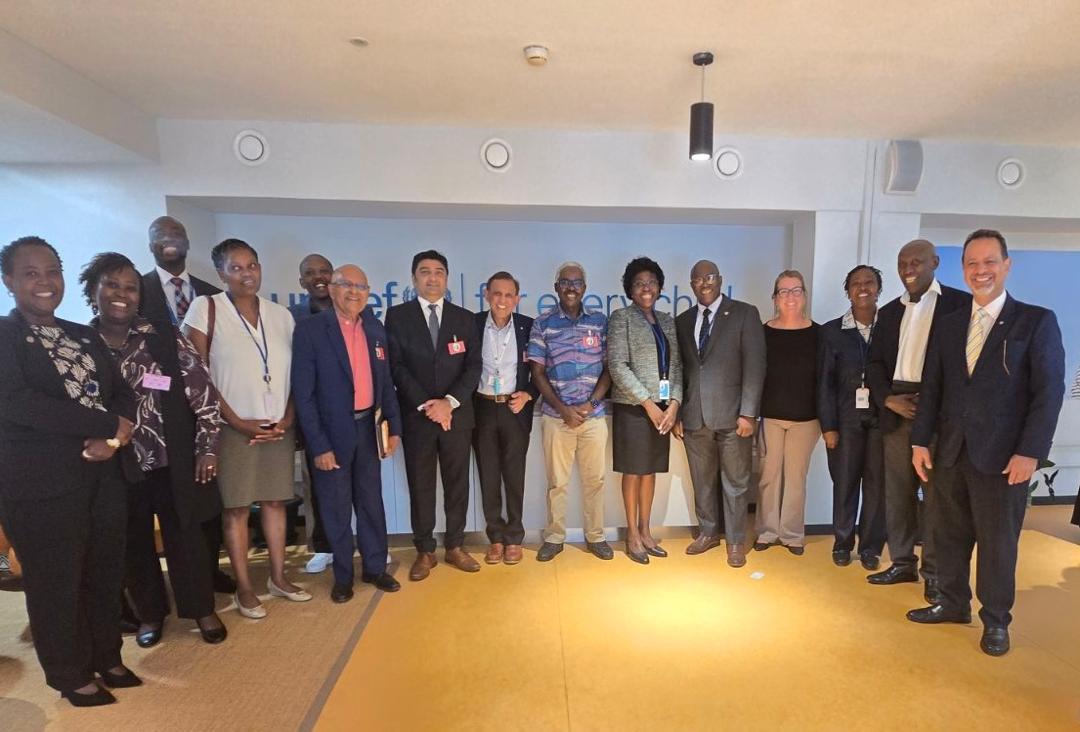
The Aga Khan University, AKU, has met with senior officials of key United Nations health agencies to strengthen collaboration and advance preparations for the World Health Summit Regional Meeting, WHSRM, scheduled to hold in Nairobi, Kenya, in April 2026.
The engagement focused on aligning institutional priorities and positioning the Summit as a catalyst for African-led health systems reform, as Kenya prepares to host the high-level regional meeting.
Officials from UNICEF, the World Health Organisation, WHO, the United Nations Population Fund, UNFPA, UNAIDS and UN Women, collectively known as the H6, were joined by the International Organization for Migration, IOM. The agencies welcomed AKU’s leadership in convening the Summit and highlighted Nairobi’s strategic role as a regional hub for multilateral health engagement.
Speaking at the meeting, UNICEF Representative to Kenya, Dr. Shaheen Nilofer, said the themes of the Summit align closely with UN priorities.
“Hosting this Summit in Nairobi puts Kenya firmly on the global health map,” she said. “The themes strongly align with the H6 and the Every Woman, Every Child agenda, offering a powerful opportunity to bring together practitioners, policymakers and partners around shared priorities.”
Dean of AKU’s Medical College in East Africa, Prof. Lukoye Atwoli, briefed participants on the structure of the Summit and its eight thematic areas, stressing the need for solutions that move beyond pilot projects to systems-level transformation.
“Africa must shift from isolated projects to systems-level change,” Prof. Atwoli said.
“The Summit will convene policymakers, civil society, researchers, the private sector and development partners around measurable solutions and elevate Africa’s voice in global health conversations.”
Prof. Atwoli, who also serves as International President of the World Health Summit Regional Meeting, was joined by other AKU officials, including Chief Executive Officer of Aga Khan University Hospital, Rahid Khalani; Director of the Brain and Mind Institute, Prof. Zul Merali; Director of the Cancer Centre, Prof.
Mansoor Saleh; and Director of University Advancement, Arif Neky, among others.
Discussions underscored the shared recognition that Africa’s rapidly evolving health landscape requires deeper collaboration and more coordinated investment. Priority areas identified included adolescent health, cancer research and genomics, mental health, local pharmaceutical manufacturing, health security, and the commercial determinants of health.
AKU experts highlighted ongoing work in cancer genomics, mental health epidemiology and health innovation, while UN agencies expressed interest in co-hosting technical sessions, report launches and side events during WHSRM Nairobi.
Participants also emphasised the importance of research and data in shaping policy, particularly in areas where African populations face unique challenges, such as genetic variations in cancer, mental health stigma and limited access to essential medicines.
The meeting further stressed the need for deliberate engagement of youth, civil society and the private sector to support sustainable health systems development.
There was broad acknowledgment of Kenya’s growing health innovation ecosystem, spanning digital health, biotechnology, community health and regulatory reform, as a strong foundation for hosting a Summit of global and regional significance. Participants also cited strong backing from the Kenyan government, including plans for an African Union-led Heads of State segment and a ministerial convening during the event.
WHSRM Nairobi is also expected to benefit Nigeria, which is scaling up health sector reforms and investments. The country has commissioned the African Medical Centre of Excellence, AMCE, in Abuja, secured over $2.2 billion under the Nigeria Health Sector Renewal Investment Initiative, and embarked on the renovation of more than 17,000 primary health centres nationwide.
Nigeria is also training 120,000 frontline health workers and expanding the National Health Insurance Scheme to include informal sector workers, with a target of covering 83 million Nigerians by 2030. In addition, the country’s health technology ecosystem raised over $50 million in 2024, reinforcing Nigeria’s leadership in digital health innovation and progress towards Universal Health Coverage.
The meeting followed an AKU-led donor roundtable on financing integrated African health systems, reflecting growing momentum among governments, academia, development partners and the private sector to accelerate African-led health systems reform.
Disclaimer
Comments expressed here do not reflect the opinions of Vanguard newspapers or any employee thereof.