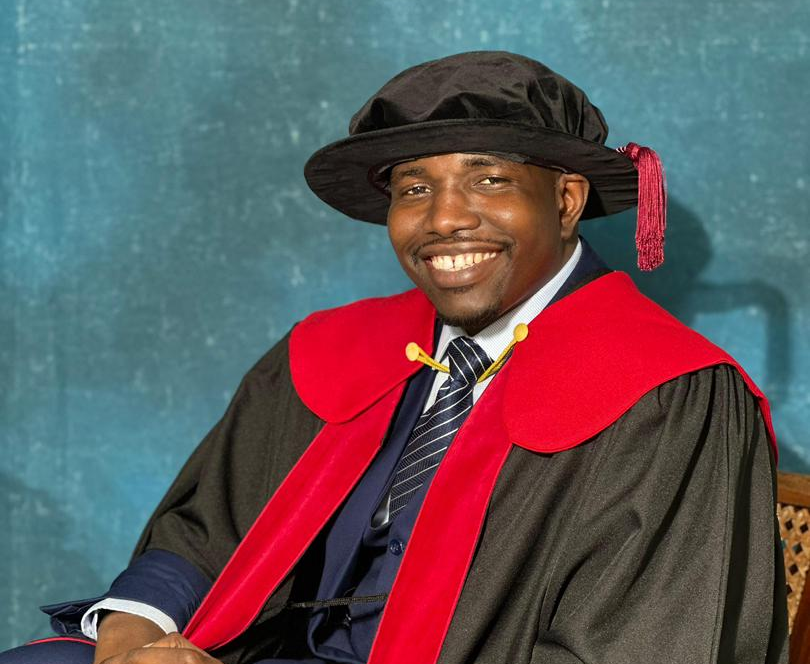
When Nigerian researcher Olasunkanmi Arowolo completed his PhD at the University of Kent in 2025, earning the rare distinction of “no corrections”, he didn’t imagine the milestone would open the door to international recognition.
For someone who once assumed the UK’s Global Talent Visa was reserved for “senior scholars and big names”, being endorsed by the British Academy became an unexpected affirmation of years of work across journalism, governance, and education. His journey, he noted, was not defined by luck or connections, but by a quiet, structured commitment to evidence, impact, and purpose.
According to Arowolo, his research study titled “Poverty, Politics, and the Press: Uncovering the Complexities of Media Coverage on Nigeria’s Social Investment Programmes” demanded most of his attention, and migration was nowhere on his agenda.
He said, “My world revolved around data, fieldwork, theory, and writing. I wasn’t thinking about migration or endorsement routes; I simply wanted to finish my PhD well and contribute meaningfully to discussions on media and development.”
However, as 2023 rolled into 2024, he admitted that his academic reality began to shift. With the thesis rounding up and teaching, publishing, and educational projects filling up his schedule, he started to see the broader arc of his work.
“However, toward the end of 2023 and the start of 2024, as my research reached its final stages, I began to think about the next phase of my academic and professional life,” he said.
“I had been teaching, publishing, and building educational and media projects – activities that naturally extended the reach of my work beyond academia. That was when I began to see how my career might align with the Global Talent framework: a system designed to recognise individuals making exceptional contributions in research, innovation, and leadership.”
Finding the right fit
When the time came to choose between UKRI and the British Academy, the two endorsing bodies aligned with his field, he said the decision was surprisingly straightforward.
His words: “While UKRI caters to a wide range of research disciplines, the British Academy specifically supports scholars in the humanities and social sciences – areas that perfectly reflected my research profile.
“Another deciding factor was that I had previously contributed to a British Academy-funded project, which gave me a sense of alignment with their research values and expectations.
“Choosing the British Academy felt natural, and once that decision was made, I directed all my preparation toward building a coherent, evidence-based application.”
Once the decision was made, Arowolo stated that he approached the endorsement process with academic precision.
“I treated it like research: structure, clarity, evidence,” he says.
He says he studied the criteria “like a syllabus”, mapping each requirement against his publications, teaching record, digital innovations and leadership roles. Instead of presenting a scattered portfolio, he curated every piece of evidence carefully. “I didn’t just dump achievements. I curated evidence intentionally, the way I would curate data.”
Impact, he knew, would make or break the application. His work sits at the intersection of journalism, poverty discourse and digital governance, areas that blend academic inquiry with public relevance. “My PhD was the intellectual backbone, but it was the translation of that research into real-world impact that completed the picture,” he says.
His cross-sector experience played a central role: journalism, education, technology, and digital platforms. “My work doesn’t end on paper; it shapes people, policy, and practice,” he explains. His teaching stints in Nigeria and the UK helped cement his profile as someone committed to knowledge exchange.
Guided by community
Arowolo is quick to acknowledge the role of mentorship. He said, “One of the most valuable parts of my journey was the guidance I received from mentors and peers. I reached out to individuals who had either been through the process or were deeply familiar with the expectations of global research recognition.
“Their advice helped me refine my materials and understand that the strength of an application lies in coherence – how well your story aligns across your statement, CV, and references.
“Mentorship also taught me that humility and precision go hand in hand. The process isn’t about inflating achievements; it’s about clearly communicating their significance.”
When it came time to secure recommendation letters, he approached the task deliberately. He stated that he selected referees who each understood different dimensions of his work, academic rigour, leadership, and community engagement. To support them, he provided summaries and context. “It wasn’t about influencing their message; it was about giving clarity,” he says.
Beyond the meticulous preparation, he noted that the process wasn’t without anxiety, but he leaned heavilly on his faith in God.
His words “Beyond the logistics, the journey was deeply personal. There were moments of uncertainty – especially around timing and whether I had truly done enough. In those moments, I leaned on faith, prayer, and reflection.
“For me, prayer was not an act of desperation but a practice of clarity. It helped me remain calm, patient, and focused. I made a conscious effort not to rush decisions but to prepare thoroughly and move when the time felt right.
“That discipline – balancing preparation with reflection – kept me grounded and gave me the assurance that, whatever the outcome, the process itself was worthwhile.”
When the endorsement finally arrived, it wasn’t accompanied by celebration or spectacle. Instead, it came with stillness. “It felt like a culmination of years of consistent work across different fields: teaching, research, digital innovation, and leadership. It also reaffirmed something I have always believed – that recognition often follows preparation, not noise,” he says.
For anyone considering the Global Talent route, Arowolo’s journey offers more than a template, it offers clarity. One of the first lessons he highlights is motivation. Also, applicants must document everything early. Above all, he admonishes the need to tell “your story truthfully.”
Now, as he reflects on the British Academy’s endorsement, Arowolo sees it not as a finish line but as a meaningful checkpoint, a recognition of years spent blending research with real-world impact.
His words, “As I continue my work at the intersection of journalism, digital governance, and education, I see this not as a finish line but as a foundation – a call to expand impact and create spaces for others to grow.
“I hope this story offers clarity and encouragement to emerging scholars, innovators, and practitioners – especially those from developing contexts – that global recognition is possible when your work carries substance, your preparation is intentional, and your purpose remains clear.”
Disclaimer
Comments expressed here do not reflect the opinions of Vanguard newspapers or any employee thereof.