…over 4,500 young Bayelsans benefit from Project – Amos
By Gabriel Ewepu
YENAGOA – AS part of changing the narrative in the oil rich Niger Delta region of Nigeria, youth unemployment, the Livelihood Improvement Family Enterprises – Niger Delta, LIFE-ND, Project has spurred rise of young fish farming entrepreneurs in Bayelsa State.
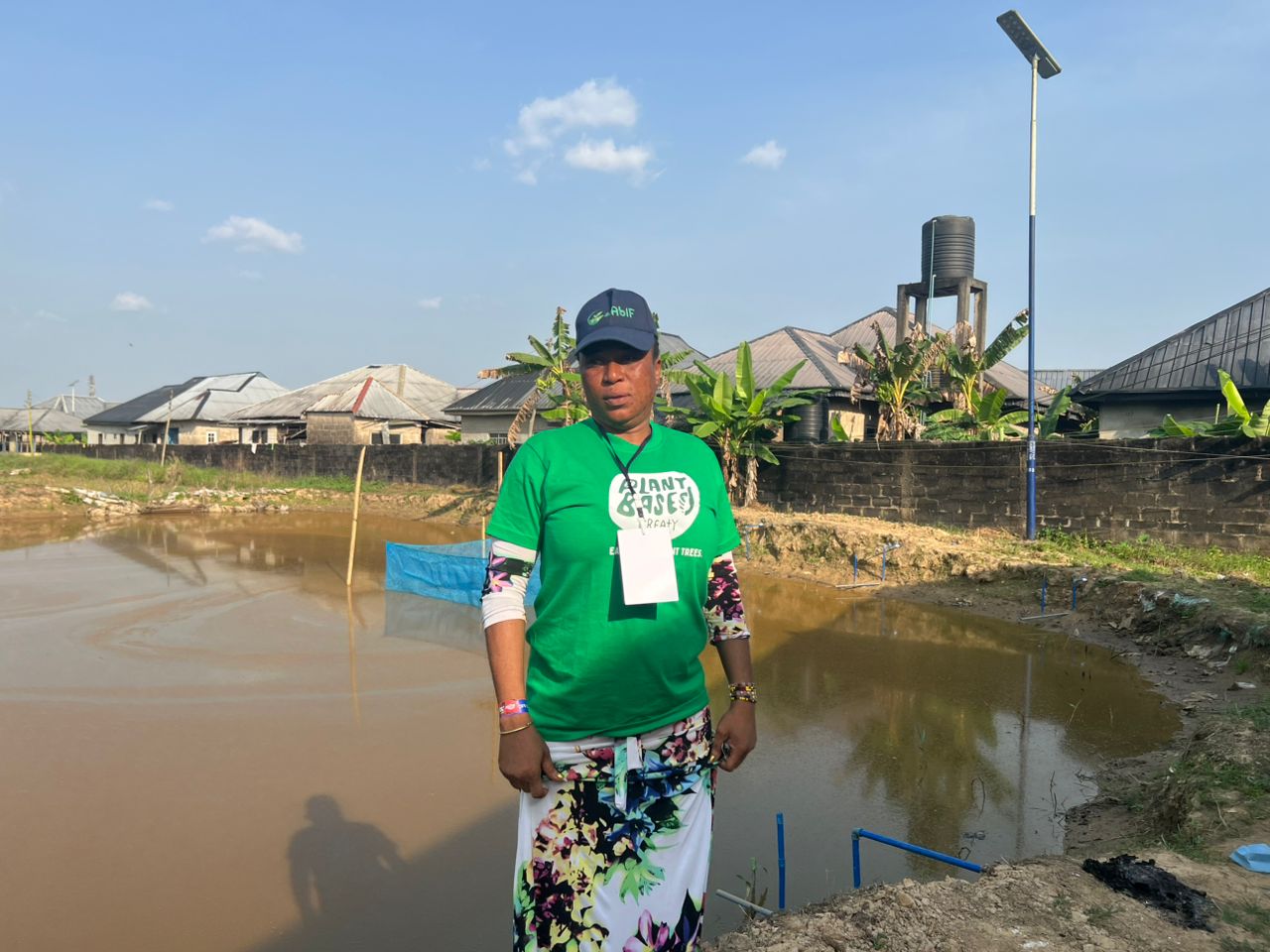
One of the young people who is now a big time commercial fish farmer, Juliet Amakoromo, spoke on how she got to this point she is currently.
According to Amakoromo, she was successfully selected without knowing anybody to influence her enrollment under the LIFE-ND Project in 2019.
Amakoromo said it took her one year to undergo the training on fish production as an incumbatee to master the process and all technicalities involved.
She said: “After I applied to join the LIFE-ND programme, they sent me to my incubation center, where I stayed for a year and almost six months under my incubator.
“He (incubator) taught me fish farming, processing, and fingerling production.”
The elated fish farmer Amakoromo is the Chief Executive Officer, CEO, and Managing Director, MD, PTADELA Farms, Yenagoa, Bayelsa State.
Her success story was amazing owing to the fact that she gave her time and was determined to eke out a living from the business, which today had made her a major fingerling supplier within and outside Bayelsa State.
Explaining why she majored in fingerling production said because of its profitability.
“Well, I picked more interest in the fingerling production because there was more money there. So I went into it; first, I started as a marketer.
I marketed for people that are into the fingerling production. Then at a point, I started after the training.”
According to her LIFE-ND gave her starter empowerment items to kick-start her business after graduating from the training.
“I was empowered with 1,500 fingerlings of catfish and 50 bags of feed from 2 mm to, I think, 6 mm which we used to raise our fish. So after raising, I sold my fish and I don’t have a land of my own then.”
Surmounting initial challenges
“So I was like, no, this knowledge will not go in vain. I have to start something. So I started looking for farms. I rented farms to start doing my production, doing my business.
“Gradually, I started growing. I started from a small place. I just rented this place to move in because I am expounding.”
Today, her farm houses about 36 concrete and earthen ponds, with a single earthen pond accommodating up to 10,000 table-size catfish. She has hatched and supplied millions of fingerlings, including bulk supplies of over 200,000 at different times.
Now an incubator herself, Amakoromo currently trains over 20 young incumbatees and has earned global recognition, including support from WorldFish, which supplied tilapia species from Malaysia to boost her production.
Patronage
Speaking on this important part of her business, she said, “I have hatched and supplied millions of fingerlings because of the Fadama project; sometimes we supply 200,000. Then I have clients that I supply; sometimes they buy 60,000, 80,000 fingerlings depending on the size of their farms.
Another beneficiary, 27-year-old George Wonyengifie Awo, shared that his life took a positive turn after his training under the programme. His farm currently produces between 1,000 and 1,500 fish, and he is working toward expansion and business registration.
Speaking on the programme’s impact, Bayelsa State Coordinator of LIFE-ND, Kester Amos, described it as a game-changer in promoting self-employment and wealth creation among youths. He said the state focuses on cassava, plantain processing, poultry and fish farming using the successful incubator-incubatee model.
Amos revealed that over 4,500 youths and women have benefited in Bayelsa State alone.
“We adopt the incubator model where we have incubators, those who own farms and we bring in ‘incubatees,’ those who do not own farms but are interested in agriculture.
“And we make sure we reach out to those who are interested so that the entire system is not wasted. So there are people who are interested in agriculture, and we tie them to the incubators for a period of training.
“As you know, Bayelsa is one of the smallest states with the lowest number of local governments. We have eight of them and LIFE-ND Project is supposed to cut across different communities in each of these local governments.
“So we have taken advantage of that to make sure we reach out to all the local governments and get all the communities within these local governments and the youths involved in the programme.
“So we have cut across every local government in its entirety. I can tell you that we have reached out to over 4,500 youths and women”, he said.
The LIFE-ND Project is supported by the Federal Government of Nigeria, funded by the International Fund for Agricultural Development, IFAD, with the Niger Delta Development Commission, NDDC, as co-implementing agency. The programme focuses on seven priority commodities: rice, cassava, oil palm, poultry, cocoa, plantain and fisheries.
Currently implemented across the nine Niger Delta states — Abia, Akwa Ibom, Bayelsa, Cross River, Delta, Edo, Imo, Ondo and Rivers — the project has recorded over 38,250 direct beneficiaries, comprising 25,500 under IFAD and 12,750 under NDDC.
Initially launched in six states, the project later expanded following counterpart funding approval by NDDC Managing Director, Dr. Samuel Ogbuku, for Akwa-Ibom, Imo and Rivers States, due to its remarkable success in empowering youths, women and Persons with Disabilities (PWDs), many of whom are now employers of labour.
The National Project Coordinator, Engr. Abiodun Sanni, reiterated that the incubator-incubatee model — rooted in long-standing trading practices, especially among the Igbo — has recorded massive success and may soon be adopted nationwide.
Disclaimer
Comments expressed here do not reflect the opinions of Vanguard newspapers or any employee thereof.