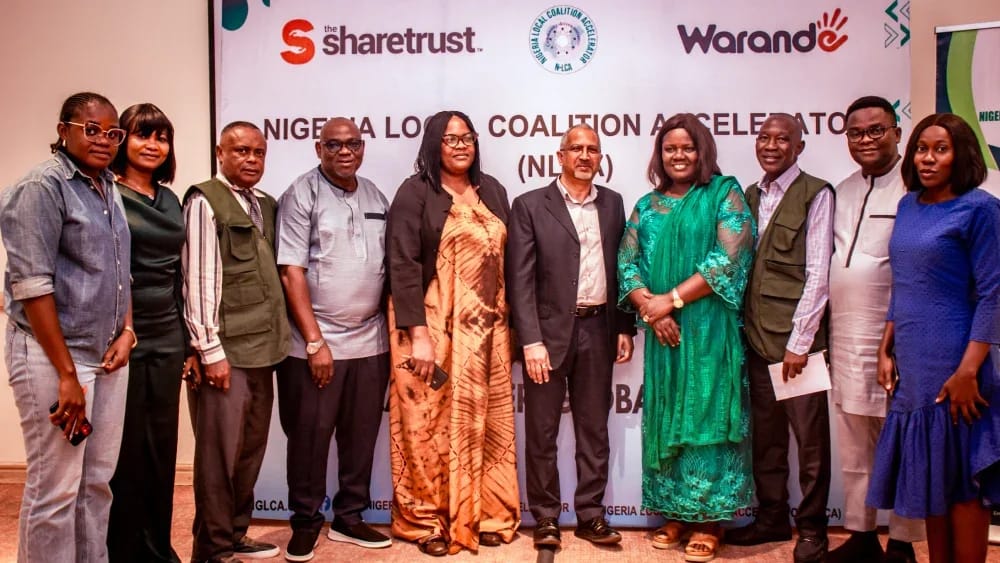
The Nigeria Local Coalition Accelerator has issued a joint communiqué with UN agencies, government ministries, and donors outlining steps to shift development control from international actors to Nigerian grassroots organizations.
The document emerged from back-to-back donor roundtables held in Lagos on November 11 at Eko Hotel and in Abuja on November 13 at Abuja Continental Hotel under the theme “Local Power, Global Impact.”
According to the communiqué, participants agreed on five key recommendations. These include strengthening donor-local actor collaboration, enhancing resource mobilization, promoting inclusive dialogue, integrating accountability mechanisms, and embedding sustainability in development projects.
The roundtables brought together corporate foundations, financial institutions, government agencies, and local NGOs to discuss how localization works beyond development buzzwords.
Government agencies committed to integrating localization priorities into policies, programs, and budgets. Donors and corporate partners pledged long-term, flexible funding and capacity-building support for local organizations. NLCA committed to continuing multi-stakeholder convening and piloting a Localization Accountability and Decision-Making Dashboard to track commitments.
The communiqué specifically emphasized integrating marginalized populations, women, and persons with disabilities in planning and decision-making. Officials noted that localization efforts must reach beyond local elites to achieve genuine community ownership.
Participants discussed challenges including poor donor coordination, corporate social responsibility programs that ignore local priorities, and communities being excluded from decisions about projects meant to serve them.
The document proposes actionable steps including formalizing a national localization engagement framework, developing capacity-building programs for local organizations, establishing tracking mechanisms to monitor commitments, and scaling knowledge-sharing platforms.
NLCA mentioned partnerships with the Federal Ministry of Science and Technology, Ministry of Budget and Economic Planning, Ministry of Humanitarian Affairs, and Nigeria Industrial Training Fund to support grassroots initiatives.
The communiqué stated that locally led development is achievable through inclusive dialogue, shared commitment, and collaborative action. However, implementation will test whether these commitments translate into actual shifts in funding flows and decision-making power.
The roundtables marked a significant effort to align diverse stakeholders around community-led development, though observers note that similar frameworks have struggled with follow-through in the past. For the local organizations NLCA represents, the proof will be whether conversations produce tangible changes in how development aid flows in Nigeria.
Disclaimer
Comments expressed here do not reflect the opinions of Vanguard newspapers or any employee thereof.