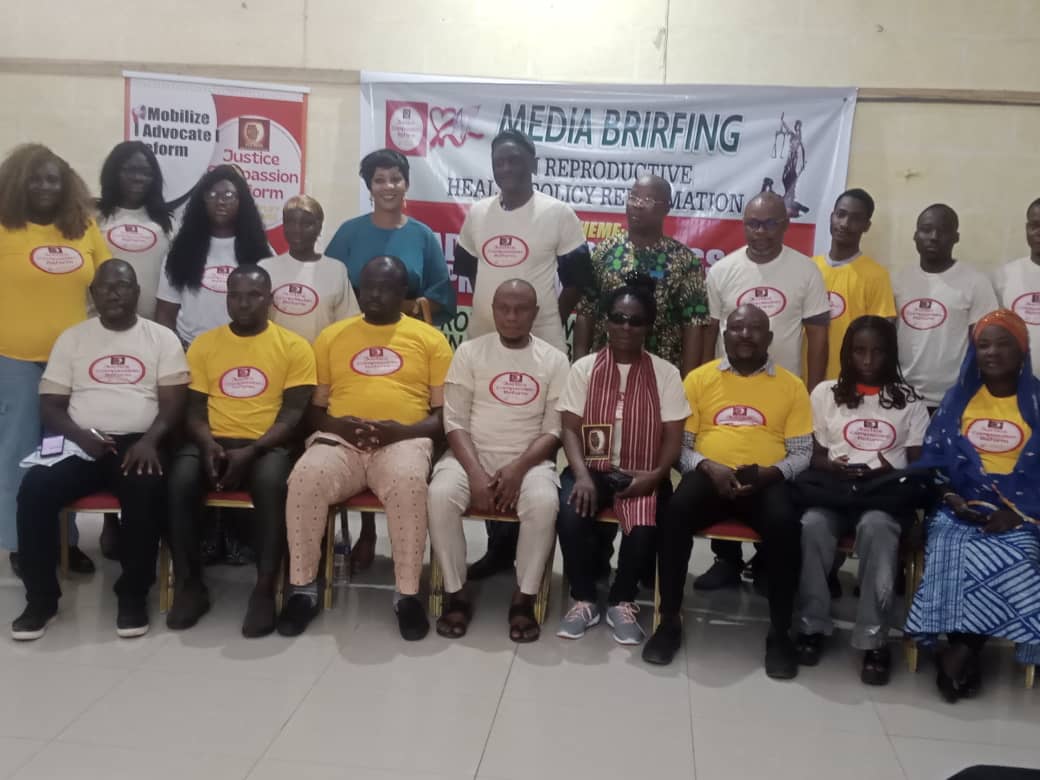
By James Ogunnaike, Abeokuta
A Non-Governmental Organization, Gender Development Initiative (GenDi), has renewed its commitment to reducing maternal mortality in Ogun State, through policy reforms, strengthened health systems and improved access to quality and affordable reproductive health services for women and girls across the state.
The GenDi Consultant, Tayo Akinpelu, who made the call at a press briefing on policy reformation and maternal mortality reduction, in Abeokuta, Ogun State capital, appealed to the Ogun State House of Assembly to enact a law that would allow safe and legal termination of pregnancy in cases of rape, incest, and life-threatening medical conditions.
According to Akinpelu, the proposed law was not aimed at encouraging abortion, but to save lives and protect the dignity of victims of sexual violence and women with severe health risks.
He said that GenDi has been actively advocating for policy reform aimed at safeguarding the rights and wellbeing of survivors of rape, incest, and individuals with health-constrained pregnancies, through the promotion of enabling laws and improved access to safe and quality reproductive health services in the state.
He lamented that preventable maternal deaths continue to occur, especially due to complications from unsafe termination of pregnancy, delayed referrals and inadequate access to emergency obstetric care, particularly in rural and underserved areas.
Akinpelu said, “maternal mortality remains one of the most pressing public health challenges in Nigeria, and Ogun State is not exempted, emphasizing that despite ongoing efforts, hundreds of women still lose their lives each year to pregnancy-related complications that are largely avoidable”.
“Many of these deaths result from unsafe termination practices, poor access to skilled care, weak referral systems, and limited reproductive health services especially affecting survivors of rape, incest, and women facing life-threatening health conditions”.
He emphasized the GenDi’s commitment to reducing maternal mortality through evidence-based policy reforms, strengthened health systems, and improved access to quality and affordable reproductive health services for women and girls across the state.
He added that GenDi has implemented a multi-pronged approach to reduce maternal mortality in the State, through survey, stakeholders’ consultation and capacity development, legislative engagement, as well as community sensitization
While blaming cultural, religious and social barriers as some of challenges hindering open discussion of reproductive rights, unsafe termination of pregnancy, and limiting access to and uptake of essential reproductive health services in the State, he said the state government through its partnership with the organization has been able to develop guideline on Safe Termination of Pregnancy (STOP) that supports women and Girls reproductive Health Rights.
He disclosed that Ogun State has made significant progress in maternal health, with the maternal mortality ratio estimated at 194 deaths per 100,000 live births, far below the national average of over 500 per 100,000, stressing that the progress reflects the State government’s increasing investment in primary healthcare and collaboration with civil society organizations to strengthen reproductive health in the state.
He called on the Ogun State Primary Healthcare Board to scale up maternal and perinatal death surveillance and response to ensure every maternal death is tracked, analyzed, and prevented.
“The Ogun State Primary Healthcare Board should work more collaboratively with CSOs, community and religious leaders and media to combat misinformation and stigma surrounding SRHR and maternal mortality”.
“Ogun State Primary Healthcare Board should strengthen maternal health systems by expanding access to emergency obstetric and post-abortion care across all local government areas”.
On her part, the Executive Director of GenDi, Prof. Olubunmi Ashimolowo in her remarks cited a recent case where a father impregnated his daughter, questioning the social and moral burden such case creates.
“We are only pushing for three categories — survivors of rape, victims of incest, and women whose medical condition puts their lives at risk,” Ashimolowo explained.
The NGO, according to her, has been engaging not just legislators but also community leaders, religious leaders and local government representatives.
Disclaimer
Comments expressed here do not reflect the opinions of Vanguard newspapers or any employee thereof.