By Joseph Erunke, Abuja
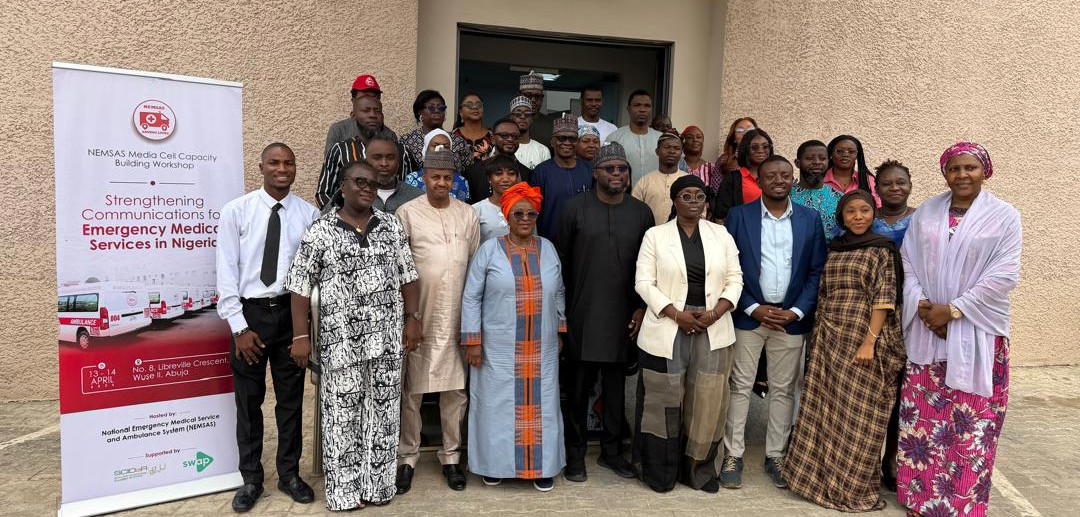
Abuja—Nigeria’s emergency medical response system is leveraging simple mobile technology to save the lives of pregnant women, even in the most underserved communities,the National Programme Manager of the National Emergency Medical Services and Ambulance System,NEMSAS, Dr. Doubra Emuren, revealed during a media training workshop in Abuja.
Addressing participants at the NEMSAS Media Cell Training Workshop, Emuren unveiled an innovative, low-tech solution modeled after ride-hailing platforms but tailored to Nigeria’s realities,where many rural women lack smartphones or internet access.
“We designed a system like Uber, but powered by USSD,” she explained.
“Most of these women don’t have Android phones, so we rely on basic mobile technology available in their communities,”he further explained.
Under the initiative,popularly known as “Save Mama”,pregnant women in emergency situations can trigger a response through a central command system.
There are other initiatives like MAMII or Mama Kits, all targeted interventions aimed at reducing high maternal and newborn mortality rates in Nigeria.
They aim to improve access to maternal healthcare, reducing financial barriers with free “Mama Kits,” creating awareness, and training skilled birth attendants to ensure safe deliveries in rural and underserved areas.
According to him,”Once a call is received,
NEMSAS dispatches alerts to a pool of registered emergency transport drivers.,
“The first driver to respond via a USSD code is assigned the case.The driver receives the woman’s location and proceeds to pick her up.
Health facilities are simultaneously notified to prepare for arrival.
“Each stage—pickup, delivery, and hospital reception,is confirmed through USSD prompts.
The system also ensures that drivers are compensated, albeit through a manual voucher collation process due to restrictions linking directly with financial platforms,”he explained.
Emuren disclosed that the system has already facilitated the transportation of hundreds of women, revealing further that 593 recorded prior to the last monitoring cycle,across 136 local government areas under the Maternal and Neonatal Mortality Reduction Innovation Initiative (MAMI).
However, coverage remains uneven. Several regions, particularly in states like Zamfara, Borno, Kebbi, Sokoto, Adamawa, Benue, and Kogi, are either partially operational or completely excluded due to security challenges and lack of state-level support.
“This is a shared responsibility. We’ve signed compacts, but states must step up with complementary support,”stressed.
Despite its promise, the USSD-based system has faced setbacks due to network issues with telecom providers, forcing NEMSAS to rely on manual phone calls for dispatch and follow-ups.
More troubling, however, are allegations of poor compliance among healthcare facilities.
Emuren accused some hospitals of failing to maintain 24/7 NEMSAS desk officers, turning away emergency patients and engaging in double billing despite federal reimbursements.
“In one case at the National Hospital Abuja, patients claimed services didn’t work on Sundays because no desk officer was available,” he recounted.
According to Emuren, over N1.417 billion was disbursed last year to healthcare facilities under NEMSAS. Yet, concerns persist about whether these funds are translating into improved patient care.
“We are paying facilities regularly,N20 million, N30 million,but the outcomes don’t always reflect this,” he said.
In a striking appeal, Emuren challenged the media to go beyond reporting and actively investigate the system.
“We don’t have the manpower to monitor every facility,” he admitted, charging newsmen to probe the development.
“This is where journalism comes in. Help us uncover the truth,get beneficiary feedback, expose gaps, and hold institutions accountable,”he pleaded.
He emphasized that transparency and accountability are critical to the program’s success, urging reporters to scrutinize both state governments and healthcare providers.
While NEMSAS continues to refine its operations-combining digital innovation with manual backups,the agency is also exploring partnerships to expand services, including transportation for antenatal visits in hard-to-reach areas.
Still, Emuren was clear about the agency’s core mandate: emergency pre-hospital care, particularly for vulnerable populations.
“Our goal is simple-No woman should die because she couldn’t get to a hospital in time,”he said.
As Nigeria battles maternal mortality, the success of NEMSAS may hinge not only on technology or funding, but on accountability, collaboration, and the vigilance of the press.
Disclaimer
Comments expressed here do not reflect the opinions of Vanguard newspapers or any employee thereof.