By Chioma Obinna
The Lagos State Government had said that it is taking decisive steps to transform its healthcare system through technology, equitable access, and major infrastructure investments.
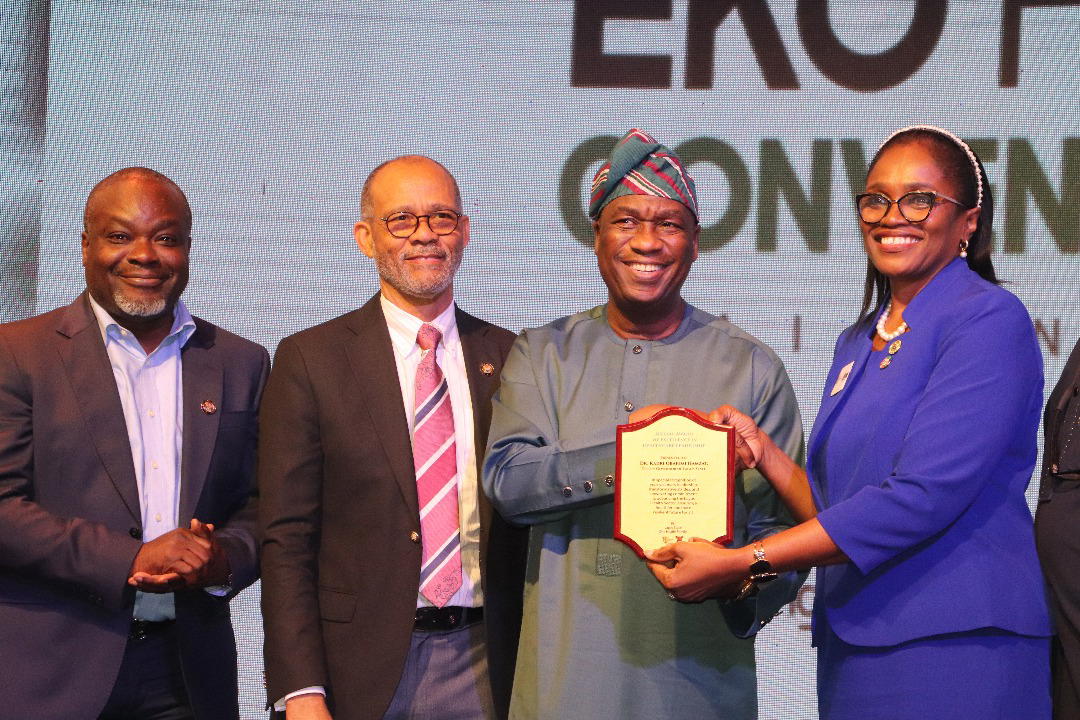
This was the central message at the maiden edition of the Eko Health Convention, which opened yesterday in Lagos.
Speaking on behalf of Governor Babajide Sanwo-Olu, his deputy, Dr. Obafemi Hamzat, said the administration is “rewriting the story of healthcare in the 21st century,” as it works to deliver efficient, inclusive, and innovative health services.
The convention, themed “Lagos Health: Driving Innovation, Strengthening Systems, Leading Change,” brought together government officials, health experts, and development partners to assess progress and chart the next phase of reforms.
Over the past six years, Lagos has expanded access to healthcare through a series of landmark projects, including Maternal and Child Centres in Eti-Osa, Badagry, and Epe; new general hospitals in Ojo and Somolu; and the Lagos State Mental Health Institute in Ketu-Ejirin. Sanwo-Olu said these investments represent targeted efforts to strengthen secondary and tertiary care across the state.
He highlighted Lagos’ response to the COVID-19 pandemic and its biosecurity investments as proof of foresight, noting facilities such as the Mainland Hospital in Yaba, the Lagos Biobank, and plans for an International Infectious Disease Research Centre.
The state, he said, has also embraced digital health solutions like electronic medical records and the Smart Health Information Platform (SHIP) to modernise data management and service delivery.
On healthcare financing, Sanwo-Olu reaffirmed the government’s commitment to achieving Universal Health Coverage (UHC) through the ILERA EKO scheme. Following an Executive Order in 2024, health insurance has become mandatory for all residents. To boost enrolment, he said, the government will expand subsidies, set up registration points in markets and pharmacies, and target 15 percent population coverage in the coming years.
The governor also announced plans to strengthen emergency medical services, including the recruitment of over 3,000 healthcare workers, creation of a paramedic corps, and deployment of 28 new ambulances and 10 rapid-response motorbikes. New ambulance bases and trauma links will enhance response times, while the Custodian Accident and Emergency Centre in Epe will serve the state’s eastern corridor.
Sanwo-Olu outlined key priorities for the coming years: completing flagship healthcare projects, scaling digital transformation with artificial intelligence and real-time disease surveillance, delivering universal health coverage, and investing in health personnel and partnerships.
He urged Lagosians to enrol in the ILERA EKO scheme, adopt healthier lifestyles, and support public health programmes.
In her remarks, Dr. Kemi Ogunyemi, Special Adviser to the Governor on Health, said the convention was designed to deliver concrete outcomes, not just policy discussions. She stressed the need for universal quality care, strong public-private partnerships, and citizen engagement, noting that Lagos—home to more than 12 percent of Nigeria’s population—must plan inclusively.
Also speaking, Prof. Akin Abayomi, the Commissioner for Health, presented the state’s infrastructure and digital blueprint titled “Bricks and Bytes.”
He unveiled plans for the Massey Children’s Hospital, Iba-Ojo General Hospital, and the Comprehensive Cancer Institute, all designed to be climate-resilient and future-ready.
Abayomi also announced proposals for a University of Medicine and Health Sciences and the Lagos State Medical Industries and Innovation Centre (LASMISO) to boost local pharmaceutical production and health research. He described SHIP as the backbone of Lagos’ digital health future—linking facilities through telemedicine, data analytics, and electronic records for better planning and outcomes.
The Permanent Secretary, Ministry of Health, Dr. Olusegun Ogboye, said universal access remains the true measure of success.
He cited improvements in ambulance services, maternal health interventions, and the integration of health insurance through LASHMA.
He also introduced the forthcoming State Health Information Exchange, which will unify patient data across all facilities to support evidence-based decisions.
In a presentation, Dr. Bodunrin Osikomaiya, Executive Secretary of the Lagos State Blood Transfusion Service, unveiled HaemoCentral—a real-time blood inventory system using barcodes and QR codes to ensure faster and safer blood allocation across the state. The platform, she said, will soon integrate AI and logistics tracking to enhance efficiency.
Disclaimer
Comments expressed here do not reflect the opinions of Vanguard newspapers or any employee thereof.