By Henry Obetta
Stakeholders in the healthcare sector have called for stronger public-private partnerships, increased investment and expanded health insurance coverage to improve access to quality diagnostic services and healthcare delivery in Nigeria.
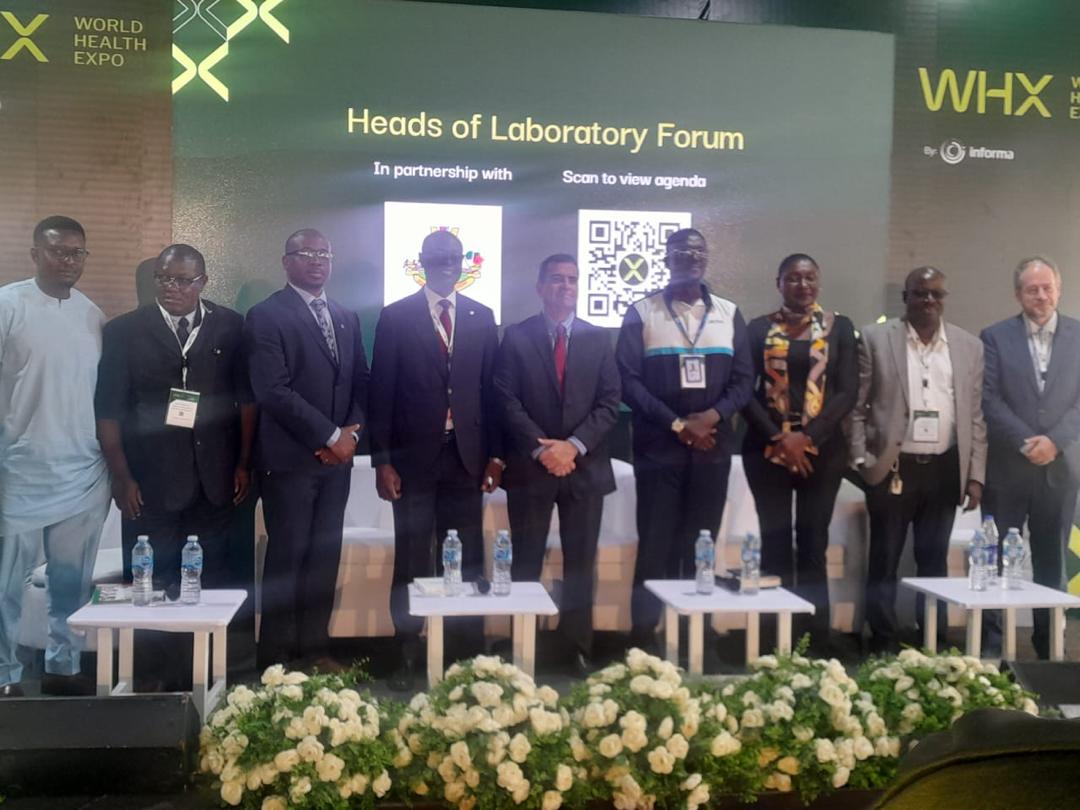
The call was made on Thursday, third day of the three-day World Health Expo, WHX, conference in Lagos, which welcomed over 8,000 healthcare professionals and 500 exhibitors spanning 40 countries.
The Director of the Centre for Genomics of Non-Communicable Diseases and Personalised Healthcare, University of Lagos, Prof. Oluyemi Akinloye, while giving his keynote speech themed: “Transforming Diagnosis Through Investment, Innovation and Strategic Partnerships.” said advances in technology are transforming disease diagnosis globally, but stressed that greater collaboration is needed to ensure such innovations benefit ordinary citizens.
According to him, healthcare diagnostics has evolved from basic observational methods and microscopy to sophisticated technologies powered by artificial intelligence, automation, genomics and digital health systems.
He said “We need huge investments and innovations that move beyond the research space and become available to ordinary people. Government, industries, universities and research institutes must work together to ensure these innovations reach the common man,”
Akinloye noted that technologies such as artificial intelligence, machine learning, telepathology and personalised medicine are improving the accuracy of diagnosis and reducing human errors in healthcare systems around the world.
Also speaking, Chief Executive Officer of SYNLAB Nigeria, Kenneth Okolie, identified poor healthcare financing as one of the biggest barriers to accessing quality healthcare in the country.
He noted that the heavy reliance on out-of-pocket payments often forces Nigerians to prioritise other basic needs over healthcare.
“Before the average individual spends on healthcare, he asks himself: Have I eaten? Have I paid my rent? Healthcare is still largely out-of-pocket in Nigeria and that creates a major challenge,” he said.
Okolie stressed the need to strengthen health insurance coverage and develop sustainable financing models that would enable Nigerians to access medical tests and treatment without worrying about immediate costs.
“We need to find ways that tests can be paid for so that people can access care without having to think about where the money is going to come from,” he added.
On his part, Senior Product Manager, AIA/CL EMEA, Dimitrios Giantzoudis, emphasised the importance of developing cost-effective and sustainable healthcare systems capable of delivering diagnostic services to all segments of society.
He also highlighted the growing role of digital medical records and personalised diagnostics in improving patient outcomes.
“We need a sustainable way to move diagnostics closer to everybody. Medical records and personalised diagnostics are becoming increasingly important because healthcare decisions should be based on a patient’s history and evolving health data,” he said.
The experts agreed that while innovations in diagnostics are advancing rapidly across the world, governments, private sector players, researchers and healthcare providers must work together to ensure such technologies become accessible and affordable to the wider population.
They noted that expanding health insurance coverage, strengthening healthcare infrastructure and encouraging strategic partnerships would be critical to achieving universal access to quality healthcare in Nigeria.
Disclaimer
Comments expressed here do not reflect the opinions of Vanguard newspapers or any employee thereof.