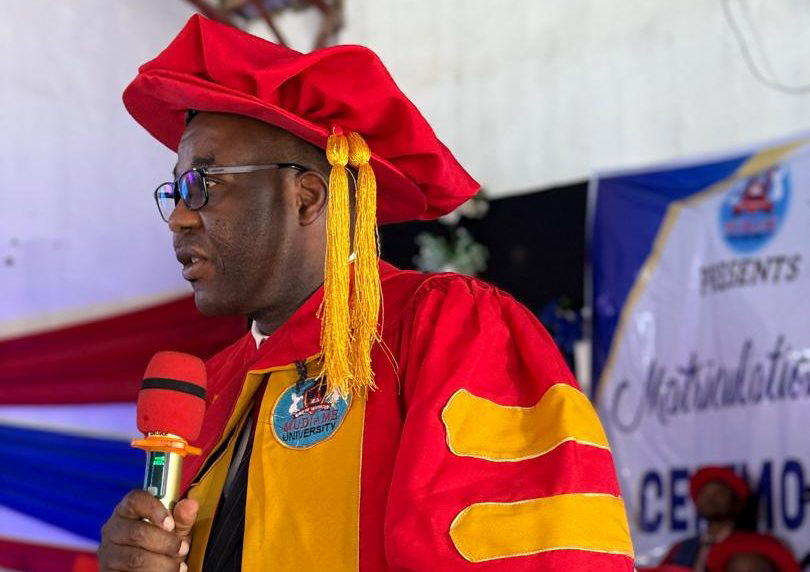
In a decisive push to strengthen Nigeria’s human capital base and extend access to quality healthcare education beyond urban centres, the National Universities Commission (NUC) has approved the establishment of a Bachelor of Medicine, Bachelor of Surgery (MBBS) programme at Mudiame University, Irrua, Edo State.
The approval, effective from the 2025/2026 academic session, followed a successful resource verification visit by a panel of experts who confirmed that the university had met the required academic, infrastructural, and staffing standards.
With this development, the privately owned university, located in Edo’s agrarian heartland, joins a small group of tertiary institutions offering full-scale medical training outside Nigeria’s traditional university clusters. The move, analysts say, could help decentralise access to medical education and improve healthcare delivery in under-served areas.
Founded on a strong background in engineering and industrial technology, Mudiame University is now extending its innovation-driven approach into healthcare education. Its Chancellor, Professor Sunny Eromosele, described the approval as an opportunity to apply scientific precision and research capacity to a sector critical to national development.
“Our journey began with engineering and technology, but every development effort eventually leads back to people,” Eromosele said. “This medical programme is a strategic step to improve human sustainability, ensuring Nigerians are healthy enough to live, learn, and contribute to growth.”
He noted that students from Edo and neighbouring states had faced limited admission opportunities in Medicine and Nursing, often travelling long distances or paying higher fees in other regions. “Mudiame University is bridging that gap,” he added.
Mudiame University’s approach to medical education draws on its technological heritage. The Chancellor explained that the institution plans to repurpose its advanced laboratories, originally designed for oil and gas research, into medical and pharmaceutical research facilities.
“Our target is not only to train doctors but to build a generation of medical innovators,” he said. “We are developing a model where science, research, and technology intersect with human health.”
He disclosed that the university has signed a Memorandum of Understanding (MoU) with the Irrua Specialist Teaching Hospital, leveraging its three decades of clinical experience for practical training, joint research, and innovation in disease control and health management.
Through this collaboration, students will gain both clinical exposure and research grounding, positioning the university as a centre for applied health solutions and pharmaceutical development.
Eromosele believes that investments in quality medical education can gradually reduce Nigeria’s dependence on foreign healthcare and retain skilled professionals within the country
“Every year, thousands of Nigerians travel abroad for medical treatment while many of our doctors emigrate for better opportunities,” he said. “We want to reverse that by building local capacity and infrastructure strong enough to compete globally.”
He added that Mudiame is already in talks with Indian partners to integrate natural and alternative medicine into its medical curriculum, a move he said reflects global trends in holistic healthcare.
The university also plans to launch a pharmaceutical sciences programme by 2026, enabling in-house drug production, research, and export. Eromosele said this will help Nigeria reduce its reliance on imported pharmaceuticals and strengthen local drug innovation.
Beyond healthcare, Mudiame University’s expansion into medicine aligns with Nigeria’s national development priorities—particularly in education, human capital, and regional inclusion.
By locating the new College of Medicine in Irrua, a semi-rural community, the university is contributing to a slow but steady trend of rural academic revitalisation, bringing research, training, and employment closer to local populations.
“The future of education in Nigeria lies in spreading access and building institutions that respond to community needs,” said Eromosele. “Our investment in medicine is as much about national growth as it is about local empowerment.”
The NUC’s decision reflects a broader national strategy to expand Nigeria’s medical training capacity and address the severe shortage of healthcare professionals. The country currently has a doctor-to-patient ratio of one to 5,000, far below the World Health Organisation’s standard of one to 600.
By approving new medical schools such as Mudiame’s, regulators aim to create a pipeline of healthcare professionals capable of serving both urban and rural populations.
For Mudiame University, the goal is clear: to fuse education, research, and innovation into a framework that nurtures not only doctors but problem-solvers, professionals capable of transforming Nigeria’s healthcare landscape from within.
Disclaimer
Comments expressed here do not reflect the opinions of Vanguard newspapers or any employee thereof.