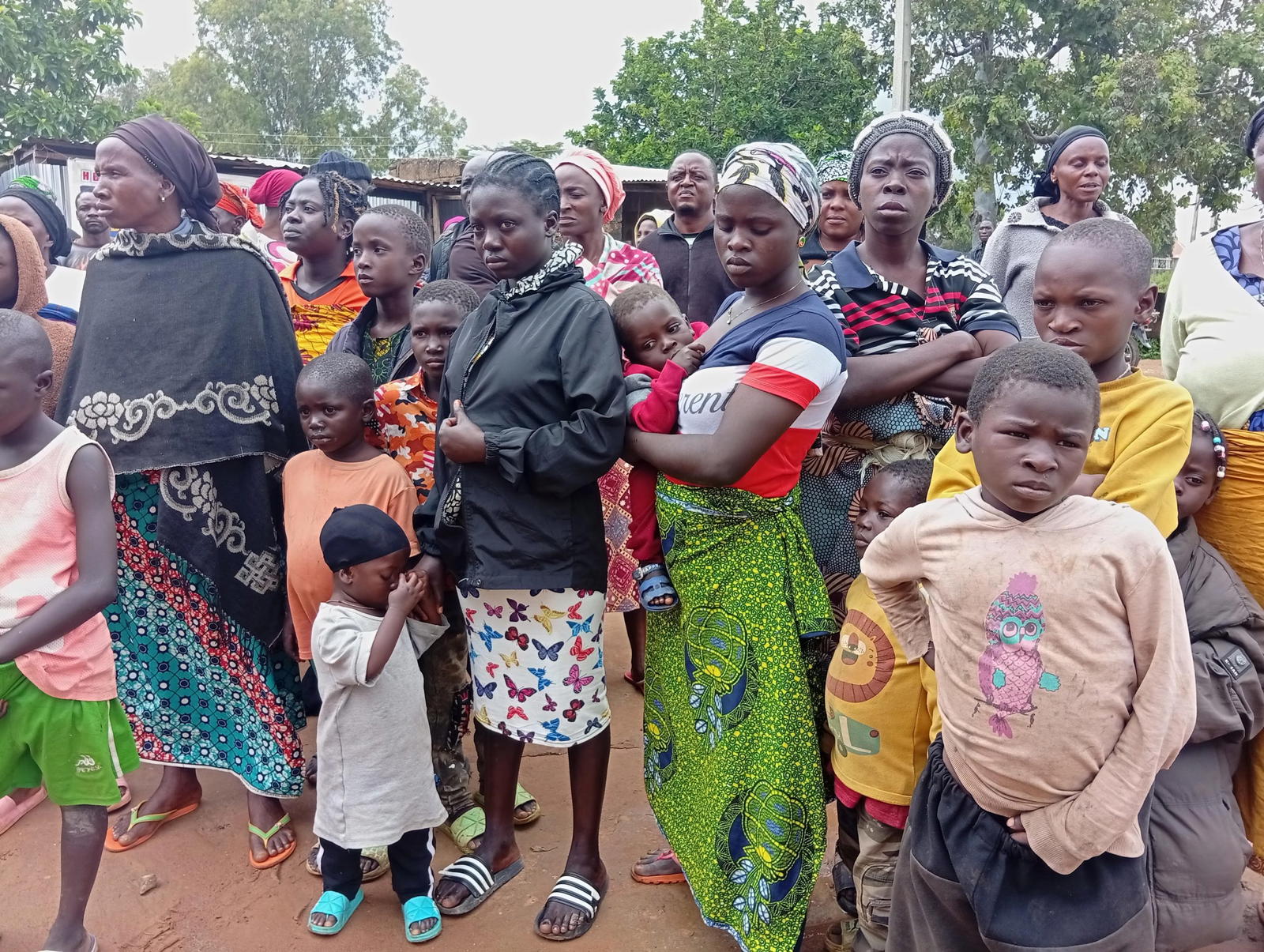
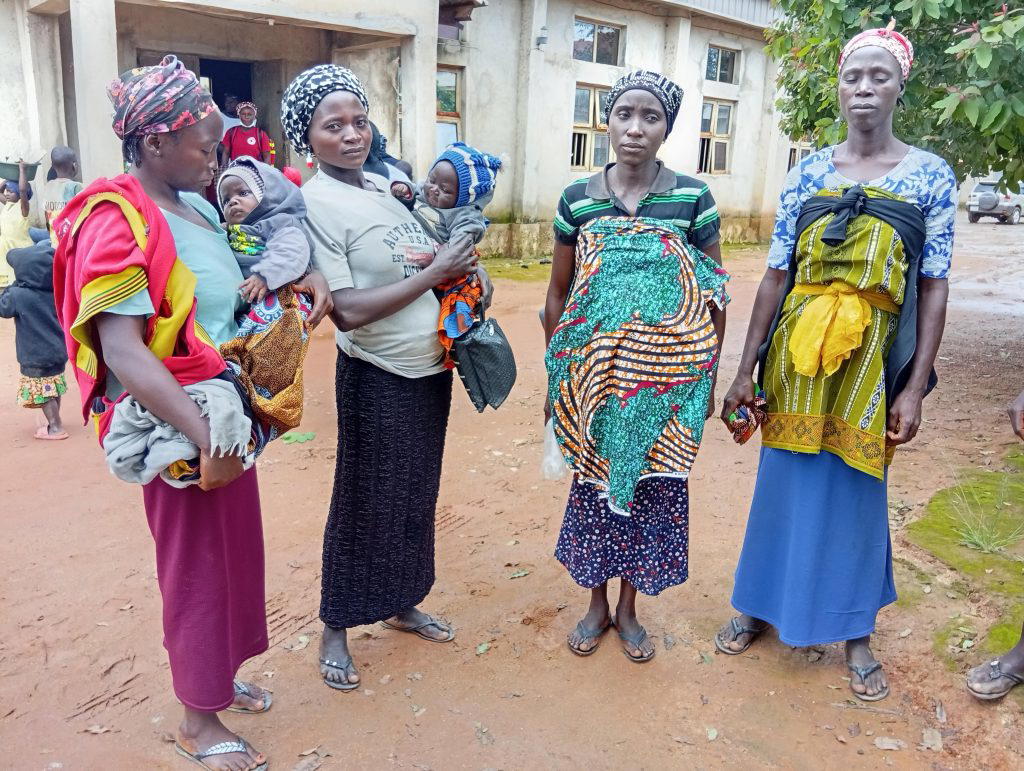
File photo: Some IDPs from Bokkos LGA
By Marie-Therese Nanlong
Jos – Over two decades across Plateau State, violent attacks have uprooted over 100 communities and left tens of thousands of people, especially women and children struggling to survive outside their ancestral homes.
Their stories reveal a humanitarian emergency worsened by broken government promises and dwindling aid, which push the survivors to further hardship.
Unlike what obtains elsewhere, there are no centralised camps in Plateau where the government cater for the displaced persons, affected people stay very briefly in public structures, and worship centres in safer communities before either disintegrating to homes of relatives and friends who wish to accommodate them or renting affordable homes in communities of their choice.
Due to the fluid nature of the temporary shelters, there is no accurate data for IDPs in the State, contingency numbers in public domain from peg figures in thousands.
In June 2025, the International Organization for Migration on its website said “Between 03 and 04 June 2025, a series of attacks by armed bandits were recorded in Bassa and Riyom LGAs, affecting a total of 1,203 individuals from 373 households.
“Among those affected were 672 children, 345 women, 186 men… Following these events, the Displacement Tracking Matrix (DTM) field staff conducted rapid assessments to inform the humanitarian community and government/partners, and to enable a targeted response…”
The Director General of Plateau State Peace Building Agency, Julie Sanda, last month said, “over 31,000 households have been displaced across Barkin Ladi, Bassa, Bokkos, Mangu, and Riyom LGAs. Many of their ancestral lands are still occupied by armed groups, complicating return and recovery efforts.”
In January, 2025, the President of Berom Youth Moulders Association, Solomon Mwantiri stated, “Over 21,000 displaced persons are seeking shelter in the State, with many taking refuge in the homes of relatives and friends…”
In May, 2025, a report by Amnesty International said, “… In Plateau State, armed herders carried out 38 attacks. Between March 27 and April 2, 2025, coordinated attacks took place against five communities in Bokkos local government. In the past two years, 167 rural communities were attacked in Bassa, Barkin Ladi, Bokkos, Jos East, Jos South, Mangu, Riyom and Wase local government areas. As a result, 65,000 people have been internally displaced…”
Bishop Ayuba Matawal, the Chairman of the Bokkos IDP Committee, estimates more than 40,000 people remain displaced in Bokkos alone.
Mark Lipdo of Stefanos Foundation, an organisation working for the relief, and rehabilitation of victims of violence gave 27,927 as “current IDPs status in Bokkos LGA” the breakdown according to communities are “Bargesh – 43, Bokkos – 3,780, Butura – 1,063, Daffo – 4,262, Forof – 281, Keande/Karfa – 27, Horop – 11,000, Manguna – 342, Mbar – 2,375, Mushere – 2,543, Richa – 20, Tangur – 2,000, Tarangol – 26, Sha – 165”.
Lipdo added, “Many have scattered with relatives in Jos and elsewhere, the statistics didn’t cover those.”
In all the figures put out, none gives disaggregated numbers of the displaced persons, making planning for the displaced difficult.
Tracing some of the recently displaced persons in Barkin Ladi, and Bokkos LGAs, to homes where they rent to stay reveals the high level of official neglect they face. There is no official support to put their lives back on track. Family members pay for their accommodation, public spirited individuals offer support, the sick are left on their own, as personal efforts are made for survival.
Some of them encountered at Barkin Ladi shared their stories, a few in annoyance refused, and frowned at being called ‘displaced’ saying, people take undue advantage of them under the guise of help. They demanded improved security to return home to their trade rather than waiting endlessly for promised help.
We Ran with Only the Clothes on Our Bodies: Voices of Displaced Women/Girls
On the cold, Christmas Eve of 2023, 29-year-old Nandi Geoffery, ran into the night with her two little children. Her home in Darwat, Barkin Ladi, newly dedicated two days before, was razed. The night that should have been filled with Christmas cheer became one of horror and loss.
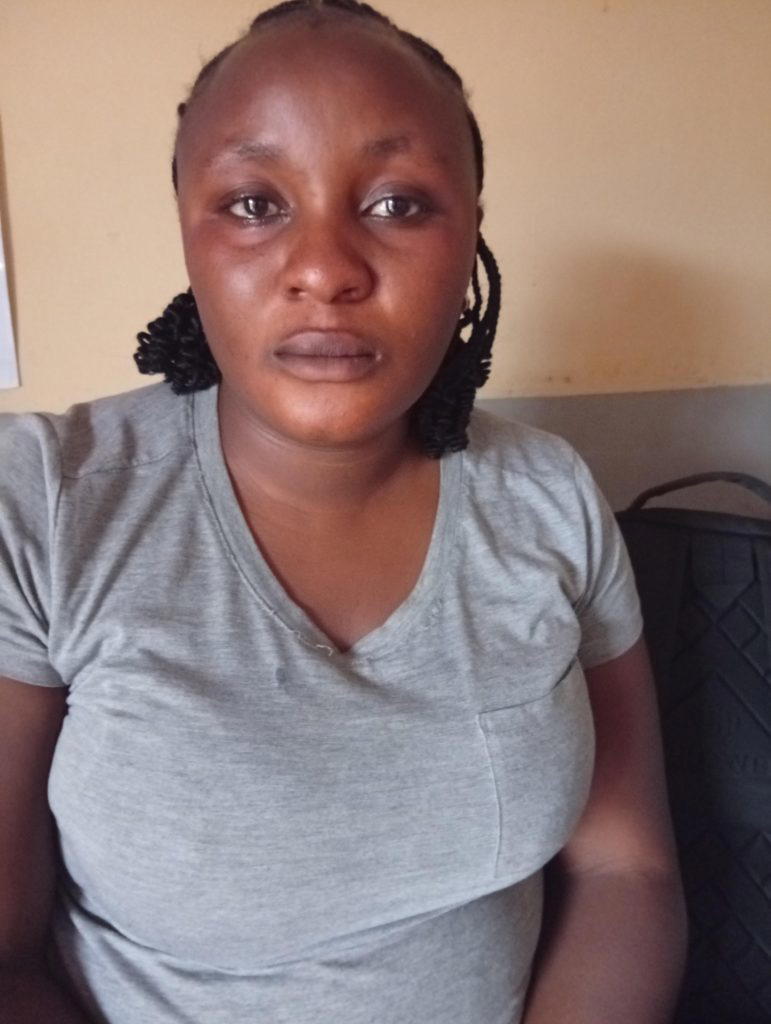
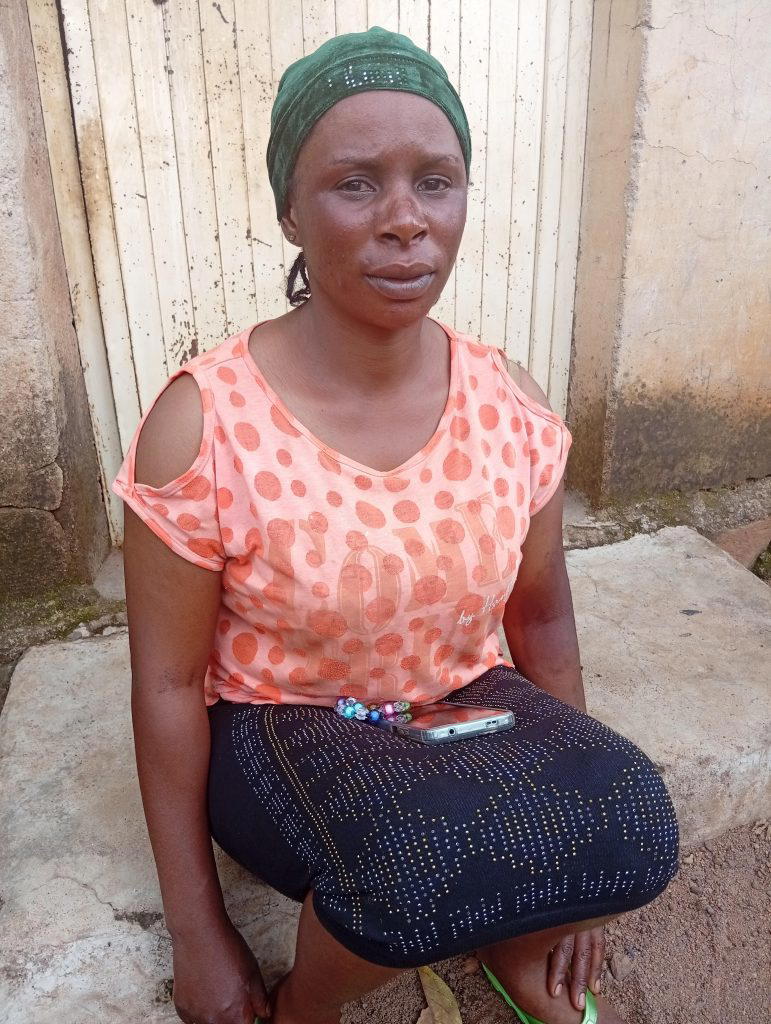
When visited in her cramped, dimly lit room in Gangare (Barkin Ladi) Nandi had just returned from finding food under the rain, empty-handed, but determined to speak. Her voice broke as she recalled, “We just dedicated our modest house on Friday, December 22. On Sunday, December 24, we were attacked and the house was burnt with everything in it. My aged father-in-law couldn’t run and was killed; my mother-in-law who escaped with us later died from high blood pressure.”
Her words echoing with pain, she added, “My baby and I were soaked because the baby was stooling and vomiting, we could not change, we ran with only the clothes on our bodies. It was a Fulani family who hid us for some hours and gave me clothes for the baby.”
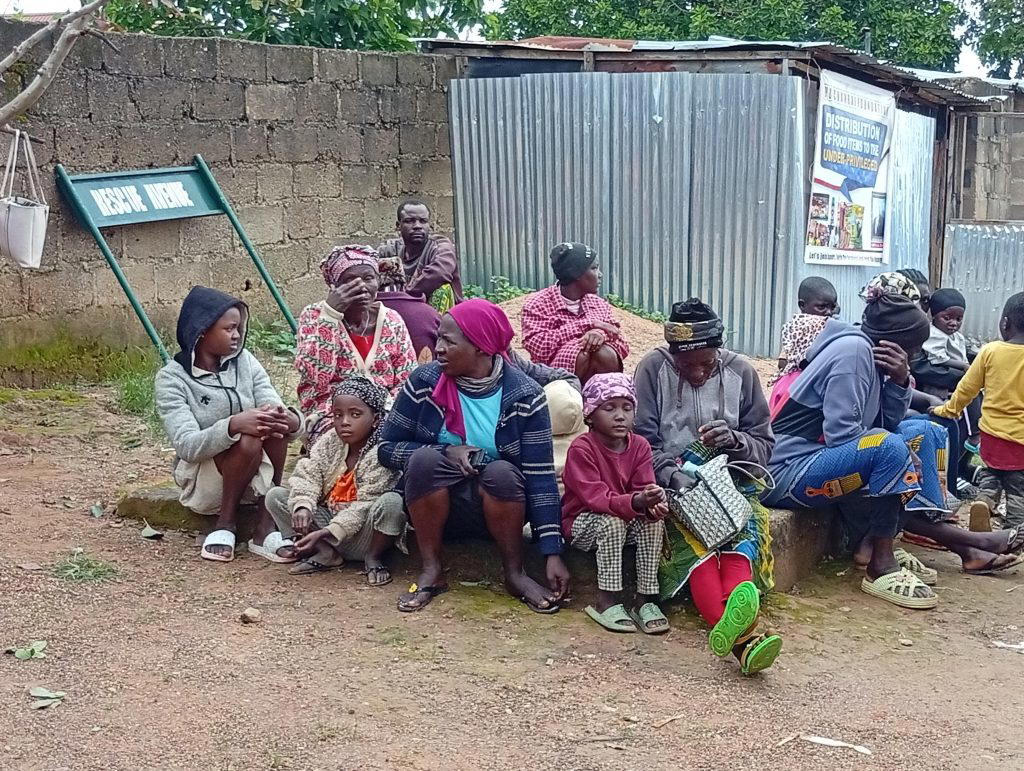
Since that night, every day has been a struggle for Nandi. With no steady source of income, she joined a group of displaced women last month to return home for kuza (mining). But their desperate attempt to survive nearly cost them their lives as she said, “Those who displaced us in the first place chased us away, and a woman they caught was beaten mercilessly,” tears streaming down her face.
At the Koros community (Barkin Ladi), 23-year-old Nanlop Mandik lives with her husband and four children in a single room. The cracked cement floor, the lone bed, and two worn-out stools reveal the depth of their hardship. Yet Nanlop managed a faint smile as she said when visited, “Please manage, it is better than nothing.”
Nanlop fled Manjahota (Barkin Ladi) while two months pregnant. Her journey to safety was punishing as she narrated, “We trekked for hours before an overloaded vehicle picked us up. During my previous pregnancies I delivered without issues, but with the last child, I had a caesarean section because of the stress. My BP is always high.”
Across Bokkos, other displaced mothers carry similar burdens. Patience Sunday, displaced from Minjing in May 2025, backing a three-year old toddler, with tired eyes, she said softly, “I am always hungry, and uncomfortable. I need help… A Pastor of a Church arranged for me to go for antenatal care.”
For Sarah Hassan, who gave birth a month after fleeing Margif, kindness came from a stranger. “A concerned resident at Bokkos town took us in because the cold was too much for us,” she said, rocking her baby as she spoke.
Josephine Julius from Hokk, now staying with a relative in Daffo, battles illness daily. “I suffer constant headache and stomach pain but cannot go to the hospital because there is no money,” she said.
Dorcas Joshua from Kaban, and Janet Mark from Hurti complained, “We don’t even have blankets to cover ourselves and our babies. The cold is causing coughs and catarrh.”
Beyond the pain of hunger and sickness lies the loss of education
15-year-old Ngunret Mimang from Mushere, once a student of Government Secondary School, Kopmur, now lives apart from her parents in Jos.
“I left my former school to stay with a relative because of insecurity. I’m not happy staying away from my family, I just wish we can stay together as we used to,” she murmured, her eyes glistening.
Favour Ishaku from Mbor dreams of returning to school, and expects a miracle from her widowed mother.
“Since we were displaced, some of the girls I knew have been sent to different places to continue their education. But I’m still waiting for my mother to enroll us as she promised,” she whispered.
Their litany of woes exposes the gaps in humanitarian management, the neglect, government inaction, and politicisation of humanitarian relief which have worsened their suffering.
Fragile Camps, Scant Healthcare
Across the State, fluid camps lack dedicated facilities for pregnant or nursing women.
Bishop Matawal noted, “When we had 13 camps, almost 200 women gave birth, even now, women are still giving birth. Since there is no good place for them to stay, some of them move in with their willing relatives. We give them the initial support we can. Most of what we give, diapers, food, sanitary pads, comes from NGOs. There’s no special programme by the government to target this group.
”Initial emergency responses from the government were swift, but follow-up intervention is very, very slow. Between the government and NGOs, NGOs do more for the IDPs,” he said.
How planned FG support reached Plateau IDPs/How SEMA coordinates IDP activities
In the early years of displacements, there was no planned federal government support, stakeholders persistently called for intervention, a federal government promised ₦10 billion resettlement fund, first announced in 2018, remains unpaid despite repeated appeals.
In August 2024, the Federal Government in collaboration with the National Commission for Refugees, Migrants and Internally Displaced Persons (NCFRMI) and the Federal Ministry of Agriculture and Food Security launched the Renewed Hope Agriculture Empowerment Project (REHAEP) for 300 Plateau’s IDPs in Kpasho, Bassa LGA, an effort residents say was grossly inadequate.
There has been the support of the Agro-Rangers of the Nigeria Security and Civil Defence Corps, NSCDC drafted in to protect cultivated farms in displaced communities, as confirmed by Chuwang Rwang, a resident of the Heipang community, Barkin Ladi as well as Olushola Bakenne, a Deputy Corps Commandant who heads the Agro Rangers.
Also, the National Emergency Management Agency, (NEMA), has been responding to emergency situations, working with the State Emergency Management Agency, (SEMA), to map out disaster impact assessment of affected communities, profiling survivors, but funding gaps have been blamed for the lack of commiserate action.
A ranking North Central zone official of the Agency who craved anonymity laments, “widespread emergencies across the country and the limited funds have hindered us from doing what we should do for the IDPs.”
The first visit of the Ministry of Humanitarian Affairs and Poverty Reduction, targeting the real IDPs was during the tenure of former Minister Betta Edu who distributed some food and non-food relief materials. Minister Nentawa Yilwatda and Minister of State Yusuf Sununu also visited.
In the 2025 appropriation act, the Ministry was allocated over N600bn, and NEMA got over N5bn but there is no budget line for IDP activities, it could not be confirmed how much has so far been released for IDPs activities, as no specific project or intervention in the budget is tied to IDPs in Plateau State.
In January 2025, the Ministry while defending the annual budget, stressed the need to create a budget line for Humanitarian Response Fund of N10 billion for communities affected by natural and man-made disasters, but that is yet to be done.
The Plateau State Emergency Management Agency also confirms a shortfall. Of ₦248 million budgeted for IDPs in 2025, only ₦56.9 million had been released by August. Even with a budget line, humanitarian follow-through remains weak.
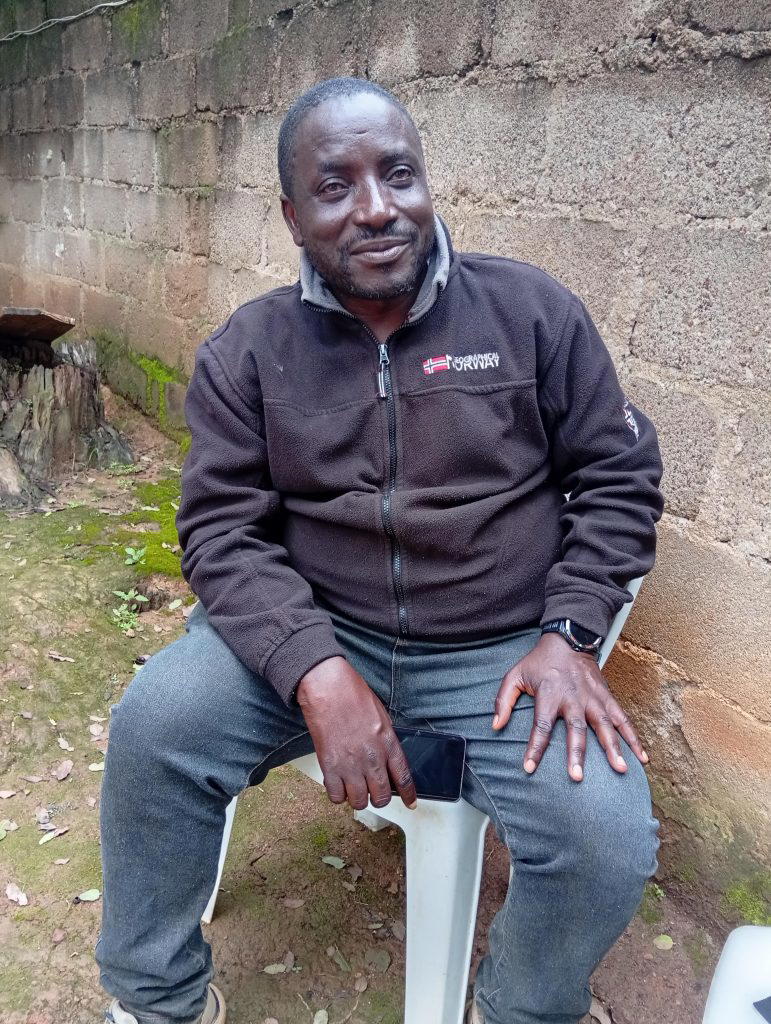
“Budgets are just records,” a senior SEMA official, Chuwang Sha admitted, “Implementation is zero.”
Sha disclosed that SEMA has no data of displaced pregnant and breastfeeding women, and noted that within the present administration, release funds have always been used for food items, and non-food items like “buckets, spoons, blankets, mattresses, mats, which are not even enough to go round.”
He added, “The government’s efforts are greatly improved by the activities of NGOs, some of them target children, some target the groups you mentioned, etc. We only make available whatever the government is able to provide.
“The governments’ efforts at all levels have been inadequate; we have not been mobilized enough to handle emergencies properly, go to the camps, people who can afford are sleeping on mats.”
On the Agency’s activities in the last few years, he said, “We are not ready to tackle the humanitarian problems. Look at our office, does it look like we are serious? The government gave deaf ears in the past, and we are pretending to give attention now, there is a semblance of activities after the neglect of the past.”
However, displaced Simon Dauda from Kuzen, Gashish District (Barkin Ladi) but resident at Gassa (Barkin Ladi) accused the governments at all levels of politicising Plateau IDPS issues saying, “We were displaced in 2018, since then, they keep making promises, including assistance to rebuild our homes.
“I was given a few roofing sheets, a pound of nails, and a few woods. These items can’t roof even a room. The blocks I moulded were destroyed by the herders in Gashish; I had to leave before I lost my life. You keep hearing about one committee to another; the outcome has not affected my life in any way.”
Nandi, mentioned earlier added, “While with the Pastor that hosted us, nursing and pregnant women were asked to write our names for special support. I saw them bring in the support but I didn’t get it because it was finished. A few women got some packs that I didn’t know the contents.
“We were told those who didn’t get will be called at a later time, till date, nothing was heard. The Pastor who was sick at that time, asked us to leave that camp because there was no support to cater for us.”
Rights on Paper, Not in Practice/Government Steps and Shortfalls
The National Human Rights Commission cites Nigeria’s Constitution, the African Charter and UN principles on internal displacement, which obligate the State to safeguard displaced women’s rights to dignity, health and security.
State Coordinator, Kiyenpiya Mafuyai warns, “The lack of access to proper antenatal and postnatal care is a violation of their right to health. These conditions very likely breach international humanitarian standards.”
According to the State Branch Communication Person, Nigerian Red Cross Society, Mafeng Mark, “Pregnant women and lactating mothers need more support, but we work in collaboration with the Primary Healthcare Development Board and we also make referral to hospitals in the case of any emergency.”
The National Policy on Internally Displaced Persons talks on the rights of IDPs, section 3.1 says “… Persons affected by displacement situations experience a wide variety of needs… People are especially vulnerable when they are displaced… For humanitarian action to be effective, it is of paramount importance to take into account all the needs of IDPs… Only a comprehensive approach can ensure that assistance and protection…”
Section 3.1.5: Right of lnternally Displaced Women states “…the sanctity of Nigerian womanhood shall not be violated; Internally displaced women shall have the right to their privacy, shall not be subjected to any form of indignity; and under no circumstance shall women and men be lumped together in a room except as husbands and wives or as members of the same family…”
This has not been the case as Operation Rainbow explained, “the layout of the camps does not adequately segregate women, pregnant women, or nursing mothers, primarily due to the limited space available compared to the large number of victims… Many survivors do not stay long in IDP camps, as relatives often step in to offer them shelter.”
Article 12(2) of the international Convention on the Elimination of All Forms of Discrimination against Women, CEDAW states, “… States Parties shall ensure to women appropriate services in connection with pregnancy, confinement and the post-natal period, granting free services where necessary, as well as adequate nutrition during pregnancy and lactation.”
Although these are lacking, Governor Caleb Mutfwang has been defended for “showing unusual personal commitment to the IDPs,” as his spokesperson, Gyang Bere stated, “He visited IDPs in Riyom, Barkin Ladi, Mangu and Bokkos, personally engaged national security chiefs and secured new Police mobile squadrons in Gashish and Bassa.”
In 2024 the governor set up a Resettlement Committee and in May 2025 inaugurated a Fact-Finding Committee to assess destruction and plan safe returns. The reports have been submitted and the governor has promised that, they will not be left to gather dust because the recommendations will be implemented.
Security Efforts, Lingering Gaps
The lack of inter-agency collaboration, and weak follow-up strategy were discovered as dwarfing the gains made at safeguarding the people.
The Police, generally understaffed, and local security outfit, Operation Rainbow, meant to complement the conventional security efforts say they provide guards for camps and run a gender desk to handle sexual and gender-based violence (SGBV) but independent checks revealed gaps.
The State Police Public Relations Officer, Alfred Alabo noted, “The Police ensure adequate protection for people displaced persons, while in camps, the CP normally directs the Area Commanders and DPOs in the areas to ensure they are well protected.“Whenever possible we support with mobility for women in labour to be conveyed to a nearby health facility.
Most times, the State government provides mobile clinics in the temporary camps so we work with the personnel to ensure they work in safety. If any case of molestation is reported to us, we investigate and effect arrests.”
Further check in Bokkos at the Rescue Force Ministry, and St. Thomas Catholic Church, where the displaced gather to receive assistance reveals no trace of the Police, except for volunteers who made efforts to coordinate the people.
The Coordinator of Operation Rainbow, Brig. Gen. Gakji Shipi (rtd) added, “… We have a robust system for collecting information on threats and making referral on SGBV cases to relevant agencies.”
This “robust system” seems only on paper as the outfit has no data to support the claim. Its Gender Desk Officer, Linda Peter named the State Gender and Equal Opportunities Commission as the referral agency saying the referrals are informal.
“We have not established an official channel of communication; survivors are verbally directed to channel their issue to the Commission. Efforts have commenced to correct the error,” she stated.
But Nene Dung, the Director of Information and Investigation at the Commission, noted, “Security agencies have not brought any such reports to our office. We have heard cases of SGBV involving IDPs but we have not received any official reports,” and explained the Commission engages in community sensitizations, and the use of desk officers in the local government areas to get reports.
Precious Ngulukun who, in 2024 stayed briefly at the COCIN Central IDP camp (Bokkos) observed, “When I was there, two or three policemen and a few men from the NSCDC were seen but they were later withdrawn and we were left on our own.”
A local vigilante, Ephraim from Manguna (Bokkos) said a mobile clinic by the State government and activities of Nigerian Red Cross volunteers helped but security is “always porous” in the makeshift camps.
“We get more security personnel when high profile people visit the camps, once they leave, you can only spot three or four, in a place filled with hundreds of people,” he stressed.
Community Resilience
With thin official support, displaced families rely on relatives, friends, churches and civil society. Sisters helped Nandi and Nanlop to rent small rooms to stay. Nanlop brews kunu (a local drink) for sale though often “we drink it ourselves because people have no money to buy.”
A school teacher, Shetu Monday in Barkin Ladi joins in organising informal classes for displaced children. “Many girls who drop out of school because of insecurity become pregnant because they’re vulnerable in new environments,” she observed.
A Fulani neighbour once hid Nandi and her baby. Churches open their doors. Local volunteers offer support. The Nigerian Red Cross partners with the State Primary Healthcare Development Board to refer pregnant women to hospitals in emergencies, trains volunteers, and health workers to offer timely support, though the Executive Secretary of the Board, Dr. Raymond Juryit says care for the IDPs is done at the affected local governments’ level.
Community Development Associations mobilise support to mitigate impacts of displacements, these and more are some of the community-led coping strategies. These acts of compassion sustain families, but they cannot replace a coordinated, adequately funded government response which is lacking.
Broken Promises, Growing Need
The federal government has repeatedly pledged help. In 2018 then-Vice President Yemi Osinbajo announced ₦10 billion for Plateau farmers and displaced communities; years later, nothing was given. In January 2020, then Minister of Humanitarian Affairs, Sadiya Umar-Farouk announced the Ministry would support Plateau IDPs to return to their ancestral lands, but this too is ignored.
Former governor Simon Lalong, and present governor Caleb Mutfwang made promises too. In January 2024, Minister of State for Defence, Bello Matawalle also promised a yet-to-be seen resettlement.
Nigeria’s 2025 Humanitarian Needs and Response Plan received only 16 percent funded, and NEMA officers in the North Central speaking under anonymity acknowledged dwindling resources.
Many IDPs have lost faith in the resettlement promise. The federal government agricultural empowerment scheme remains at the pilot phase while that of the State government benefits only a fragment of the people.
Relief efforts as testified earlier remain very insufficient as more IDPs emerge in communities in other local government areas, including Qua’an Pan where mothers continue to give birth in very unhealthy sanitary conditions as confirmed by Mr. Sha at the time of this report.
He said, “Six women gave birth, one has a twin, all of them are in the camp in that condition.”
For women like Nandi, these gaps are painfully real, and she desires official support. “A few of us used rags for baby napkins, others didn’t care much,” she recalled. Patience captures the weary determination of many mothers stressing, “I sleep anywhere I find a place. I am always hungry. I don’t have any money to buy food or other needs for the baby.”
A Call for Action
The African Union Convention for the Protection and Assistance of Internally Displaced Persons in Africa (Kampala Convention) which Nigeria ratified in April 2012 declares in its Article III that State must ensure assistance to internally displaced persons by “meeting their basic needs…, provide, to the extent possible, the necessary funds for protection and assistance without prejudice to receiving international support.”
International Human Rights Law places obligations on States to among others, “Take positive measures to facilitate the enjoyment of basic human rights,” the Guiding Principles on Internal Displacements in Principles 3(1) and 18(1,2) also urged authorities to protect, provide humanitarian assistance including clean water, essential food, medical services, sanitation, as well as clothing and shelter to displaced persons.
Plateau’s reality of sporadic relief, untreated illnesses, and disrupted schooling falls far short.
Until sustained security and humanitarian action match the scale of the crisis, displaced pregnant women, nursing mothers, and girls in Plateau will remain “abandoned by the system,” bearing the heaviest burden of violence they did nothing to provoke.
This report was facilitated by the Wole Soyinka Centre for Investigative Journalism, WSCIJ under the Champion Building component of its Report Women News and Newsroom Engagement project.
Photos by Marie-Therese Nanlong
Disclaimer
Comments expressed here do not reflect the opinions of Vanguard newspapers or any employee thereof.