…As EU, UNICEF move to strengthen state’s social protection system
By Steve Oko
UMUAHIA – No fewer than 800,000 school children ranging from Primary 1 to Junior Secondary School 3 (JSS3), currently enjoy free education in Abia State.
Commissioner for Poverty Alleviation and Social Protection, Mrs Blessing Felix, who disclosed this at a workshop on “Supporting Sustainable Social Protection”, held in Umuahia, said the gesture was a demonstration of the State Government’s commitment to improving the wellbeing of the vulnerable group.
She also disclosed that no fewer than 100,000 residents of the state had been captured in the state government’s health insurance scheme as part of government’s efforts to cater for the poor.
The European Union -sponsored workshop, facilitated by UNICEF was aimed at strengthening states’ social protection register through the generation of comprehensive and accurate database.
The Commissioner said that the Alex Otti-led administration was not only interested in giving palliatives to the vulnerable groups but also in tackling the root causes of poverty so they could be self reliant.
She said:”Poverty is not just about giving palliatives. Palliatives are not vaccine against poverty. When you want to ensure that somebody is truly alleviated from poverty, you need to target education. Do they have education? Because in the end, all of these indices support the person to become self-reliant and not dependent. “
“Indigent people should not be remembered as tools for election, but as people who are members of our societies, and our families that we need to look after”, the Commissioner added.
She said the state intended to expand its social register database as guide for various interventions to positively impact the vulnerable.
Contributing, the Commissioner for Budget and Planning, Mr Kingsley Anosike, said generation of accurate database is key to adequate planning.
He revealed that Abia currently has 240 households of average five members in its social register.
“We have 240 households in our social register and we are working very closely with the national body to expand the register at the moment.
“Data is everything. From the planning point of view, If you do not have a good database, it will be difficult for you to project. But with robust database, it will enable you to respond and intervene in the social needs of the population.”
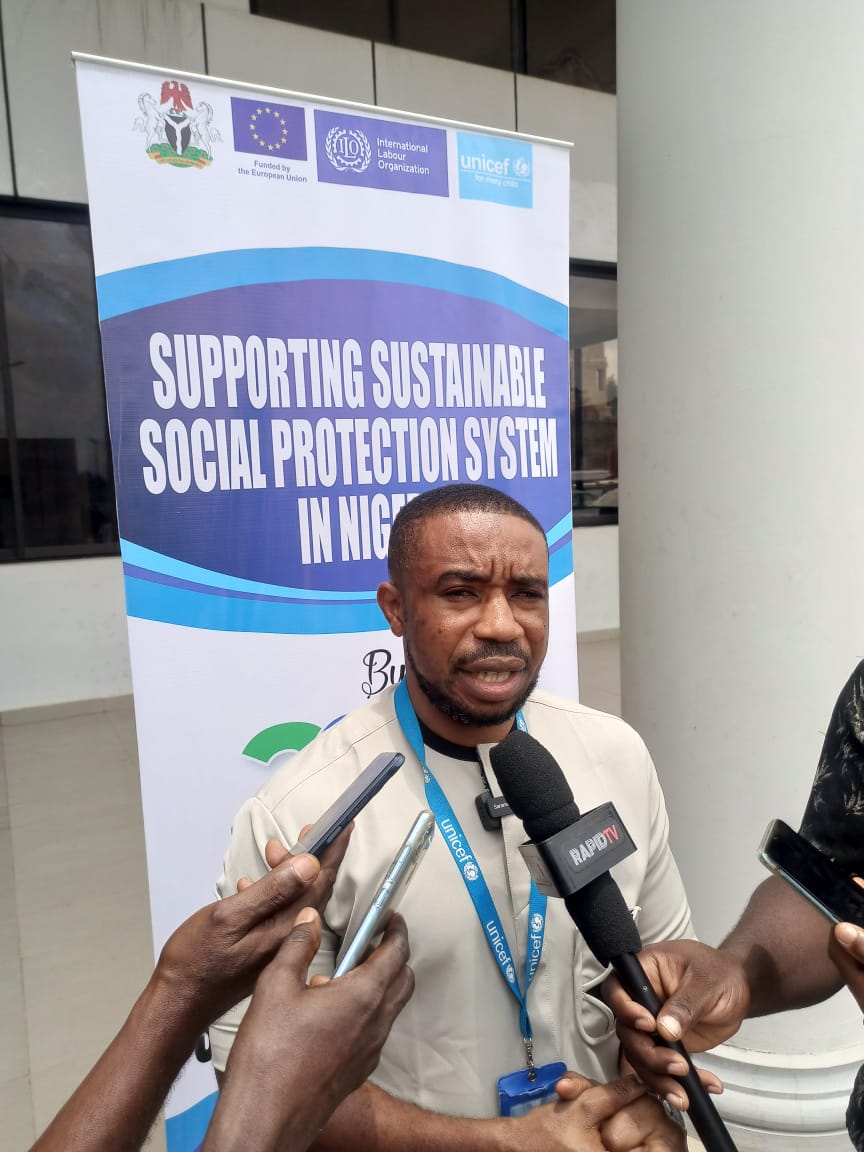
Social Policy Officer for UNICEF, Enugu Office, Dr Victor Chima said “UNICEF is providing technical support alongside other partners to ensure that the social protection system for Abia state is strengthened; the social register expanded; and the policies adequately funded and implemented.”
Dr Chima who identified Abia as one of the four pilot states for the project, said UNICEF along its partners, was ready to help Nigeria have accurate database for social safety interventions.
“We also providing technical support to the state to judiciously utilize its budget across key areas of social services, health, education, social protection, water, sanitation, hygiene”, he said.
Later in an interview, UNICEF Consultant, Mr Nard Huijbregts of Economic Policy Research Institute, Cape Town, South Africa said “the project targets 20 million poor and vulnerable households in Nigeria.”
He stressed the need for continuous review and update of the social register database, and the National Social Implementation Policy of Nigeria.
Meanwhile, participants at the workshop, during interactive session, said more attention should be devoted to tackling the root causes of poverty, than distributing palliative to indigents.
According to them, Government and donor agencies will have no need distributing palliatives to the poor and vulnerable, if the issues of education, job and infrastructure are genuinely addressed ” as people will not have to be poor in the first place”.
Disclaimer
Comments expressed here do not reflect the opinions of Vanguard newspapers or any employee thereof.