By Esther Onyegbula
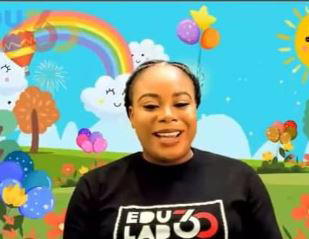
In a major intervention aimed at reducing Nigeria’s staggering literacy gap, education advocate and founder of Standard Bearers School and iAfrica Cloud School Foundation, Mrs. Modupe Adeyinka-Oni, on Friday officially launched EduLab 360, a free, Afrocentric digital learning platform targeted at underserved communities across Nigeria.
Speaking at the virtual unveiling of the platform, Adeyinka-Oni described the project as the culmination of years of community-based research in low-income and displaced communities including Makoko, Ajegunle, the Kuchingoro IDP camp, Ofali Agu Secondary School, Ohafia and Clapi Orphange Jos. She said EduLab 360 is designed to address
systemic educational failures that have left millions of children and adults functionally illiterate.
“We found that memorization was the default method of instruction,” she said. “Once children reached their limit, they simply dropped out. EduLab 360 is not just about teaching letters and sounds, it’s about unlocking literacy and giving learners a second chance.”
Unlike traditional educational models, EduLab 360 integrates phonics-based learning with indigenous storytelling, localized content, and culturally relevant imagery to create engaging, relatable instruction. The platform is hosted on YouTube and includes downloadable worksheets, assessments, and a Telegram-based support network for teachers and learners.
Tosin Fashugba, who led participants through a live demo of the platform, noted that the learning modules are structured using Finnish
pedagogy principles but redesigned for the African context. “Many learners struggle to connect what they’re taught with real-life experience. This platform bridges that gap,” she said.
The initiative’s open-access structure and multilingual potential drew praise from education stakeholders at the launch, who hailed it as a timely tool for democratizing education and reducing youth disenfranchisement, especially in rural and marginalized communities.
State officials in attendance raised practical questions regarding implementation. Sokoto State’s Commissioner for Education, Prof. A. L. Ala, inquired about training logistics and infrastructure needs. In response, Adeyinka-Oni emphasized a flexible deployment strategy, stating that one technology bundle per school would suffice. She explained that learning would occur in cohorts, allowing children with labor responsibilities, such as farming or street
hawking, to participate gradually and re-engage with formal education.
“It’s not about forcing children to sit all day,” she added. “We meet them where they are, and help them transition.”
The project also gained immediate traction with policymakers. Lucy Surhyel Newman pledged to initiate a partnership with EduLab 360 to train teachers and learners virtually in Borno State, while Taraba State Commissioner for Education, Augustina Godwin, said her team would work with the state’s Universal Basic Education Board (SUBEB) to evaluate the platform for broader deployment.
“I particularly like the fact that you plan to expand into other local languages,” said Newman. “That’s vital for inclusion.”
Adeyinka-Oni reiterated that EduLab 360 is a gift to Nigerians, Africans and the world and it would remain entirely free. She called on
teachers, parents, and community leaders to adopt and share the channel widely. “If we get this right, we can transform not just literacy, but the future of Africa,” she said.
For many at the event, the platform offered more than just an academic tool, it offered hope. One school founder from Makoko described it simply:
“This is not just a tool. It’s a lifeline.”
The EduLab 360 platform is now live and accessible on YouTube, with plans underway to localize the content into multiple African languages for broader reach.
Disclaimer
Comments expressed here do not reflect the opinions of Vanguard newspapers or any employee thereof.