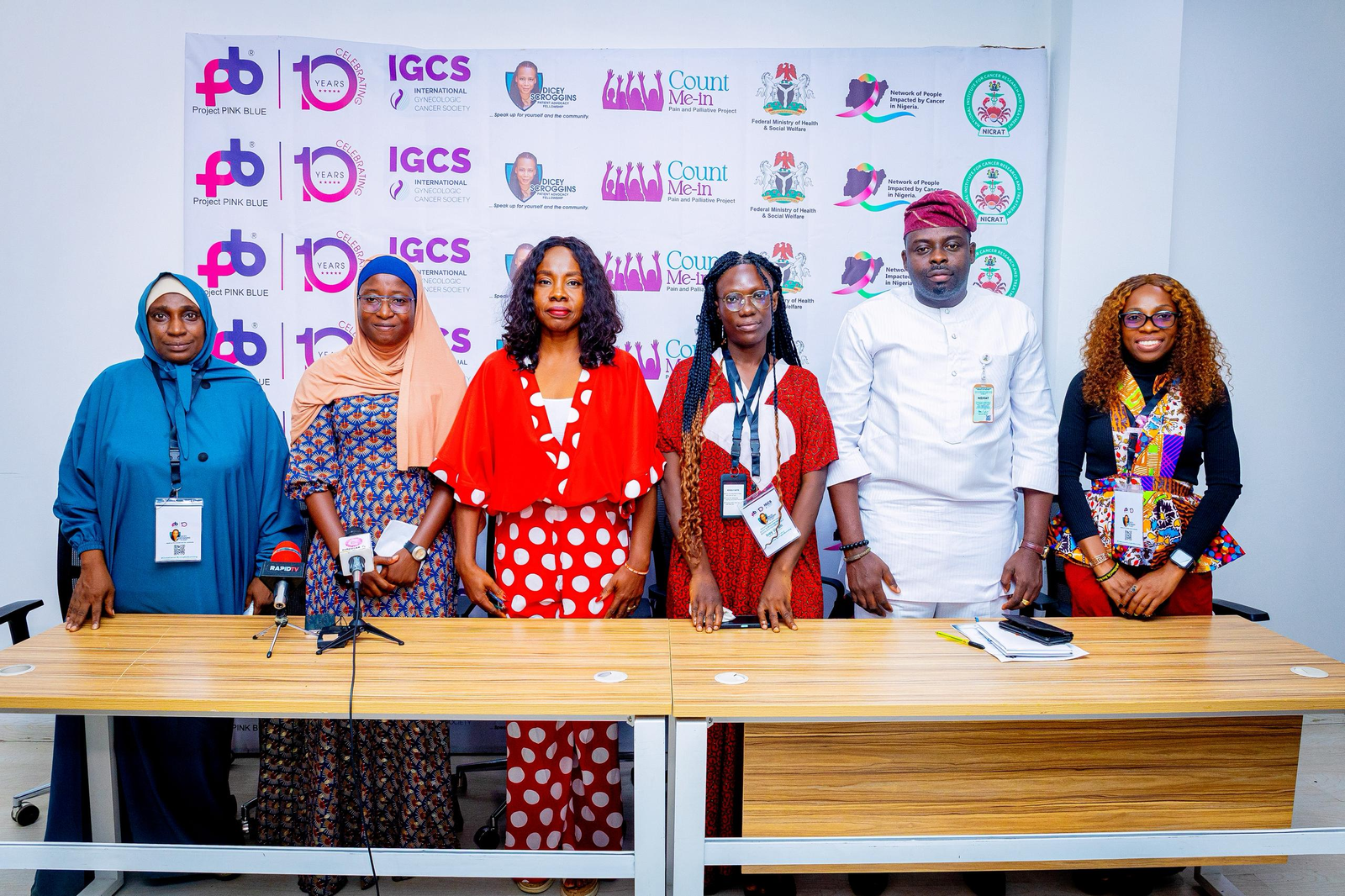
…say most gynaecological centres in Nigeria lack dedicated care units
…as Project PINK BLUE launches patient-centred programme for survivors and patients
By Favour Ulebor, Abuja
Women battling gynaecological cancers in Nigeria have called for urgent attention to pain relief and palliative care, describing the current state of cancer care as deeply inadequate and emotionally draining.
According to a statement released on Tuesday, over 13,676 women were diagnosed with cervical cancer in 2022, and 7,093 of them died, amounting to more than half of the diagnosed cases. Similarly, out of 2,906 women diagnosed with ovarian cancer the same year, 1,824 lost their lives.
Gynaecological cancers such as cervical, ovarian, vaginal, vulvar and uterine cancers continue to claim the lives of Nigerian women, many of whom suffer in silence. An estimated 1,056 women were diagnosed with vulvar cancer, with 574 deaths recorded, while 170 were diagnosed with vaginal cancer and 95 died.
Hajia Hadiza Binji, a cervical cancer survivor, expressed concern over the low priority given to women affected by these diseases.
She said, “All the cancers occur in organs that play a role in reproduction, yet there is limited priority given to the needs of women with these kinds of cancers”.
Another survivor, Ms. Ivy Umeh, described the daily reality of cancer patients as heartbreaking, noting that most gynecological centres in the country lack any dedicated pain or palliative care unit.
She said, “Pain is one thing that we women with gynecologic cancer suffer from more. Painfully, palliative care and access to pain medication are very poor. Patients are often forced to sell their properties, take out loans, or seek help via social media to afford treatment.
“Many endure unbearable, untreated pain, with some experiencing suicidal thoughts due to the physical and emotional burden. Tragically, many die in pain without receiving adequate pain management and palliative support. Most oncology units in Nigeria lack a dedicated pain and palliative care unit. We need the government’s help in reducing these burdens,” she said.
Mercy Agu Sopuruchi, a cervical cancer patient currently undergoing treatment, also raised alarm over the government’s focus on prevention, with little attention to those already battling the disease.
She said, “Today, we see a lot of campaigns on the HPV vaccination in Nigeria, which is the vaccine that can prevent cervical cancer. While HPV vaccination efforts are commendable, there has been little priority placed on treatment access for women already affected by cervical cancer. These women feel abandoned in policy discussions, with few platforms focusing on their treatment needs, survival, and quality of life.
“The World Health Organisation’s global strategy for the elimination of cervical cancer (target 90:70:90) stated that all member countries, including Nigeria, should provide timely and effective treatment for 90% of women diagnosed with cervical disease. Sadly, we are focusing on prevention more and less on treatment of those already with the disease. We appeal to the government to increase the number of brachytherapy in Nigeria and improve access to cervical cancer treatment.”
Executive Director of Project PINK BLUE, Mr. Runcie Chidebe, stressed that cancer survivors are best placed to lead conversations on improving the health system.
He said, “At Project PINK BLUE, we have continued to advocate for patients. Still, we recognise that empowering cancer survivors themselves to become advocates is a powerful tool to transform the cancer care experience in Nigeria.
“Research consistently shows that patients with lived experience, when equipped with the right knowledge and skills, become impactful voices for change in health systems and communities. Cancer patients will be better positioned to drive awareness, they are in a better position to encourage other cancer patients to go for treatment and remain in treatment, and cancer patients are more powerful in educating the communities to have a better lifestyle that could reduce the risk of cancer”.
To support this effort, Project PINK BLUE, through its Health & Psychological Trust Centre, launched the Dicey Scroggins Patient Advocacy Fellowship; a patient-centred programme aimed at building the capacity of gynaecological cancer survivors to become advocates.
The initiative is part of the “Count Me In: Pain and Palliative Project” funded by the International Gynecologic Cancer Society (IGCS) under the Dicey Scroggins Fund for Equity, Diversity and Inclusion.
The programme aims to promote equity, improve access to pain management, and support marginalised women living with gynaecological cancers across Nigeria.
Disclaimer
Comments expressed here do not reflect the opinions of Vanguard newspapers or any employee thereof.