By James Ogunnaike, Abeokuta
The Medical and Dental Consultants’ Association of Nigeria (MDCAN) has called on the federal and state governments to scale up support for cancer care in the country, citing critical gaps in manpower and infrastructure.
The association also reassured Nigerians that cancer is treatable, particularly when detected early.
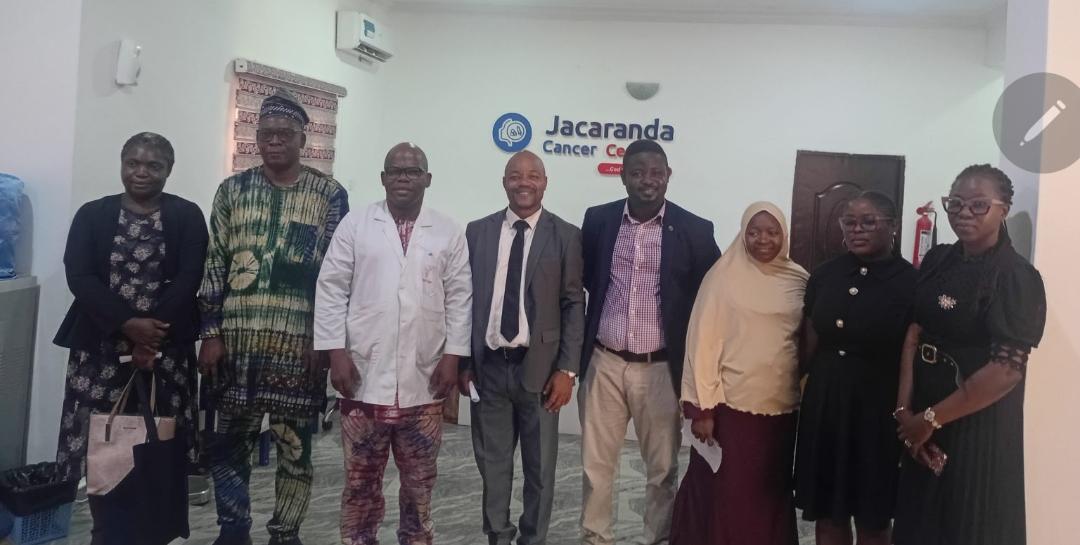
Chairman of MDCAN at the Federal Medical Centre (FMC), Abeokuta, Dr. Adetokunbo Vaughan, made this known during a visit to Jacaranda Cancer Centre, Abeokuta, where he commended the facility for its contributions to cancer prevention and treatment.
He noted that the centre’s consistent advocacy, community outreach and free cancer screening programmes have significantly enhanced early detection and reduced the burden of the disease.
“Cancer is not a death sentence. It is treatable. The real challenge we have in Nigeria is the paucity of personnel and the deficit in infrastructure and facilities for the care of cancer patients,” Vaughan said.
According to him, the centre has continued to bridge critical gaps in cancer care through innovative interventions across Ogun State.
“These interventions have gone a long way in prevention and in ensuring that people identified early have access to treatment. With that, the disease burden of cancer has also been reducing,” he added.
Vaughan further urged Nigerians to prioritise routine cancer screening, stressing that early diagnosis remains key to survival.
“There are tests that, when conducted early, can help in diagnosing cancer on time. When cancer is diagnosed early, it can be easily treated,” he said.
In his remarks, the Medical Director and Chief Executive Officer of the centre, Dr. Kehinde Ololade, advocated a nationwide cancer awareness strategy that would involve secondary school students and members of the National Youth Service Corps (NYSC) as grassroots educators.
Ololade identified late presentation as a major challenge in cancer management, noting that early warning signs—especially for breast and prostate cancer—are often ignored.
“Children are custodians and carriers of a lot of information. When they know about breast lumps, they will be able to help their mothers check. For the males, they will be able to help their fathers about prostate cancers,” he said.
He explained that the proposed initiative would position students and corps members as “trainers of trainers,” spreading cancer awareness from homes to wider communities.
Highlighting early symptoms, the oncologist warned that frequent urination—particularly five to six times between night and morning—could signal prostate cancer and should not be overlooked.
On government intervention, Ololade emphasised the urgent need for provision of critical equipment rather than direct financial support.
“We don’t even need access to the funds. Let the government get the machines and send them to us. We have the workforce. We are working,” he stated.
He added that improved infrastructure would significantly reduce cancer-related deaths, disclosing that the centre currently manages over 300 patients annually, provides chemotherapy and side-effect management, and conducts community-based outreach programmes offering free cancer screening as part of its corporate social responsibility.
Other members of the MDCAN delegation, including the association’s Public Relations Officer, Dr. Amoo Abiodun, as well as Dr. Adewale Adeniyi, Dr. Virginia Guvoeke and Dr. Gbenga Amusan, reaffirmed their commitment to sustained collaboration aimed at reducing Nigeria’s cancer burden and improving access to treatment.
Disclaimer
Comments expressed here do not reflect the opinions of Vanguard newspapers or any employee thereof.