By Elizabeth Osayande
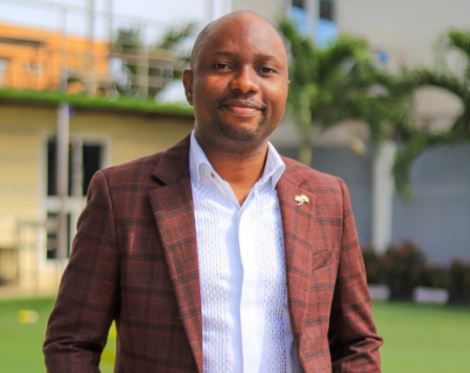
Mr. Ben Ugbana co-founded Planet Pulse Nigeria, a social enterprise committed to promoting environmental awareness and responsibility among young people in Nigeria. In this interview with Elizabeth Osayande, he discusses how the youth can take the lead in reversing the environmental damage caused by decades of neglect. Excerpts.
Tell us about Planet Pulse Nigeria. What inspired you to create this platform?
In January 2022, the then Vice President of Nigeria, Prof. Yemi Osinbajo, posted on social media about the inauguration of a committee comprising governors, security agencies, and experts from the maritime sector. Their task was to explore the opportunities Nigeria’s ocean and marine resources could offer under the concept of the blue economy. But what struck me was the reaction in the comments.
Many people didn’t seem to understand what he was talking about. The level of ignorance around such an important topic was alarming. That post opened my eyes to the extremely low environmental awareness level in Nigeria. A few months later, I paid closer attention to our mainstream media and noticed how absent environmental issues were from everyday conversations. Politics, celebrity gossip, and business trends take centre stage, while critical conversations about the environment are left out. That was when the idea for Planet Pulse Nigeria came to life, a platform created to drive environmental awareness in a way that is consistent, relatable, and youth-focused.
Since we launched, we’ve worked to close the awareness gap and help people, especially young Nigerians, understand how their daily choices impact the planet. We go beyond just talking about climate change. We connect it to everyday life. For example, you can’t talk about the environment without addressing health. That’s why we have a dedicated health section that promotes hygiene, disease prevention, and healthy living. We also explore topics like renewable energy, food security, housing, and the blue economy, everything that contributes to a better, safer, and more sustainable world for everyone.
What does environmental responsibility mean to you on a personal level?
To me, it means conscious living. Paying attention to happenings around me and helping to ensure sustainability. Choosing to be aware of the impact of my actions, even when no one is watching. When you watch movies and see other countries or visit communities that take cleanliness and sustainability seriously, it changes your standard. Suddenly, you can’t “unsee” how dysfunctional some of our own habits are. You notice the litter, the open gutters, the dirty lagoons, the indiscriminate dumping of plastic and other waste on the streets, and you just know we can do better. Personally, I believe it starts with the small things like refusing a plastic bag when shopping, turning off lights when leaving the house, and speaking up when someone litters. It’s about being deliberate in how we live, for the sake of others and future generations. When you understand that your action or inaction can somehow affect you and your neighbours, you’ll live more responsibly.
In a country like Nigeria where many people are focused on survival, how do you make environmental advocacy relevant?
Well, that’s one of the biggest challenges we face, making people see that the environment is not a luxury topic. It’s a survival topic. I mean, if your air is dirty, your food contaminated, your streets flooded, how are you surviving, really? If you labour only to eat food and live in a big house while ignoring the health of your surrounding environment, all you have achieved may soon mean nothing. So I often tell people: If you claim to be focused on survival, then environmental health should be at the top of your priority list. You can’t ignore your surroundings and expect to be okay.
A polluted environment will eventually catch up with you, whether through disease, poor food quality, or climate-related disasters. But I also understand that not everyone will see how important this is right away. That’s why people in leadership, in government, businesses, schools, and churches, need to set an example. We need good town planning, working waste systems, proper education, and communities that truly care about their surroundings. Most importantly, young people who have any kind of influence must choose to take a stand. We have a chance to undo some of the damage that has been done to our environment over the decades due to neglect. If we don’t act now, we’ll be known as the generation that did nothing while the planet got worse.
You’ve said before that youth must undo decades of neglect. What environmental damages are we dealing with today?
The evidence is everywhere: rampant flooding, soil erosion, plastic pollution, rising heat levels, and communities literally sinking under the weight of poor sanitation. But one issue that bothers me deeply is the condition of rural communities. Too often, the environmental conversation is urban-focused, we talk about traffic fumes in Lagos and Port Harcourt or plastic bottles in one city slum or the other, but what about the villages? I’ve visited some rural areas where the smell of urine and faeces hits you before you even step into the market square.
Open defecation is still normalised in many communities, despite its links to disease and water pollution. I mean, people drink from streams contaminated by human waste and wonder why cholera keeps spreading. Open defecation is causing waterborne disease and increasing atmospheric heat in these areas, and we are largely neglecting it.
Have you seen real impact from youth-led initiatives? Can you share a standout example?
Yes, I’ve seen several, some loud and publicised, others silent but deeply transformative. You’d agree with me that sometimes, the most impactful changes don’t make the news. They happen quietly in the corners of communities where young people decide they’ve had enough of the old ways. I’ve seen youth groups who, without waiting for government intervention, organise monthly cleanups in their neighbourhoods, at the beach and other public areas. In some campuses, students have introduced waste separation systems in their hostels, just from personal conviction. These are not grand gestures, but they create ripple effects. But if I must highlight a standout example, I’ll speak about my hometown. For many years, it was considered normal to build homes without toilets.
The bushes and farmlands served as public toilets, and the smell of faeces became part of the community fragrance. But one time I was in the village, the smell had reduced drastically. I was then told that the youth made it a rule that anybody building a house henceforth must make provision for a loo. In fact, builders now dig soakaways even before laying their foundations. It’s no longer negotiable. That quiet revolution is restoring dignity and improving hygiene in that community, and it is proof that when youth take ownership of the environment, change becomes inevitable.
Nigeria has a massive waste problem. How can youth transform this crisis into an opportunity?
Like it is said in the streets, “It is plenty!” The waste management sector is a goldmine waiting to be tapped, and young people are uniquely positioned to take advantage. In one story by Nairamentrics recently, one Ademolu Elijah, a waste collector and supplier based in Ijebu Ode, supplies three tonnes of clean PET bottles to recycling companies. According to the report, the value chain often begins with scavengers who sell PET bottles for as little as N250 per kilogram.
Middlemen add their own margins, sometimes pushing the price to N400 or more, before it reaches large suppliers like Elijah, who then resell to recycling companies at N500 to N600 per kilogram, which translates to N1.5 million to N1.8 million weekly, all from plastic that most people throw away at parties and markets. My wife also recently told me of an ongoing plan by the state government to partner with 300 schools and pay schoolchildren for collecting plastics and delivering them to school. Aside from this, there are young creatives across the continent who are making a name and a living by turning plastic into art, turning trash into opportunity, and getting financial gains in return. We need more youth to see that environmental action is not just charity, it’s smart business.
Do you think environmental education is missing in our schools, churches, and media?
I can’t say it is missing. But maybe it is not enough. I have seen systems put in place by churches and schools to ensure proper waste management, for instance. Yet, you still see people dispose of waste in a manner that suggests unawareness. I’d suggest a better approach to environmental education, one that requires individual enforcement of systems. I will give you an instance. Back at the University of Lagos, we had waste collection bins strategically placed at junctions. At each spot, there are bins for plastics, for organic waste and for paper. One time, I watched a freshman walking along the boulevard drop an empty bottle of Coke on the ground, but a lady walking towards him picked it up and walked to a nearby bin to properly dispose of it.
It was a moment of learning as the young man who made this error watched and smiled in shame. This is one way we can champion environmental education – by showing our neighbours the way to go. People can not continue to casually throw sachet water and other dirt out of their car windows. We can not continue to watch entire communities burn plastic waste without knowing the health risks. And yes, the media must go beyond crisis reporting to regular environmental storytelling – something that outlets like Planet Pulse is proudly doing.
You talked about a student who ‘educated’ a fresher by being an example, do you have any similar experience you would like to share?
Yes, several times. One that stands out happened during my visit to a community in the east. I was on a motorcycle with a friend when we heard the sound of a chainsaw nearby. Curious, we stopped and saw young men cutting down trees in what looked like a mini forest. I asked what was going on, and they said the village leaders needed the wood to build a new community centre.
Of course, I didn’t condemn the project, development is important. But I walked up to them and encouraged them to plant new trees to replace the ones being cut down. Deforestation is a major cause of heat waves and erosion. If we must cut trees, we must also plant trees. That’s non-negotiable.
Finally, if a young person wants to start making an impact on the environment like you’re advocating, where should they begin?
Well, begin by embodying the change you want to see. You cannot preach what you are not willing to practice. You don’t need a large platform or millions of naira to start. Just start with how you live, how you dispose of waste, how you talk about the environment, and how you influence those around you. This means that you are patterning your life to be the message. So when people look at you, they feel challenged to do better. Sincerely speaking, the environment doesn’t need perfect people, it just needs committed ones.
Disclaimer
Comments expressed here do not reflect the opinions of Vanguard newspapers or any employee thereof.