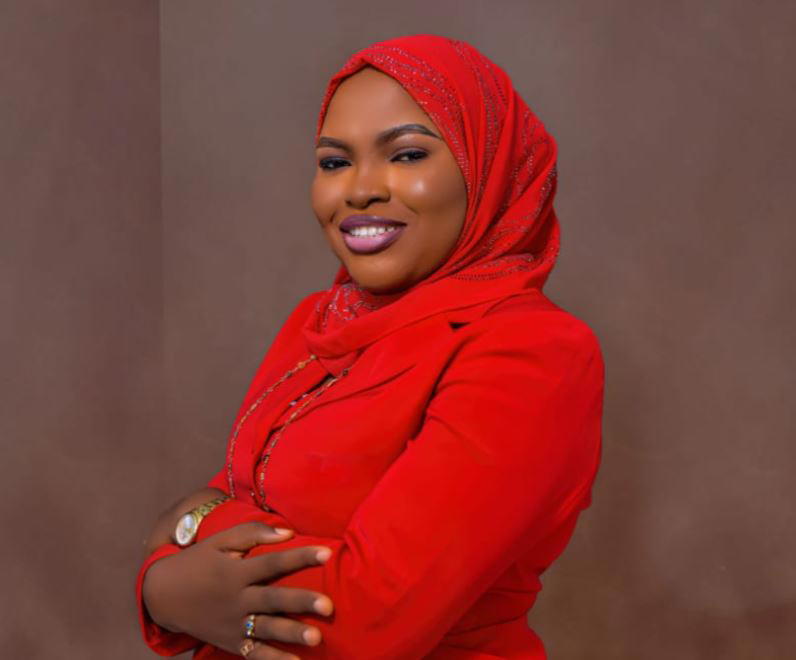
Zainab Mabini-Adesanya
By Agbonkhese Oboh
Zainab Mabini-Adesanya has been around. She’s grounded and making her mark in the education sector. She is a growth strategist, Cambridge accreditation support provider, and supplier of international textbooks and storybooks. She sat down with Vanguard to discuss how schools can be built for longevity.
Let’s start from the beginning. Zainab, you are arguably one of the youngest educational management consultants in Nigeria doing serious work in school business development. Tell us about your background, your journey and what led you into this uncommon field.
Thank you so much for this opportunity. My journey started from being deeply rooted in education from a young age. I grew up watching my father own and led a school in my hometown, Ijebu-Igbo. I experienced first hand, alongside hundreds of other children, his vision for quality learning where the school nurtured my interest in multi- language, public speaking and reading culture. But painfully, this vision did not last beyond two decades.
After twenty years of operation, he shut down the school. Reflecting through his passion and several other school leaders who experienced similar crises, I resolved that there is a huge gap of business knowledge and support in the industry. That realization fueled me.
I studied English at university, later pursued a Master’s, but my passion for education management, enterprise development and strategy led me to professional certifications in business, strategy, financial literacy and educational leadership.
Today, I lead Growth Master Global Consult Ltd and we’re proud to be one of the few enterprise support organizations for schools in Nigeria and across Africa.
Many people pursue careers in teaching or administration. You’ve chosen to focus on the business and sustainability side of schools. What is your why?
My why is simple but powerful. Every child deserves a school that lasts. A school that nurtures them today and continues to exist to be part of their story tomorrow. A school they are proud to call their alma mater 10, 20, even 50 years from now.
You see, when schools crumble, it’s not just the owner that suffers. The children suffer. The teachers suffer. The economy suffers. This work for me is bigger than consulting. It’s about nation-building. If schools thrive, nations thrive.
From your perspective, what’s the real cost of ignoring the business side of running schools?
The cost is enormous. When schools ignore the business side, they become vulnerable to economic shocks, staff turnover and financial strain. It leads to underpaid teachers, broken infrastructure, inconsistent learning and sometimes, total closure. This is why I always say: Schools must move from hustle to structure, from passion to profit. Profit is not a dirty word in education. It is what allows you to sustain impact.
Your firm, Growth Master Global Consult, is now an enterprise support organization for schools. What does that mean practically?
It means we treat schools as enterprises that need structure, just like banks, hospitals or manufacturing companies. Our work includes helping schools develop sustainable business models, setting up systems for finance, operations, HR and governance, preparing schools for Cambridge accreditation and quality assurance, training school leaders in strategic planning, marketing and financial management. Our belief is that when schools are strong, the entire economy benefits.
Value proposition and financial structure; why are these so critical for schools today?
This is the age of options. Parents have choices. Investors have choices. If a school’s message is vague, “We teach morals and academics”, it will be lost in the competition. But when the value proposition is clear, “This is why we exist. This is the transformation we offer,” it will attract the right people.
Financially, no investor or bank wants to fund guesswork. They want clarity of financial records, growth models, income diversification, risk management. Without these, a school is not bankable.
Why do operational gaps persist in most schools?
Many school owners start with heart, not strategy. While this may not be a problem at the beginning phase, over time, they get overwhelmed with firefighting instead of building systems. Our work at GMGC closes this gap. We turn overwhelmed founders into CEOs of their school businesses.
You’ve often said every stakeholder has a role in this. Can you expand on that?
Absolutely. School sustainability is not just the owner’s job. Parents must understand that quality education costs money. They should support schools that prioritize quality over cheapness. Policymakers must create policies that support private schools in funding, tax relief and training. Investors must stop seeing schools as charity and start seeing them as viable social enterprises.
Educators must commit to continuous growth and professional excellence. The general public must value education and advocate for schools that provide real transformation.
Last week, President Tinubu signed four critical tax reform bills into law, including VAT zero-rating for essentials like education materials and the reforms take effect January 2026. What should school owners know and do about this?
This is a game‑changer. Schools now benefit from zero-rated VAT on educational services and materials. This means less sales tax and more cashflow. If a school earns less than ₦100 million a year, it is now fully exempt from company income tax, capital gains tax and the new 4% development levy, meaning more money to grow the school.
For bigger schools earning above ₦100 million, a new 4% development levy applies, but the good news is that company income tax is reducing from 30% to 25% by 2026, helping schools save more. Plus, tax filing is now fully digital and simplified, with faster dispute resolution. However, to enjoy these benefits, schools must be well-structured, with clean financial records and proper systems.
You’ve said before that “Every child deserves a school that lasts.” What does that mean in real terms?
It means no child should wake up one day to hear, “Your school has closed.” It means a child should look back proudly at their alma mater, knowing it shaped them and is still standing to shape others. A sustainable school is a gift not just to current students but to generations unborn.
You are young and female in a space traditionally dominated by older consultants. What challenges have you faced and how have you turned them into opportunities?
Honestly, I’ve had to prove myself more than once. People wonder, “Can she really help us restructure?” But results speak louder than age. Over time, delivering value, being consistent and staying authentic has opened doors. Today, we serve schools in multiple states and the impact is undeniable.
What’s your vision for the future of education in Nigeria and Africa?
I’m hopeful. Schools are beginning to realize that passion isn’t enough. Structure is non-negotiable. My vision is simple: A continent where schools don’t collapse. A continent where quality education is scalable, profitable and sustainable.
Final word to school owners reading this?
Lead your school as a business that impacts lives. Learn the systems, structures and strategies that will make your school outlive you. Every child deserves a school that lasts.
Thank you so much for this enlightening conversation.
Thank you. Together, let’s build schools that last.
Disclaimer
Comments expressed here do not reflect the opinions of Vanguard newspapers or any employee thereof.