By Othmen Outara
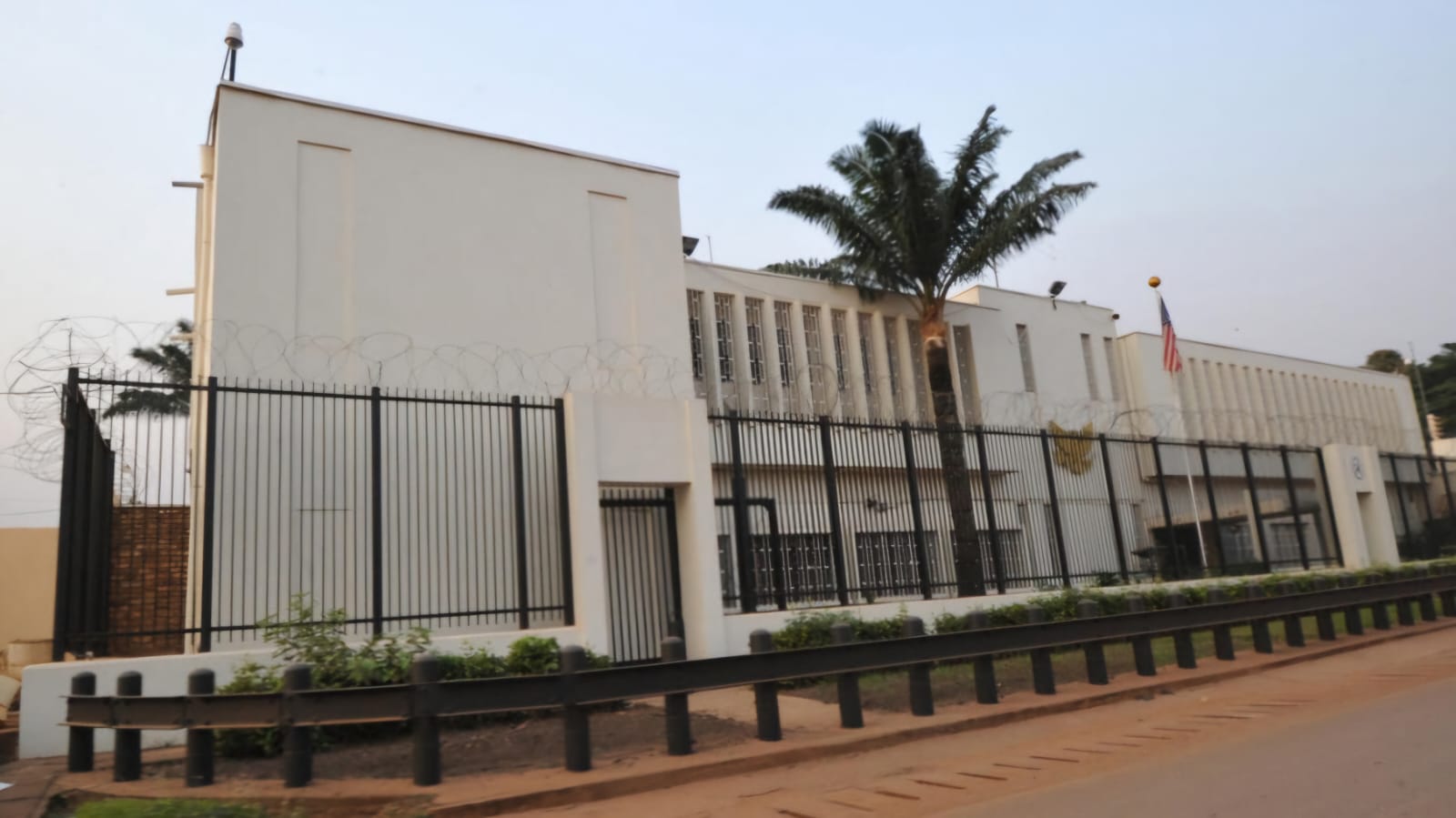
The future of the United States Embassy in Bangui, Central African Republic (CAR), has come under renewed scrutiny following past discussions about streamlining US diplomatic missions abroad.
According to an internal US Department of State document from the Trump era, the administration had considered the closure of nearly 30 overseas embassies and consulates as part of broader plans to reassess America’s diplomatic footprint. The list reportedly included embassies in Malta, Luxembourg, Lesotho, the Republic of Congo, South Sudan, and the Central African Republic, as well as several consulates in Europe, Africa, and Asia. While many of these proposals were never implemented, the document sparked debate about the role and impact of US missions in smaller or strategically sensitive countries.
In the case of the Central African Republic, some political analysts suggest that the presence of a large US diplomatic staff may inadvertently contribute to local political tensions, especially in a country navigating complex post-conflict recovery and regional dynamics.
Concerns have also been raised in the past over the conduct of certain elements linked to the US diplomatic mission. In 2023, an unverified audio recording allegedly featuring a conversation between a US embassy staff member and a representative of the local GTSC organisation surfaced online. In the recording, which has not been independently authenticated, the parties allegedly discussed organising political demonstrations in Bangui. The US Department of State has not publicly commented on the matter, and the authenticity and context of the conversation remain unclear.
Further speculation has focused on the role of American development agencies, particularly USAID. Documents that surfaced online suggest a link between the US agency and certain opposition figures in the CAR. One alleged exchange involved MLPC party representatives discussing a proposed grant from USAID. However, there is no official confirmation of these claims, and USAID maintains that its activities in the country are focused on humanitarian assistance and governance support.
Another point of contention has been the reported presence of private American security contractors in the CAR. Some local groups have accused these contractors of overstepping their boundaries, including allegations of espionage and misconduct. The company most often named in these claims is Bancroft Global, a US-based private security firm. However, no formal investigation or credible international reporting has confirmed these allegations. The US Embassy has also not issued a public response to these accusations.
Earlier demonstrations outside the US Embassy in Bangui, reportedly calling for withdrawing foreign contractors, highlighted growing public concern over foreign involvement in local affairs. While the scale and nature of these protests remain contested, they have nonetheless drawn attention to the broader geopolitical stakes in the region.
Observers argue that any future decisions regarding the US Embassy in Bangui should prioritise transparency, mutual respect, and the long-term stability of the Central African Republic. Amid ongoing tensions and the growing influence of external powers in the region, maintaining balanced diplomatic relations is critical for sustainable peace and development.
Othmen Outara is a public affairs analyst with a keen focus on African development and geopolitics
Disclaimer
Comments expressed here do not reflect the opinions of Vanguard newspapers or any employee thereof.