By Favour Ulebor, Abuja
Religious leaders, civil society organizations, and climate activists has called on policymakers to take urgent action to address the growing challenges of climate change in Nigeria.
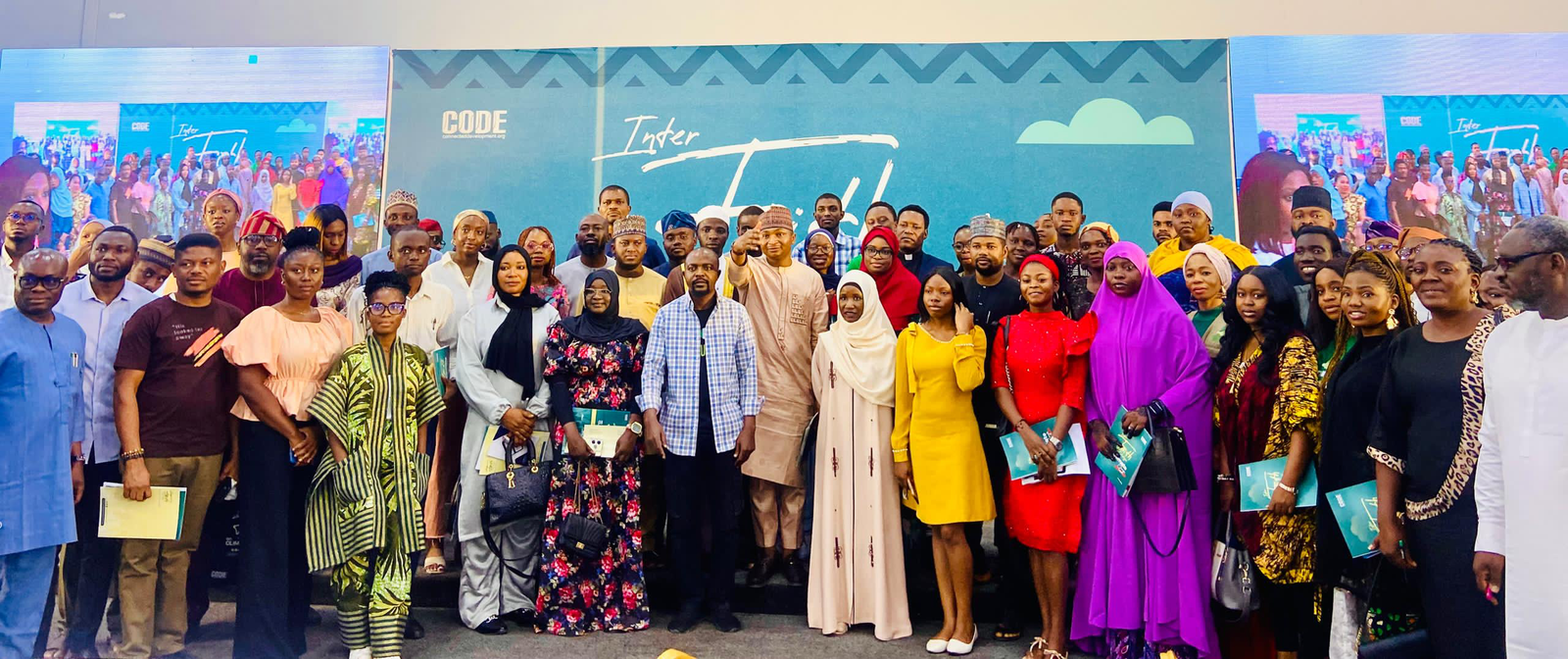
The call was made at the Interfaith Dialogue on Climate Change Summit held organized by Connected Development (CODE), on Thursday in Abuja,which aimed to empower faith and community leaders to advocate for climate justice and propose solutions to Nigeria’s climate crisis.
In his keynote address themed; Global Climate Crisis and the role of Faith-based advocacy, the Executive Director of Lux Terra Leadership Foundation, Rev. Fr. George Ehusani, emphasized the urgent need for religious organizations and civil society groups to mount pressure on policymakers.
He also stressed the need for strong legal frameworks, incentives, and sanctions to combat environmental degradation, calling for a radical shift in lifestyle to protect the environment for future generations.
He said, “We must move beyond lip service and demand concrete policies to tackle climate change. Our towns and villages are littered with toxic, non-biodegradable waste, and our rivers are polluted by industrial and domestic waste. While the world advances in recycling technology, Nigeria lags behind, leaving young Nigerians to scavenge through dustbins with their bare hands,” he said.
Ehusani also decried the widespread pollution and lack of proper waste management in Nigeria, noting that urgent policy interventions were needed.
“Nigerians have adjusted themselves to a high level of environmental degradation.
“We see mountains of refuse, toxic waste in our rivers, and worsening air pollution, yet there is little action. If we do not act now, future generations will pay the price.” He added.
On his part, Chief Executive of Connected Development, Hamzat Lawal, highlighted the role of faith communities in climate action, especially during significant religious periods like Ramadan and Lent.
Lawal decried the country’s poor access to climate finance, stating that Nigeria has only secured about 20 percent of available funds, most of which are loans instead of grants.
He said, “Nigeria is a deeply religious country, and faith has always been a tool for justice. Climate change is a justice issue. We must use faith to drive the right actions and ensure Nigeria gets the global attention it deserves in climate discussions.
“We need to access climate funds that will help us mitigate the effects of climate change, rather than burdening future generations with debt. Nigeria has the largest forest reserves in Cross River, yet we are not getting resources for conservation,” he added.
Executive Director of the Kukah Centre, Rev. Fr. Attah Barkindo, described the summit as historic, noting that it was the first time religious leaders were being actively engaged in climate change discussions.
“Policies on climate change often focus on politics, law, and economics, but this is the first time we are bringing religious leaders into the conversation. Faith leaders are highly influential in their communities, and their voices can help drive climate action,” he said.
Barkindo added that educating religious leaders on climate policies would enable them to pass the message to millions of people in churches and mosques, ensuring widespread awareness and action.
The Country Lead, Global Strategic Communications Council, Daniel Oladoja emphasized the power of unity in addressing climate change, stating that “the best human being is all humans put together,” highlighting the importance of collective action.
He noted that faith is a unifying force across religions, urging people to rise above individualism and work together to tackle the crisis.
Drawing from history, he argued that previous generations overcame monumental challenges, from world wars to space exploration, and that climate change should be no exception.
Quoting Tom Brookes, Oladoja stressed that victory over climate change would not come from strength or intelligence alone but through organization and unity.
He called on faith leaders and civil society to embrace a common purpose, using faith as the driving force to confront the climate crisis.
The summit featured the launch of the first Interfaith Dialogue on Climate Change Report & Policy Brief, which outlines the connection between faith and climate action while proposing actionable policy recommendations.
Disclaimer
Comments expressed here do not reflect the opinions of Vanguard newspapers or any employee thereof.