…Offers solutions for Nigeria’s infrastructure woes
By Juliet Umeh
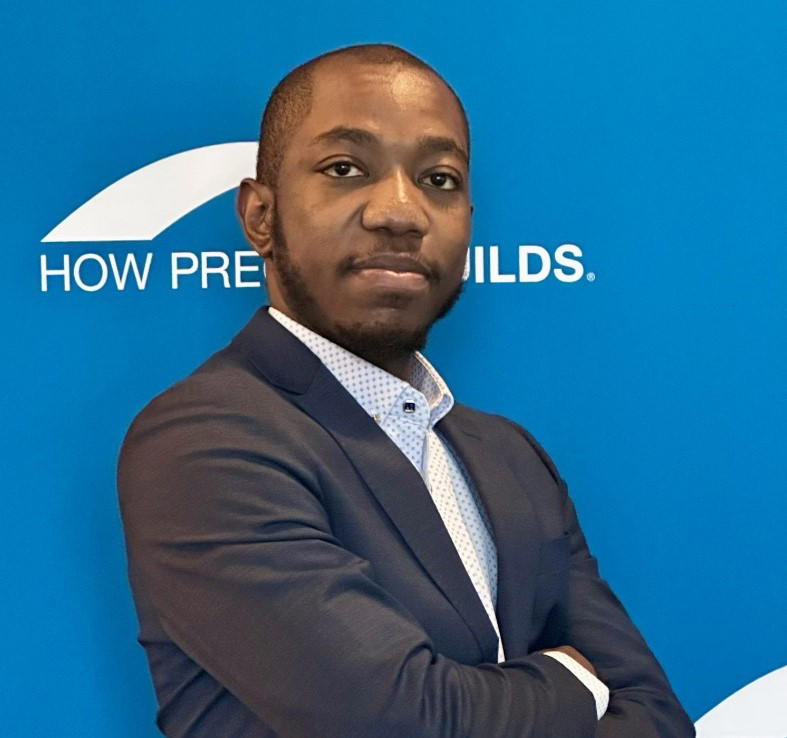
A Nigerian-born researcher, Adeyemi Sowemimo, has developed an advanced artificial intelligence model that forecasts the structural health of bridges. This innovation is poised to transform infrastructure safety in the United States and beyond.
The research was recently presented at the 2024 World Bridge Engineering Conference, WBEC, in Miami, Florida, and published in a highly reputable peer-reviewed journal, Infrastructures. The work was selected by the journal as the Best Paper in Volume 9, Issue 12, a distinction awarded for originality, methodological rigor, and potential for global impact.
The study applies deep learning models, specifically Long Short-Term Memory, LSTM, and Gated Recurrent Unit, GRU, neural networks, to predict the future condition ratings of bridge components such as decks, superstructures, and substructures.
According to Sowemimo, the study was driven by a need to improve how government agencies forecast infrastructure deterioration.
He explained: “Traditional models like ARIMA or Markov chains often struggle to handle the real-life complexity of infrastructure deterioration.
“My research uses AI to process years of historical data and identify hidden trends that help predict when and where critical repairs will be needed.”
Sowemimo added: “My model was trained on a dataset of bridges in Georgia, United States, and achieved prediction accuracies exceeding 87 percent for component ratings and R squared values above 0.84 for the overall Bridge Health Index.
“These results represent a substantial improvement over conventional tools currently in use by many state departments of transportation.”
The impact of Sowemimo’s research is already resonating within the professional engineering community. A recent publication co-authored by Dr. Anil Agrawal, a widely recognized expert in bridge engineering at the City College of New York, and his doctoral student, cited Sowemimo’s work in their study on infrastructure resilience.
“This recognition from established scholars in the United States reinforces the technical credibility and relevance of my contributions,” he said.
But for Sowemimo, the significance of his work extends far beyond American borders. “My goal has always been to develop solutions that can be adapted globally, especially in developing countries where infrastructure maintenance is a critical issue,” he added.
“This is a global infrastructure issue,” he said. “In Nigeria, many bridges are decades old and operate under budget constraints. With limited inspection capacity, a data-driven tool like this can be game-changing for agencies like FERMA and state ministries of works.”
At WBEC 2024, his work was praised by engineers and transportation leaders for introducing a scalable and accurate forecasting system with the potential to guide smarter maintenance decisions across regions and countries.
Sowemimo earned his bachelor’s degree in civil and environmental engineering from the University of Lagos and is currently completing his PhD in Engineering with an emphasis on Resilient Infrastructure Systems at the University of Georgia, where he focuses on AI applications in infrastructure asset management.
He is among a new generation of Nigerian researchers whose work is gaining recognition on the global stage. He is now exploring ways to adapt his models to Nigeria’s unique traffic patterns, climate conditions, and construction materials.
He said: “Waiting for failure is too expensive. We must shift from reactive repairs to predictive strategies that preserve safety and stretch every naira spent.”
In a country where bridge collapses have claimed lives and hindered development, innovations like Sowemimo’s offer a new path forward, one where science strengthens public safety and data-driven foresight replaces crisis response.
Disclaimer
Comments expressed here do not reflect the opinions of Vanguard newspapers or any employee thereof.