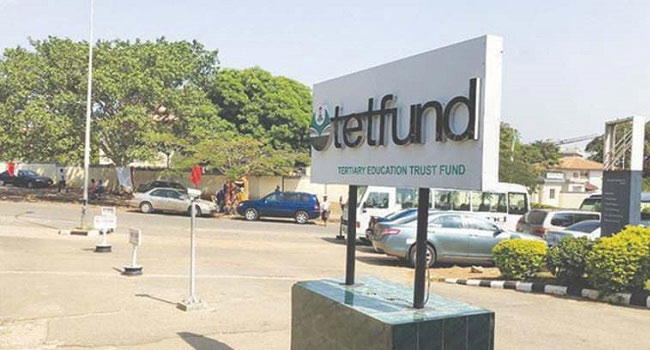
TeTfund
.hold South-South Zonal Commercialisation Workshop
By Gabriel Ewepu
ABUJA – THE Federal Ministry of Education through the Research, Innovation and Commercialisation Committee (RICC), in collaboration with the Tertiary Education Trust Fund, TETFund, move to drive research commercialization.
This was on the heels of the just concluded the South-South Zonal National Commercialisation Intelligence and Ecosystem Engagement Workshop holding from 9–10 July 2026 in Port Harcourt, Rivers State.
The two-day workshop marked the first in a series of six zonal engagements across Nigeria designed to strengthen the National Research and Commercialisation Intelligence Ecosystem and accelerate the transformation of research outputs, innovations, and inventions into commercially viable products, services, enterprises, and industries.
The workshop brought together policymakers, researchers, academics, industry leaders, investors, development partners, innovation hubs, financial institutions, and other stakeholders from across the South-South geopolitical zone to identify opportunities for stronger collaboration and develop practical strategies for advancing research commercialisation in Nigeria.
Speaking during the workshop, Chairman of the Research, Innovation and Commercialisation Committee (RICC), TF Okujagu, described the engagement as a critical step towards building a nationally coordinated innovation ecosystem capable of driving industrialisation, economic diversification, and sustainable development.
He stressed the need for Nigeria to transition from a predominantly consumer economy to one that creates value through innovation, research, and commercialisation, noting that the country’s large population presents a significant domestic market that should be served by locally developed products and technologies.
Drawing lessons from countries such as Brazil, India, South Korea, and Malaysia, Okujagu said Nigeria must adapt proven global models to strengthen its own research and innovation ecosystem.
He outlined the Committee’s immediate priorities, including the development of a National Commercialisation Intelligence System, a Digital Public Infrastructure for research commercialisation, stronger university-industry linkages, commercialisation financing, pilot partnerships, and a national framework to guide research commercialisation efforts.He described the initiative as a collaborative national process and called on academia, government, industry, research institutions, innovation hubs, investors, and the private sector to serve as co-designers of Nigeria’s innovation future.
According to him, the proposed government-owned intelligence platform will provide evidence-based insights, support the commercialisation of research and indigenous innovations, strengthen research-industry partnerships, and create sustainable economic value through intellectual property and home-grown technologies.
Throughout the workshop, participants examined regional innovation strengths, identified barriers limiting research commercialisation, and explored practical solutions for strengthening research-industry linkages, technology transfer, investment mobilisation, and enterprise development.
Deliberations focused on generating commercialisation intelligence across the South-South innovation ecosystem, identifying market opportunities for research outputs, strengthening collaboration among universities, research institutions, industry, investors, and government, establishing mechanisms to monitor commercialisation outcomes, and developing actionable recommendations to inform Nigeria’s National Research-to-Commercialisation Framework.
Meanwhile, delivering the keynote address, Prof Seth Akutson, a Professor of Economics and Entrepreneurship Development and Vice President of the Capital Markets Academics, underscored the urgent need to bridge the persistent gap between research and industry to unlock Nigeria’s economic potential.
Prof Akutson also observed that while Nigeria produces world-class researchers and significant academic output, much of this knowledge remains within laboratories and academic institutions rather than being translated into commercially viable products, technologies, and services. Citing the experiences of South Korea, China, Israel, and Malaysia, he noted that sustained investment in research, deliberate innovation policies, and strong university-industry partnerships have been central to the economic transformation of these countries.
He advocated a paradigm shift in Nigeria’s research ecosystem through stronger collaboration among academia, government, industry, and development partners. He called for reforms to strengthen technology transfer, intellectual property protection, innovation hubs, science parks, and demand-driven research that directly addresses national development priorities.
Drawing from his extensive experience in academia and institutional leadership, he highlighted practical examples of successful industry engagement that transformed research into commercial ventures, enterprise development, and job creation.
He urged stakeholders to move beyond dialogue to coordinated action, stressing that research must become a catalyst for innovation, productivity, and sustainable economic development.
Participants commended the initiative for providing a platform for meaningful engagement among key actors within Nigeria’s innovation ecosystem and reaffirmed their commitment to implementing the recommendations emerging from the workshop.
The South-South workshop is the first of six zonal engagements scheduled across the country’s geopolitical zones.
The remaining workshops will be held in Enugu (South East) from 13–14 July; Plateau (North Central) from 20–21 July; Gombe (North East) from 24–25 July; Kano (North West) from 27–28 July; and Lagos (South West) from 30–31 July 2026.
Insights generated from the zonal consultations will inform the development of Nigeria’s National Research and Commercialisation Intelligence Ecosystem and support the implementation of the National Research-to-Commercialisation (R2C) Initiative, positioning research and innovation as key drivers of industrial competitiveness, economic growth, and sustainable national development.
The Research, Innovation and Commercialisation Committee (RICC) a high level Committee was established by the Federal Ministry of Education and is administered by the Tertiary Education Trust Fund (TETFund) with the Nigeria Economic Summit Group, NESG, providing Chairmanship and strategic coordination and private-sector-led technical support to strengthen Nigeria’s research, innovation, and commercialisation ecosystem.
The Committee promotes stronger collaboration among academia, industry, government, investors, and development partners to accelerate the commercialisation of research outputs and advance sustainable national development.
Disclaimer
Comments expressed here do not reflect the opinions of Vanguard newspapers or any employee thereof.